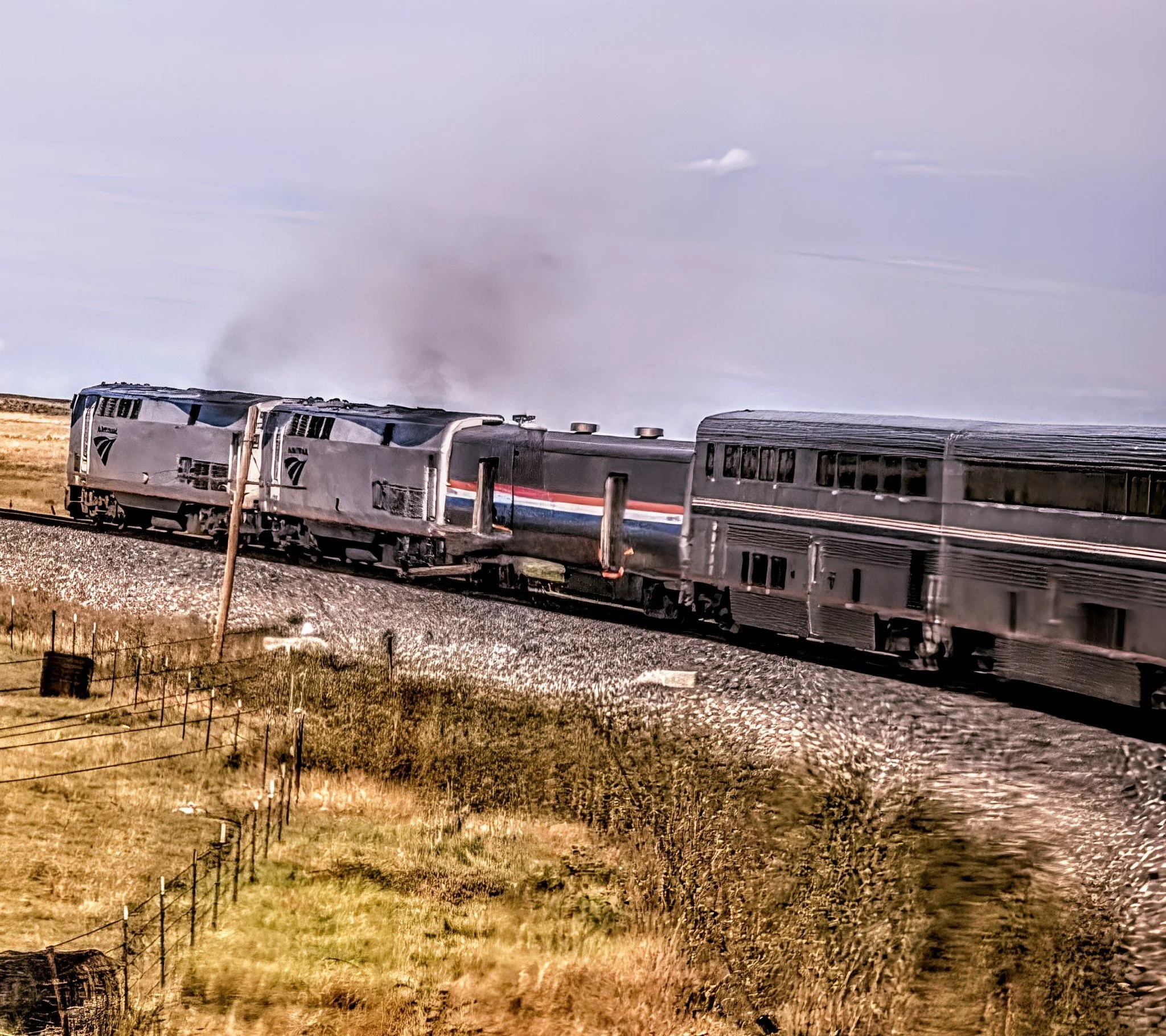
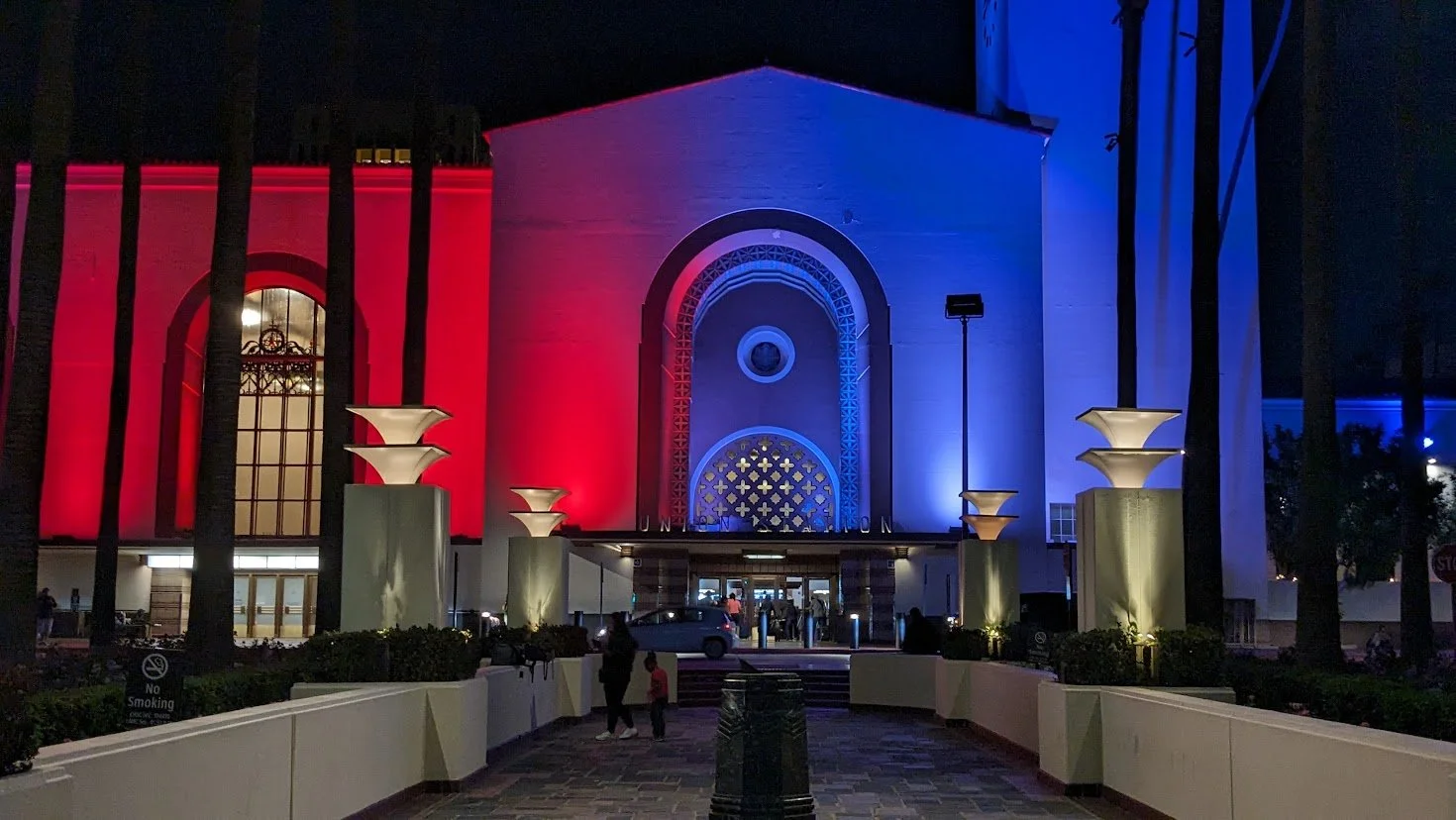
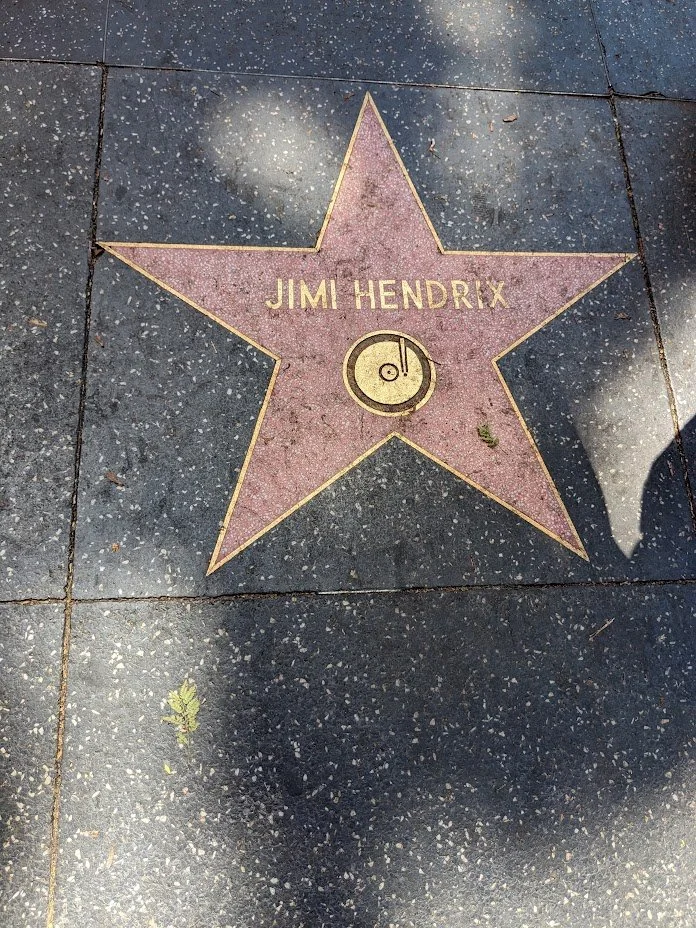
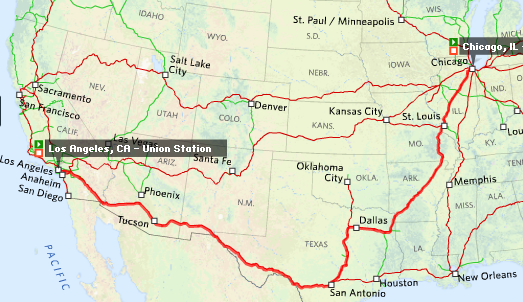
All aboard!! Off we go again, this time from west to east, so get a window seat, some snacks, a good book for those evening hours, your neck pillow and a comfy throw. Next stop, Tucson, Arizona, where the West was and still is the very heart of cowboy country. We’ve just caught the Texas Eagle and boarded at 10:00 P.M. so we’ll be able to catch some much-needed rest after a full day exploring Downtown Los Angeles. This leg of our southern journey will take us approximately 9 and 1/2 hours. Despite it being nighttime, many of the towns/cities we’ll pass through as we make our way across California will be visible, given that the areas are heavily populated, and the light they throw makes it appear as if we’re going through them in the middle of the day. One of the first cities we come to as we travel East is, no kidding, Ontario, and it is apparently named after our Province. However, its name is the only thing it has in common with its namesake. We stopped there for an hour once, and the heat at 12:00 A.M. and the Palm Trees lining the streets make it quite clear that this is not in Canada. Next up, Palm Springs, and it’s a shame that we have to pass through at night because I’d love to get a look at this famous piece of real estate. As it was, I didn’t see any stars hanging around the station as we passed it.
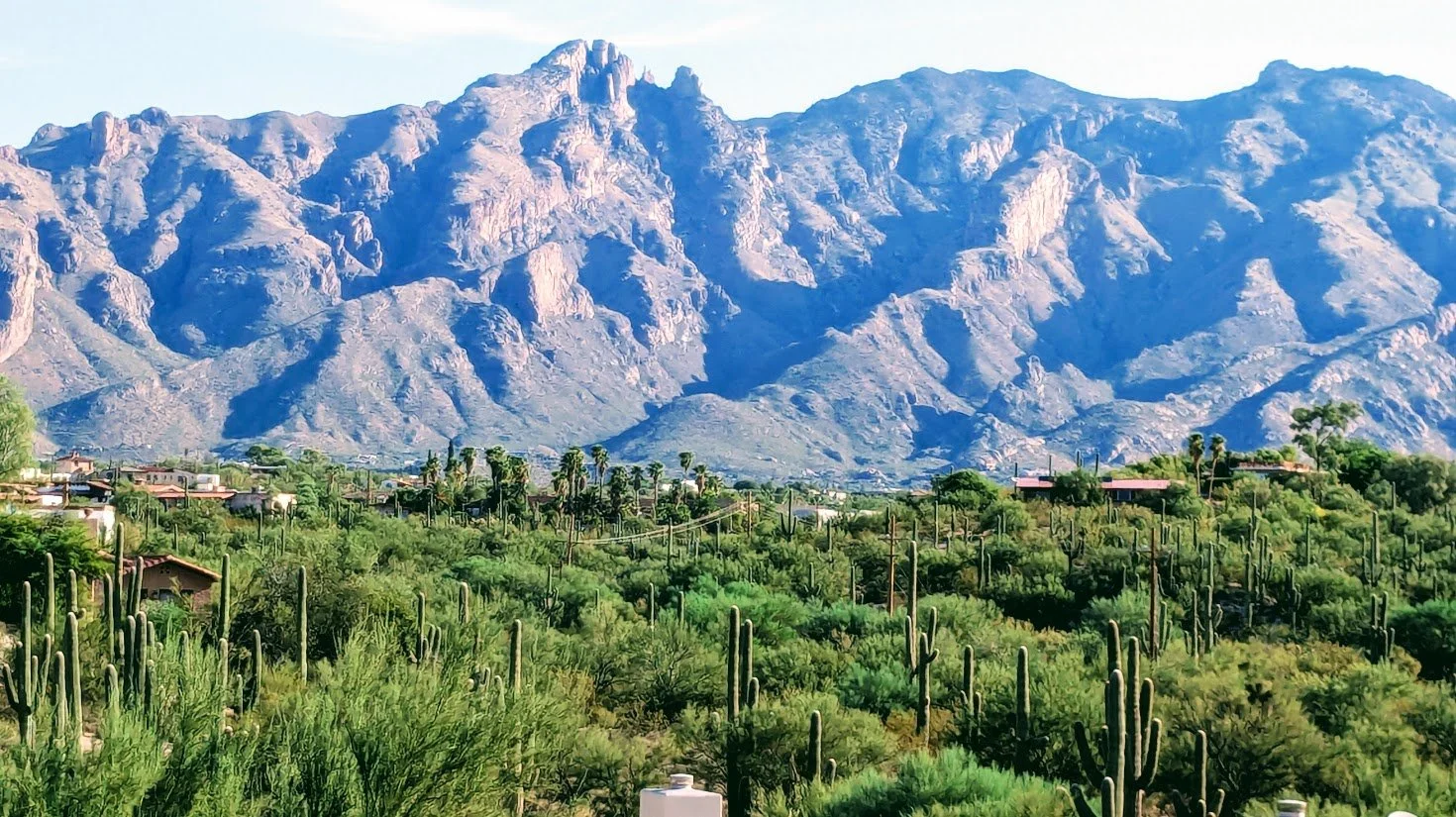
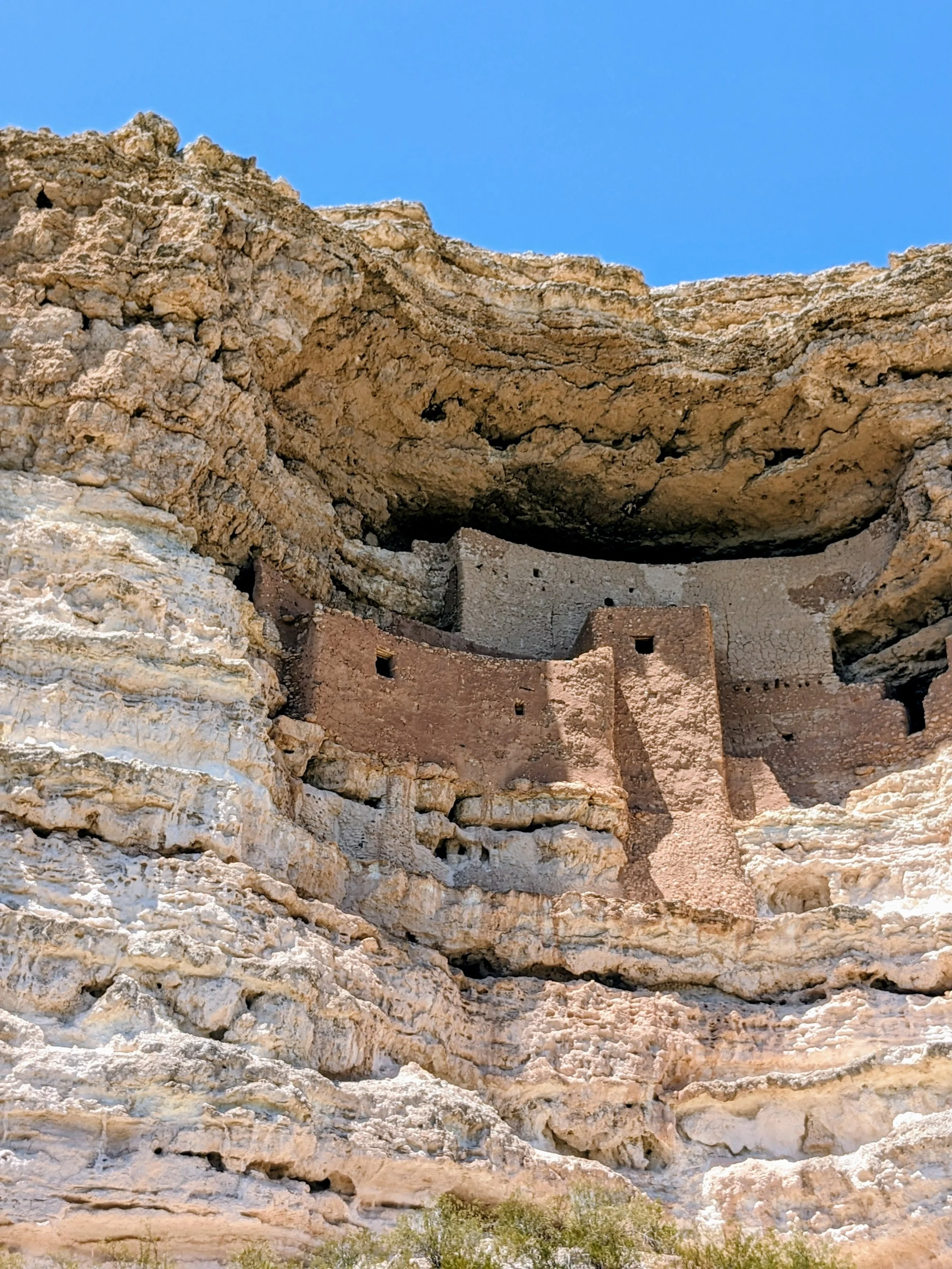
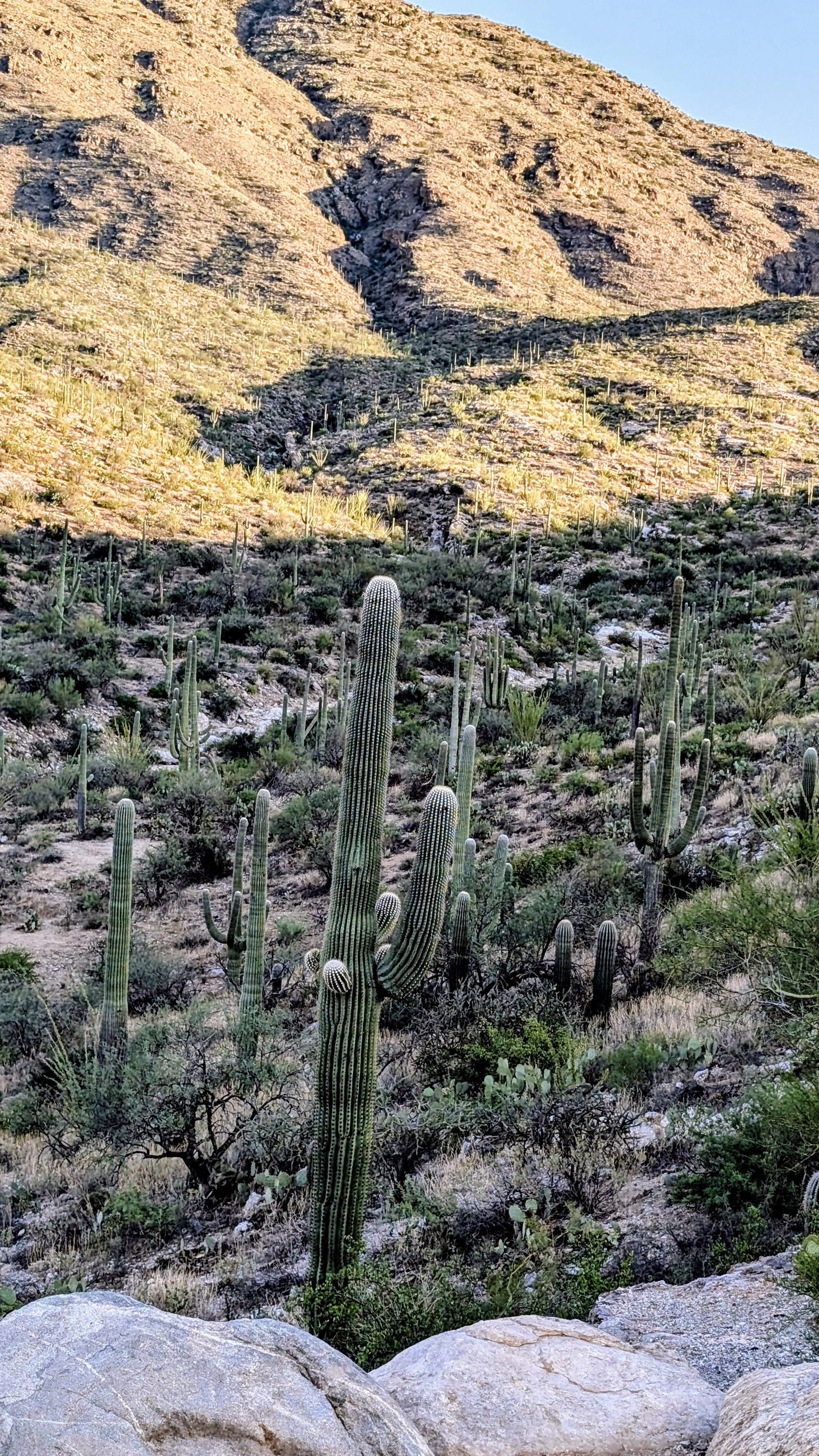
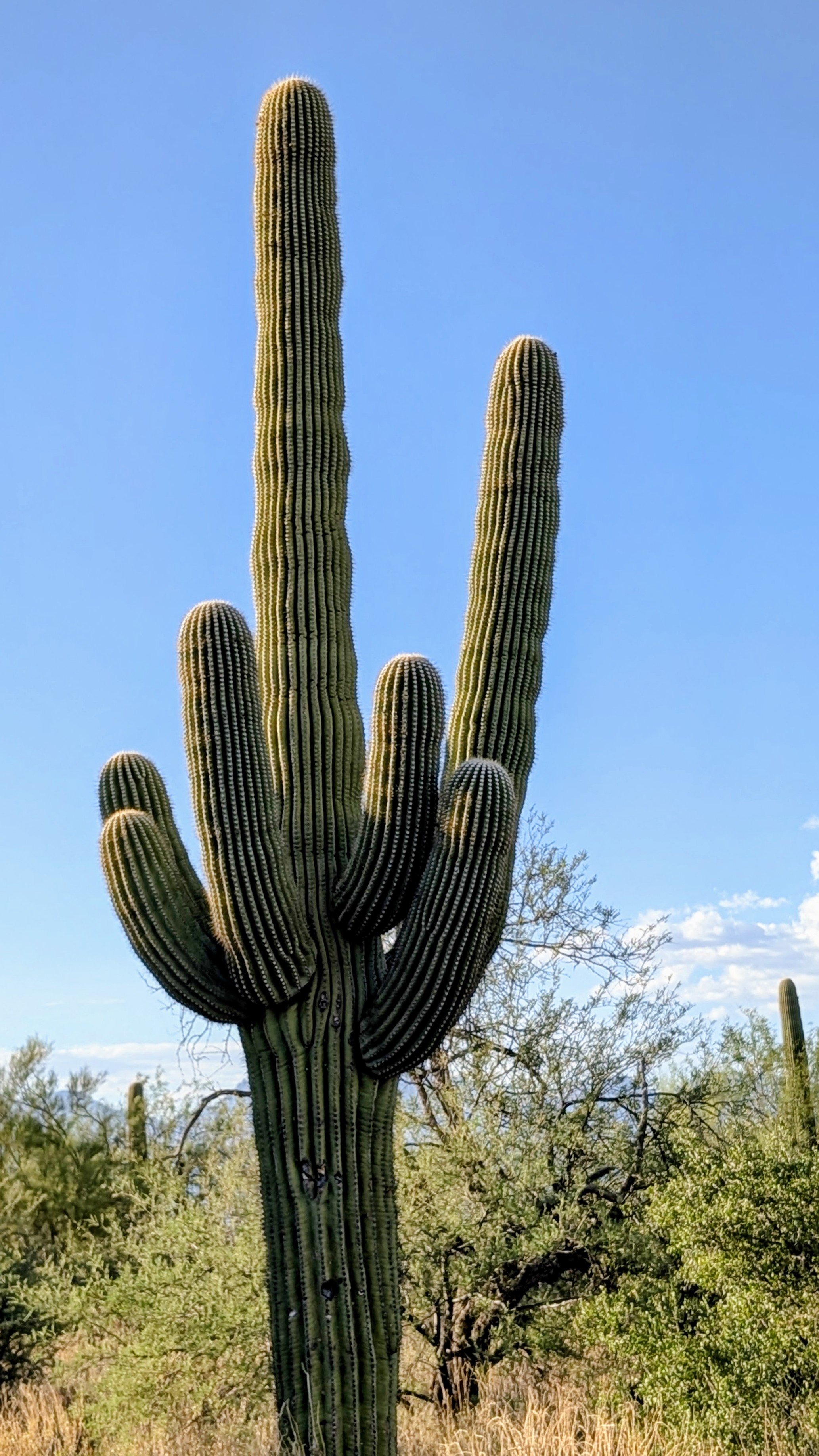
At 2:47 A.M., we cross into Arizona, the Grand Canyon State, the Apache State, the Land of the Saguaro, the Land of the Sun. All of these nicknames for this great state are not misleading; this truly has to be the greatest of all the states for rugged, raw, breath-taking, natural beauty. I get a warmth in my bones whenever my road leads me into Arizona. It is one jaw-dropping scene after another, from the Grand Canyon and Colorado Plateau to the North to the wide desert valleys bookended by tall rocky mountains in the mid and southern lands. These flat lands are actually Alluvial Valleys created when sediment washed down from the surrounding mountains. We have been through Northern Arizona on our last trip when we took the Southern Chief and saw the vastness of the Colorado Plateau and many of the geological marvels this area is home to. As we skirt the very southern end of Arizona and pass through the Sonoran Desert, we are for a while in the land of the Saguaro Cactus, those stately cacti that tower some 50-60 feet above the desert floor. One doesn’t require a very imaginative mind to see Apache, Yaqui, Tohono O’odham (Desert People) and Akimel O’odham (River People) behind every hill, mound and cacti. There are several Cliff Dwelling sites in Arizona, such as Montezuma Castle, which is just south of Flagstaff. It is simply amazing how people actually carved and built their homes on the side of a towering cliff. The mind wanders and tries to imagine how they had the ingenuity to create such villages. I have a problem making a one-room house out of my granddaughter’s Lego.
Dawn catches us arriving in Maricopa Az. the station where those going to Phoenix Az. will leave us. We will now get a full view of the Sonoran Desert, and its stunning scenery, complete with the saguaro cacti I spoke of. I made it a point to ‘‘jump-off’’ at our next stop, Tucson Az. a couple of times and had the pleasure of exploring several of Arizona’s southern sections. First up on my agenda, of course, was every boy’s dream, a trip to Tombstone, AZ. It doesn’t get any better than this if you want to follow the dreams you had while walking home from the Saturday afternoon matinee at the Paramount.
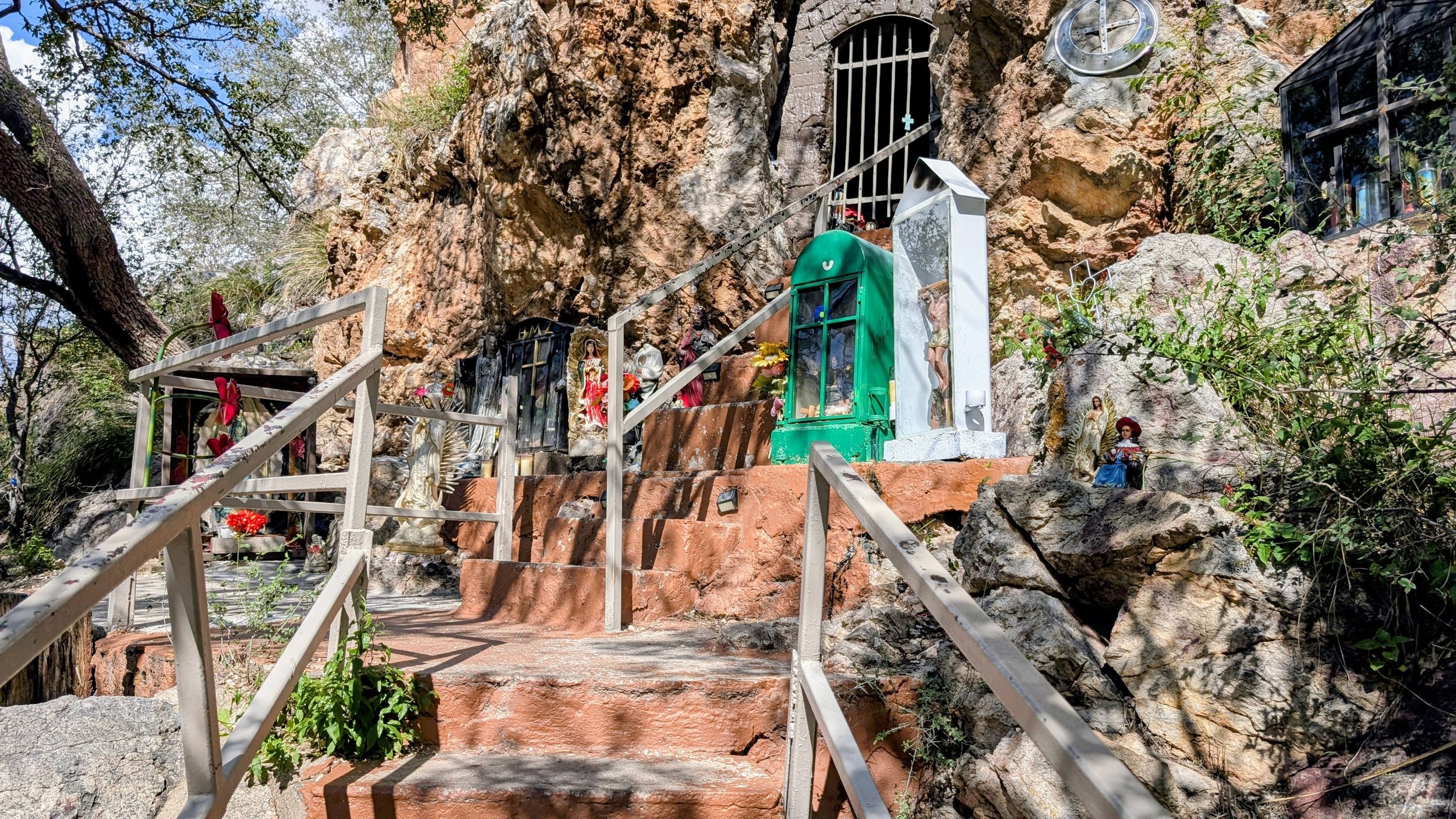
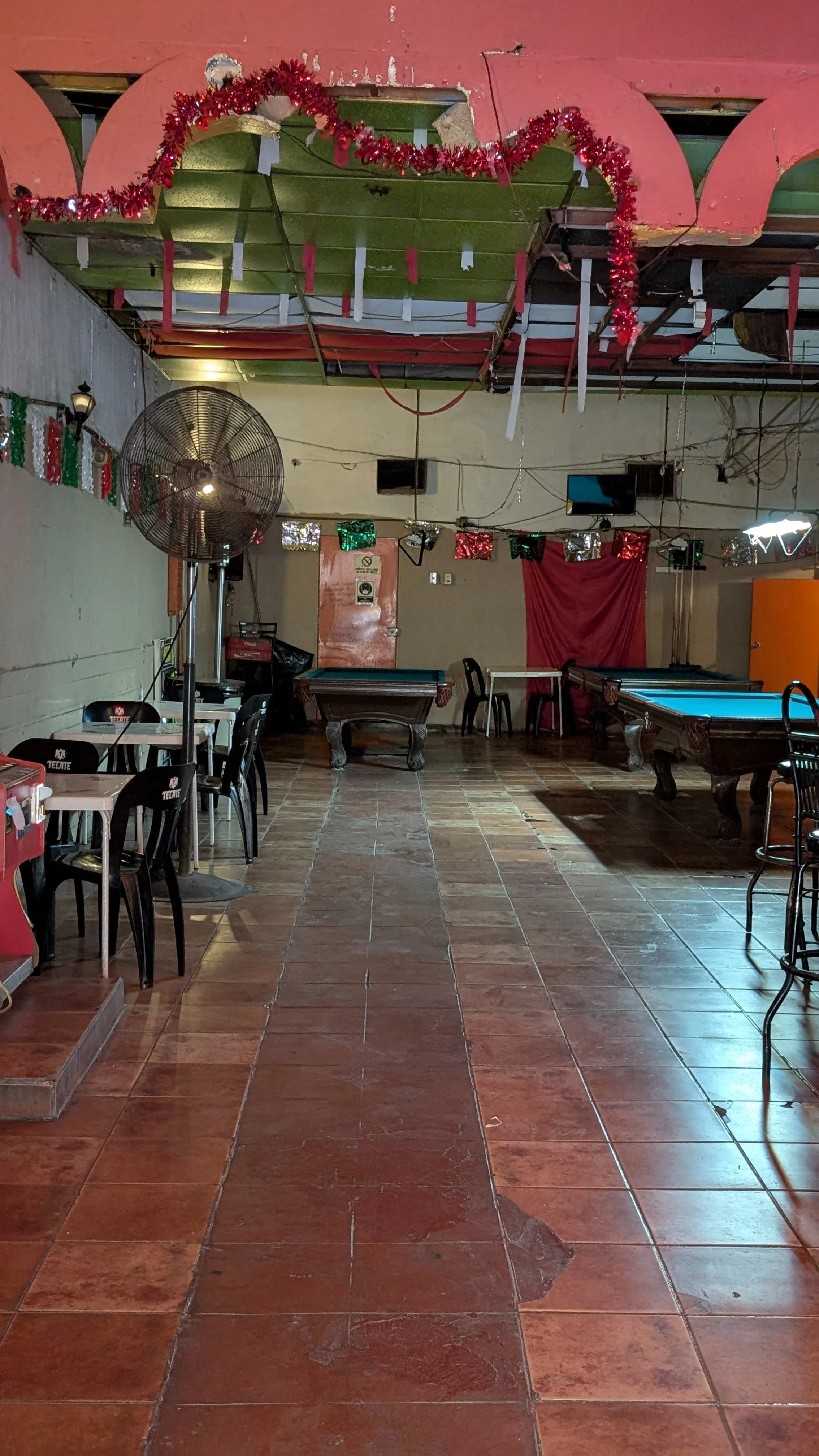
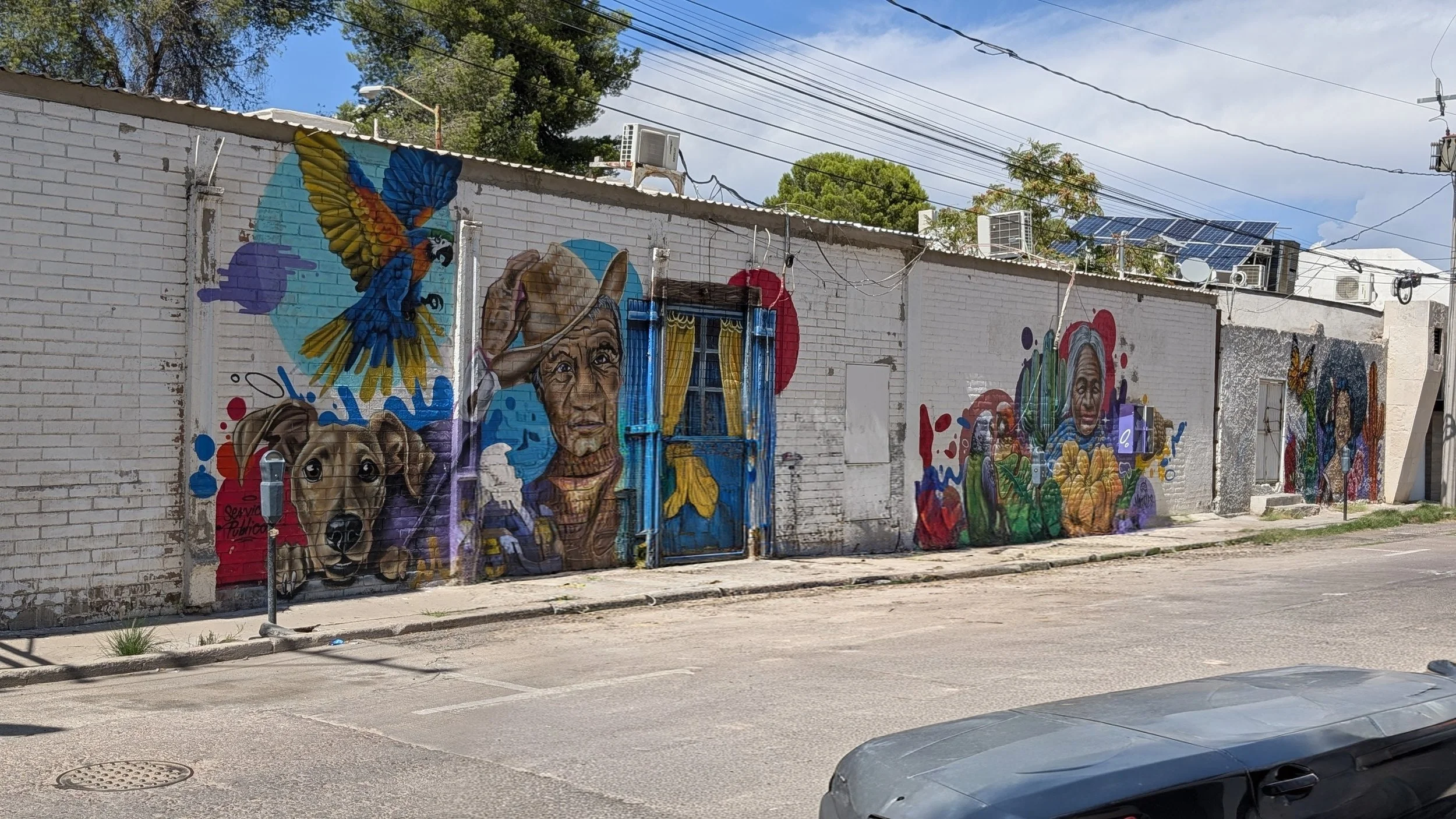
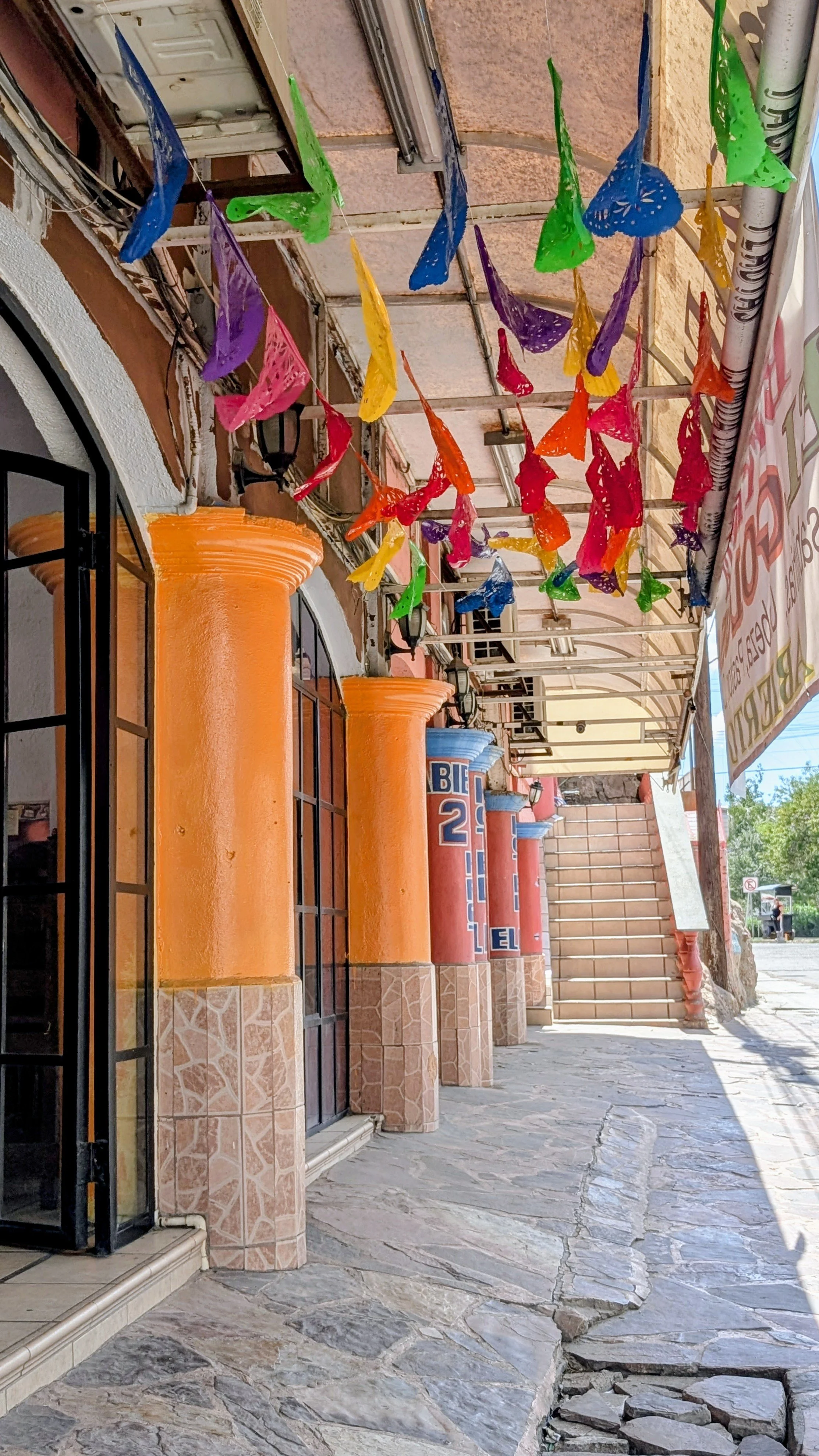
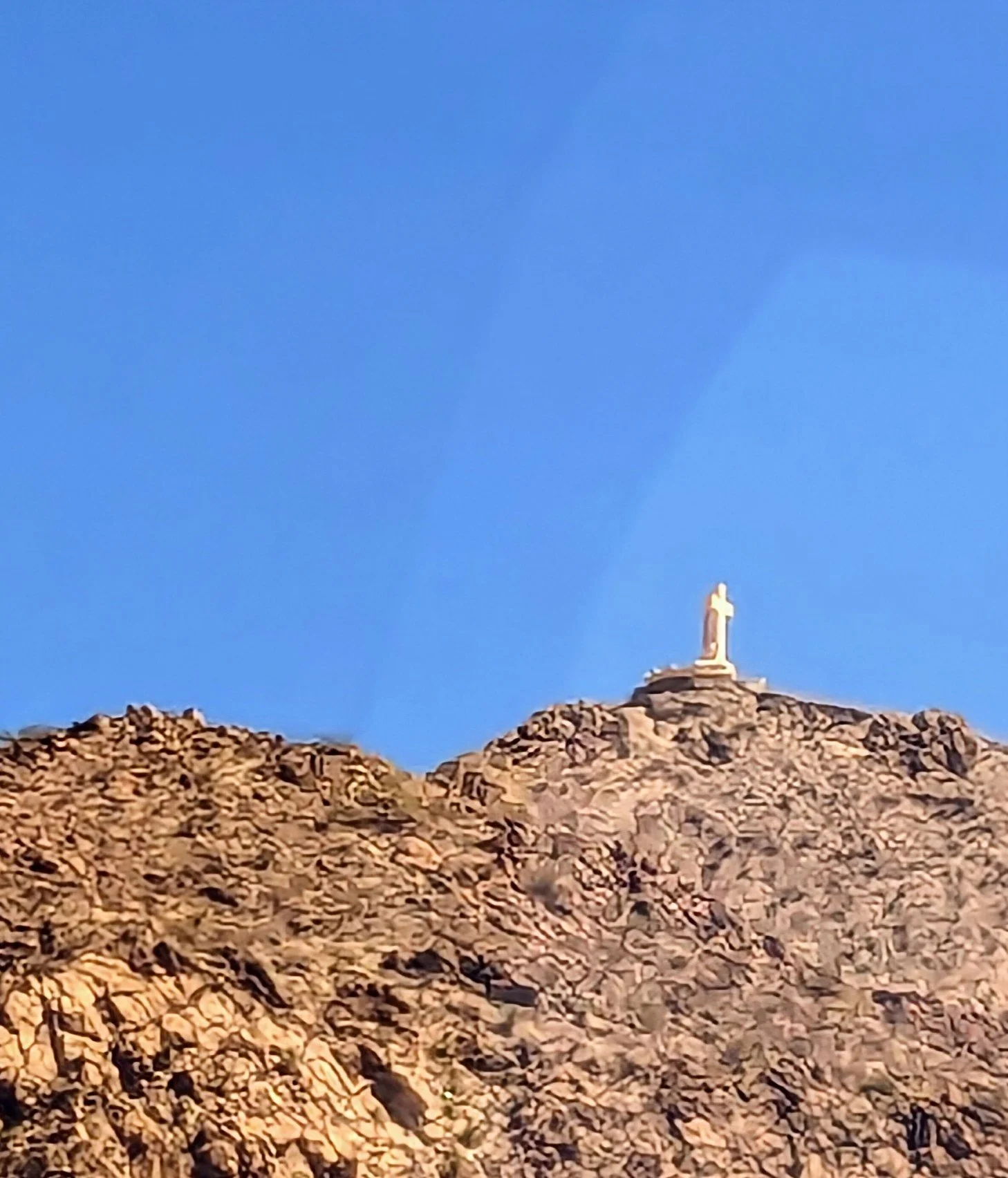
During my layover here in Sept. 2025, I took the road directly south to Nogales, the border town that touches the Mexican border. I parked the car and walked across the border into the Mexican half of Nogales. I figured that being this close to a very foreign country, I just had to explore a little. The difference was like day and night. While the American half of Nogales was as American as a town in Iowa, on the Mexican side, it was a cluster of white-washed, unkempt buildings on tiny alley ways that had no sense of structure to them. I walked a couple of blocks into the town, but I didn’t see any hope of it becoming what I thought a Mexican border town should look like. In fact, I felt a little out of my comfort zone, especially when I poked my head into a tiny ‘‘cantina’’ and couldn’t see the inside; it was so dark and foreboding. So I headed back to the border crossing, took a couple of photos just to prove I was there and made my way back to the safety of the USA. Heading back to Tucson, I made a stop at a roadside shrine to someone's mother. The steps up to the shrine were carved out of the rock, and there were devotional candles all the way up. At the top was a shrine built into the side of the hill. Inside of it was a full-sized statue of The Virgin Mary, more candles, flowers and rosaries. Someone sure loved and missed their Mom.
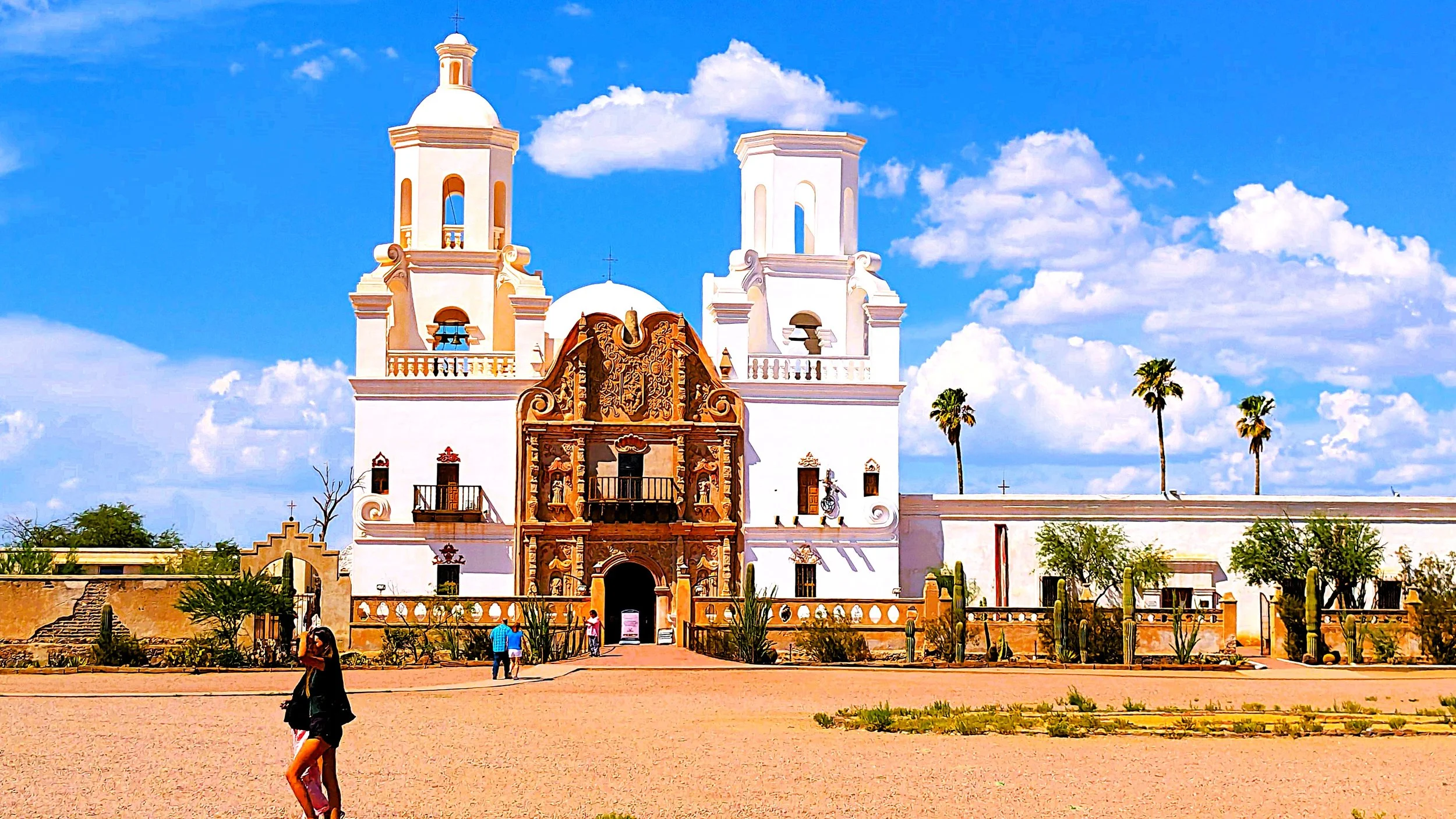
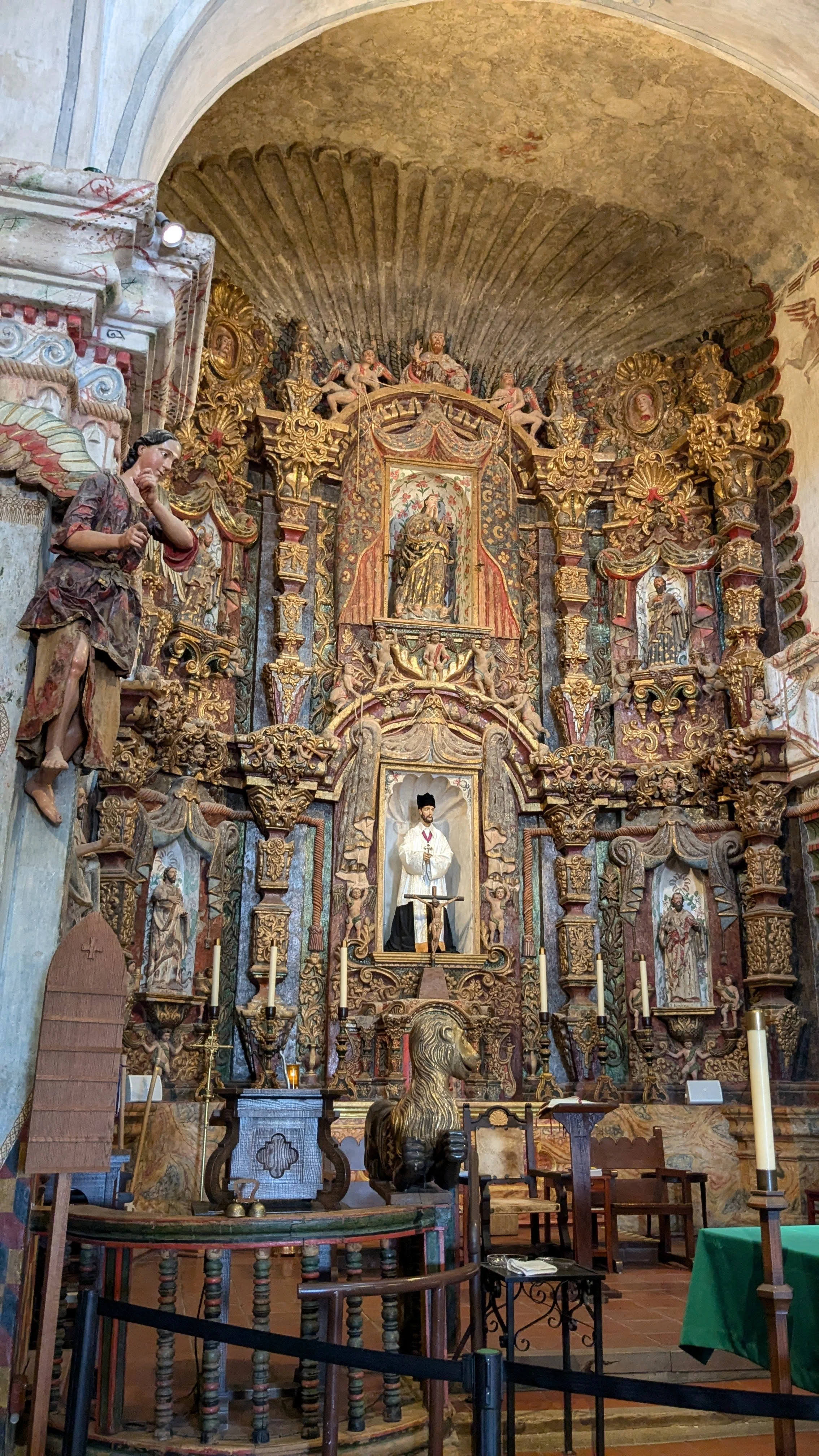
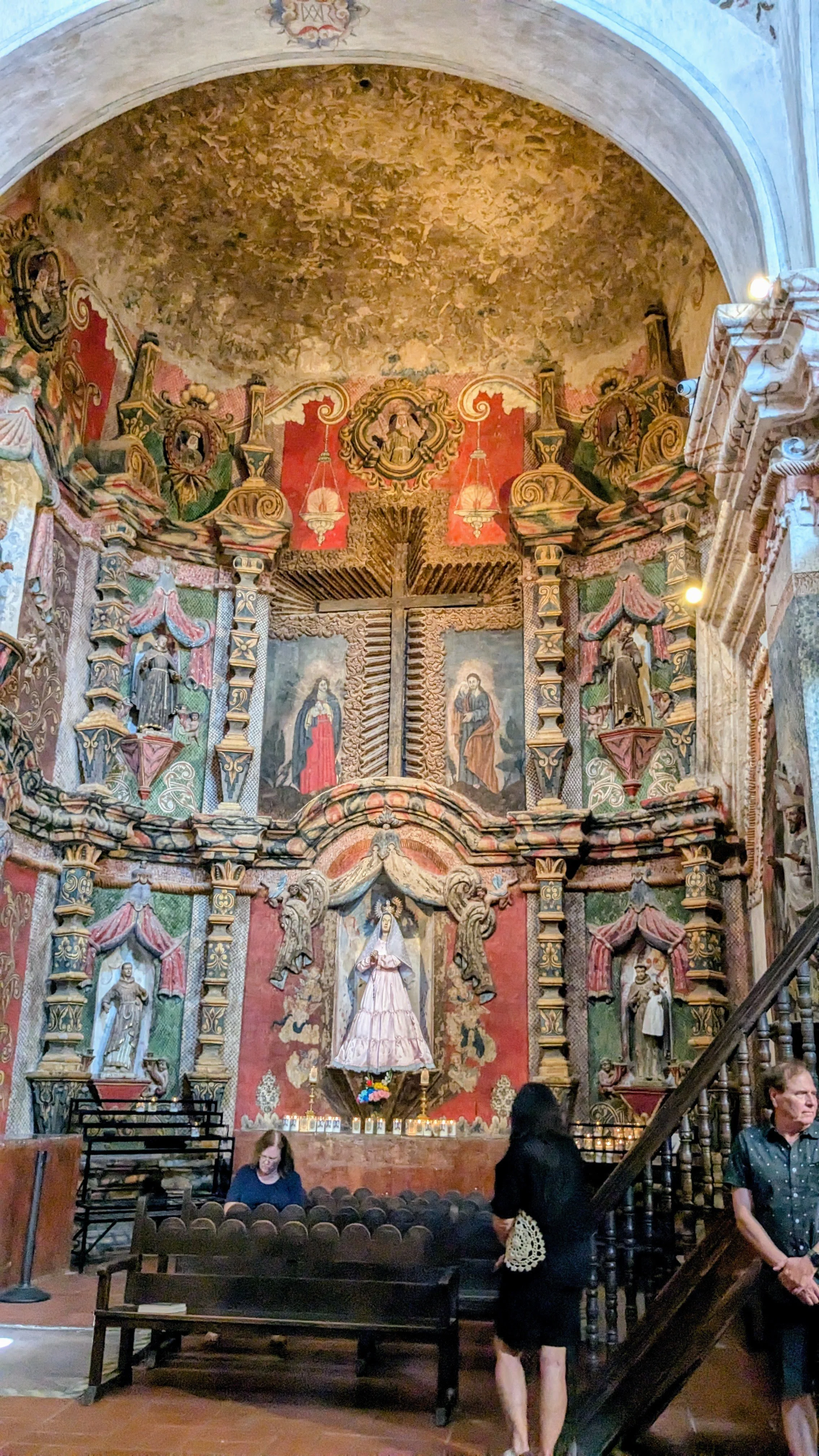
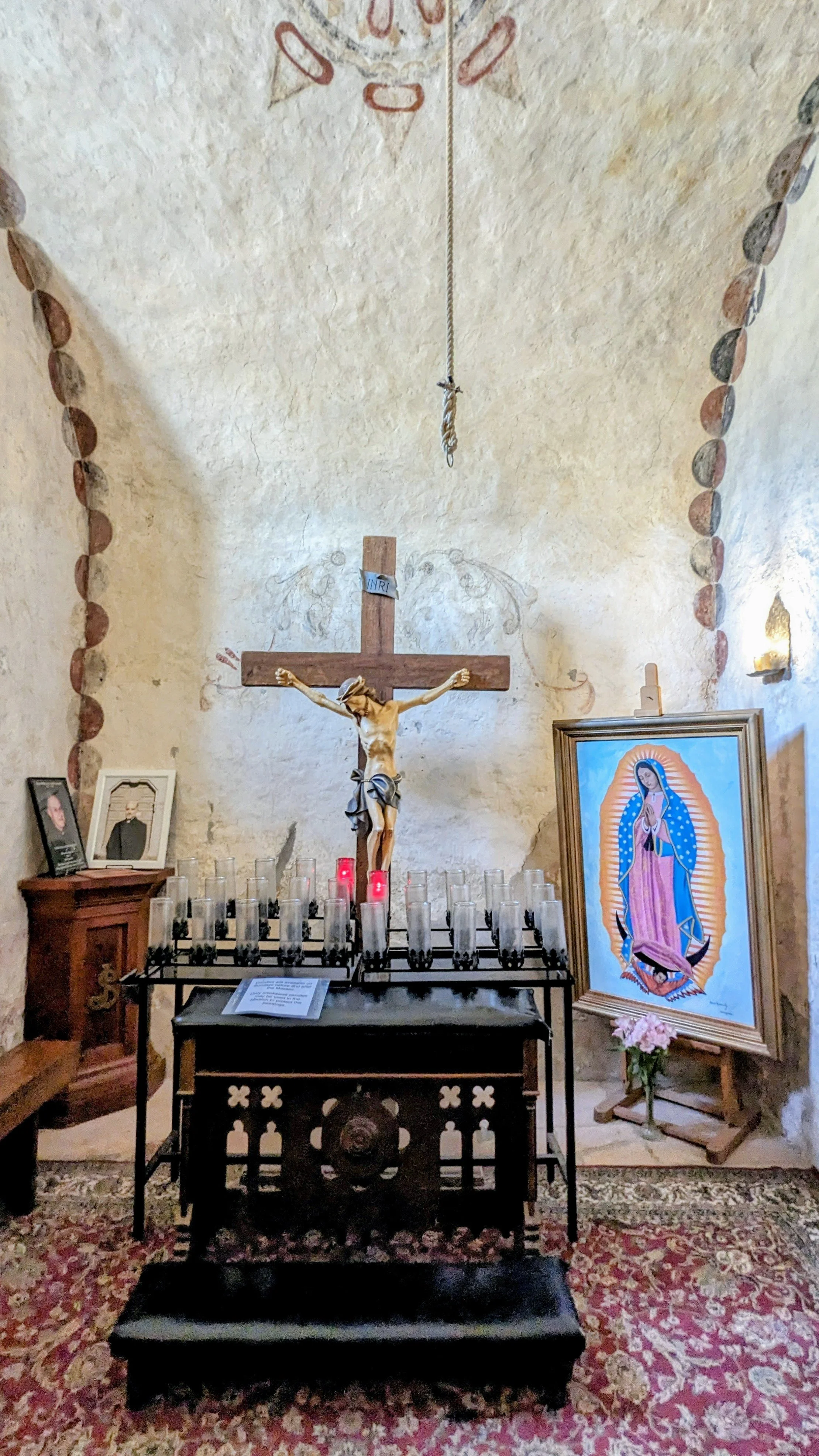
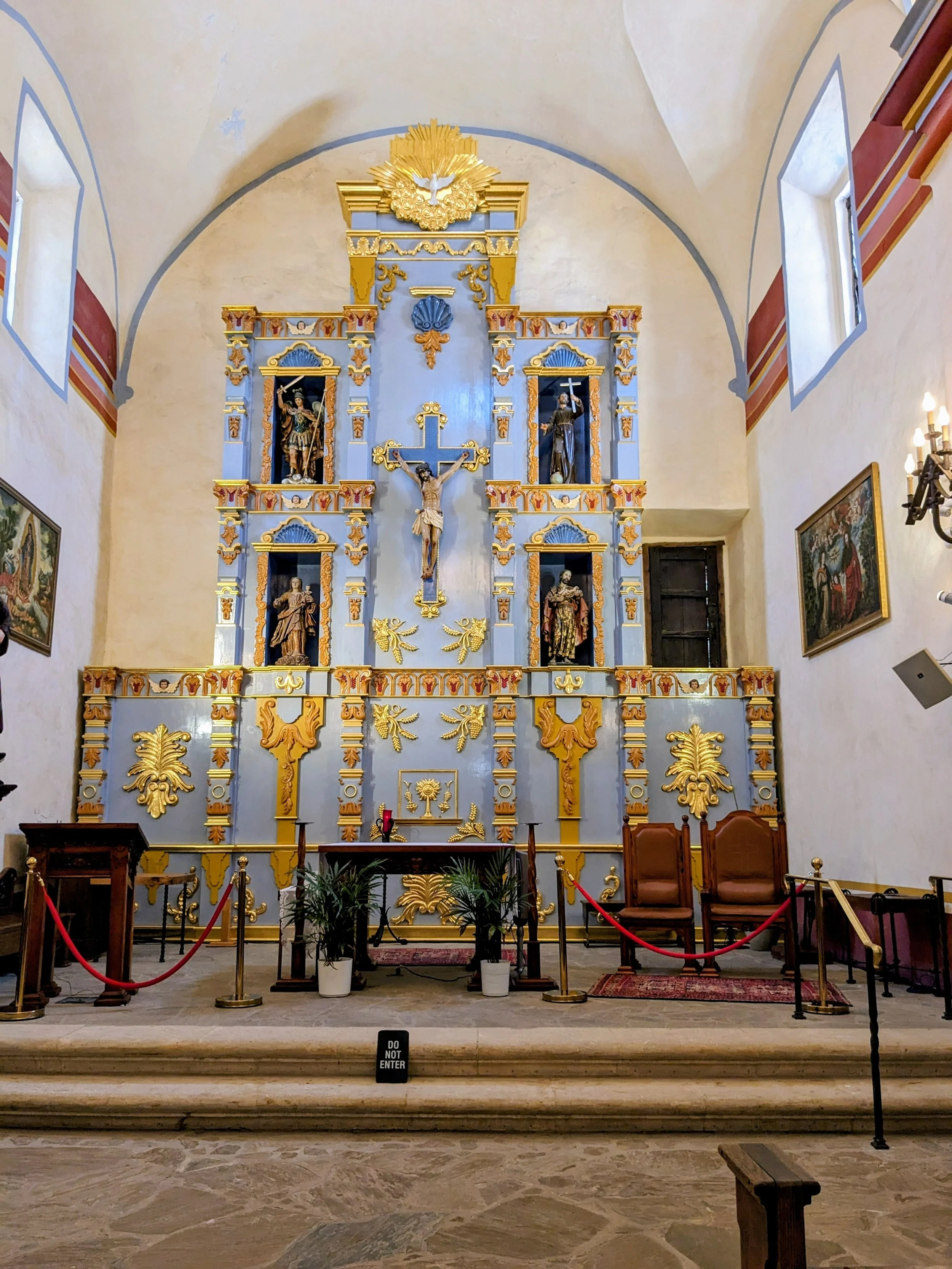
On an earlier trip here, I stopped at San Xavier del Bac Mission, which is a huge Mission on the outskirts of Tucson. The thing that really stands out is the whiteness of the building. In the hot midday sun which shines down from the bluest sky imaginable, the white almost blinds you. You enter through massive carved mesquite-wood doors into a 52-foot-high vaulted ceiling with a floor that is in the classic Latin Cross configuration. The altar must be seen in person to get the full effect of the gorgeous golden carvings on its aspe wall, my photos don’t give it the credit it deserves but I put seceral up just to give you some sense of the magnificence of it. The walls are covered with paintings, carvings, frescoes, and statues. Whenever I have the privilege of visiting a Catholic place of worship, I always love looking at the reliefs of the Stations of the Cross. These hangings awe me with the pictured story of Christ’s crucifixion as they tell it in a poignant, lamentful manner.
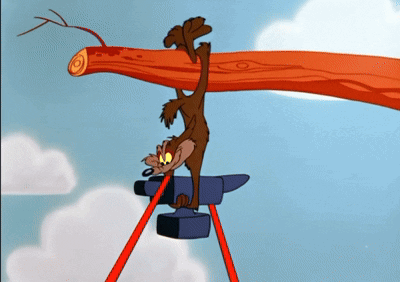
One more stop to make, Saguaro National Park. Tucson has two, an eastern one and a western one, I took the Eastern one, which has an 8-mile-long driving path through it. What a great way to get an up close and personal view of these 5-6 story cacti. The trail has many pull-offs, some of which are in the hollows where a dry riverbed runs. These make wonderful spots to take a short hike and allow one to get a little deeper into the heart of this wilderness area. Upon a close inspection, you can spot many different animal tracks crisscrossing the riverbed, although it’s unlikely you’ll see an animal during the hot daylight hours. They, unlike us humans, are wary of the desert heat and will wait for nighttime to venture out of their cool hiding spots. Twilight is fast approaching, so it’s time to return to the safety of my air-conditioned car and head for my Hotel. Besides, I could swear I saw a coyote on the last boulder I passed, holding an ACME anvil tied to a long rope. Don’t know what that was all about, but I thought it was safer to leave without asking questions.
In the morning, we’re back the Texas Eagle headed for San Antonio, which we’ll reach about 5:00 A.M. tomorrow morning. We reach Lordsburg, AZ, the final destination in ‘‘Stagecoach’’, the 1939 classic western movie starring John Wayne, around noon hour. Just beyond Lordsburg, we’ll once again cross the Continental Divide where streams on the West flow to the Pacific Ocean, and on the East, they flow to the Atlantic Ocean or the Gulf of Mexico. This area is historically important as the backdrop for the Apache Wars. A series of armed conflicts that spread across southern Arizona, New Mexico, and West Texas, culminating in the capture of such Apache heroes as Cochise and Geronimo. Amazingly, the hostilities continued right up to 1924. Another 65 minutes along, we cross into New Mexico and come to the town of Deming, New Mexico. Another note from the history books was the raids on the nearby town of Columbus by Pancho Villa back in 1916. 1916? right in the middle of WW1. It is hard to imagine such things as the raids by Pancho Villa and the Apache Wars happening when my Grandparents were pre-teens!! Even wilder is the fact that 1924 was only 30 years before I was born.
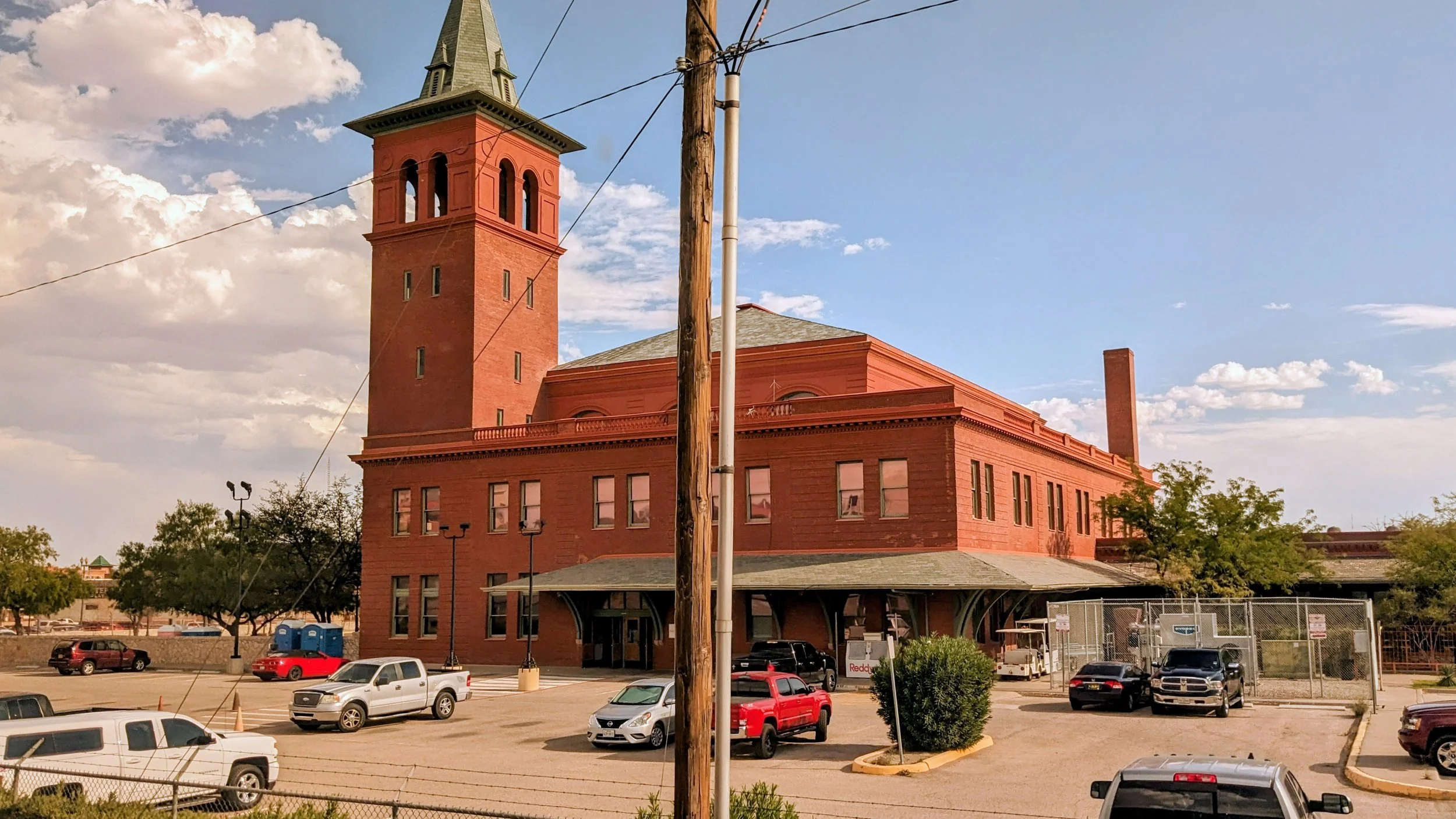
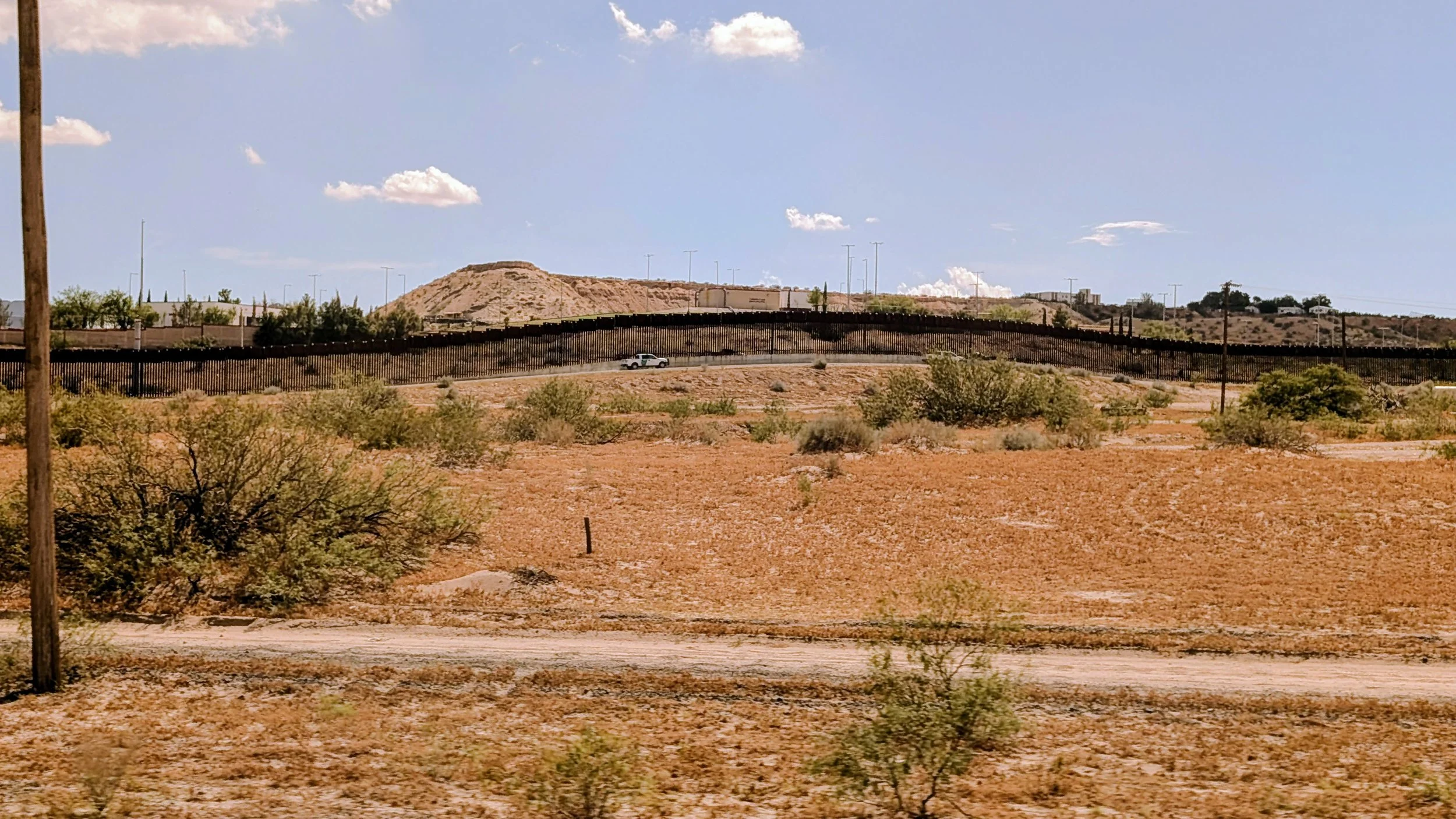
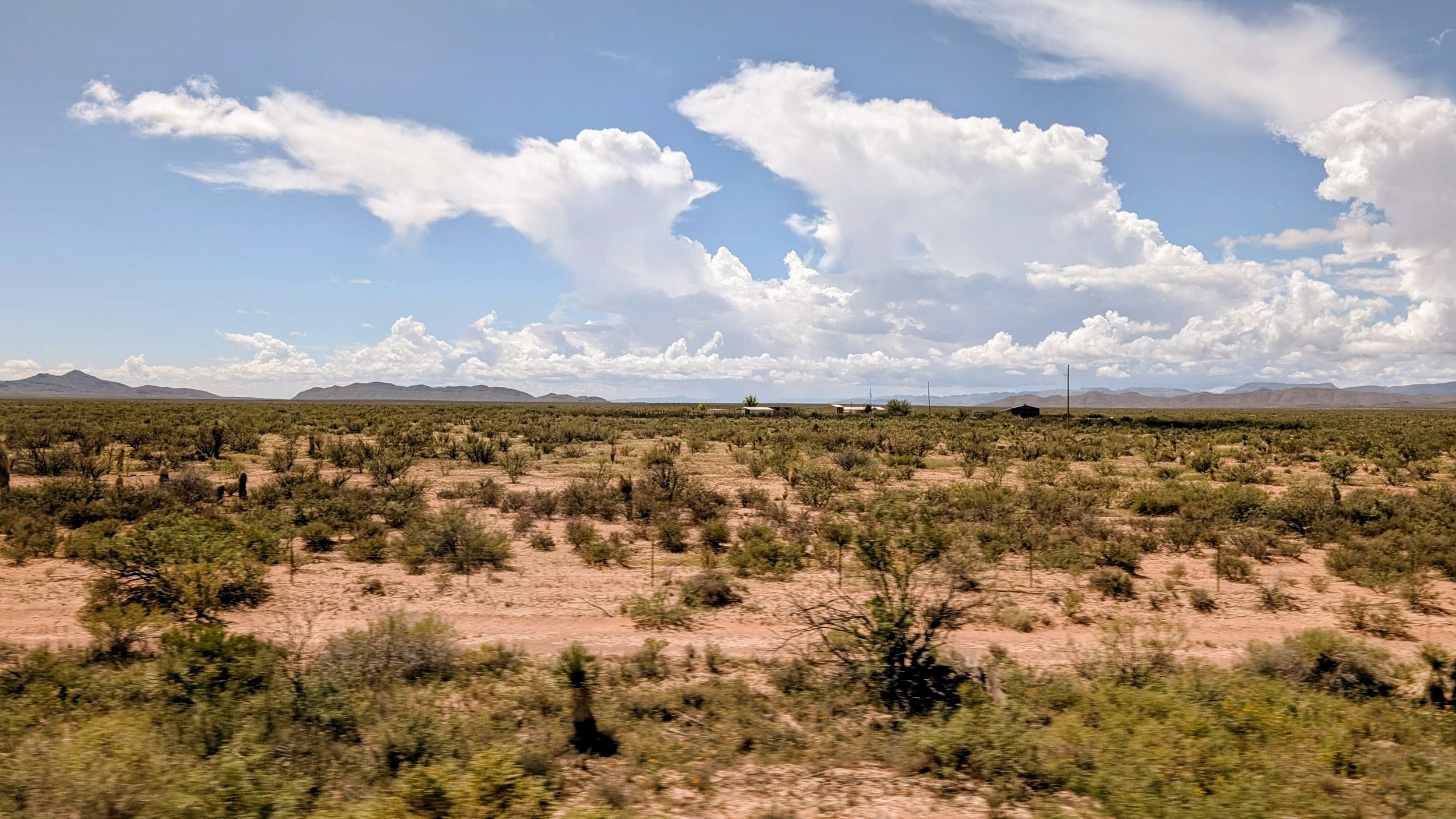
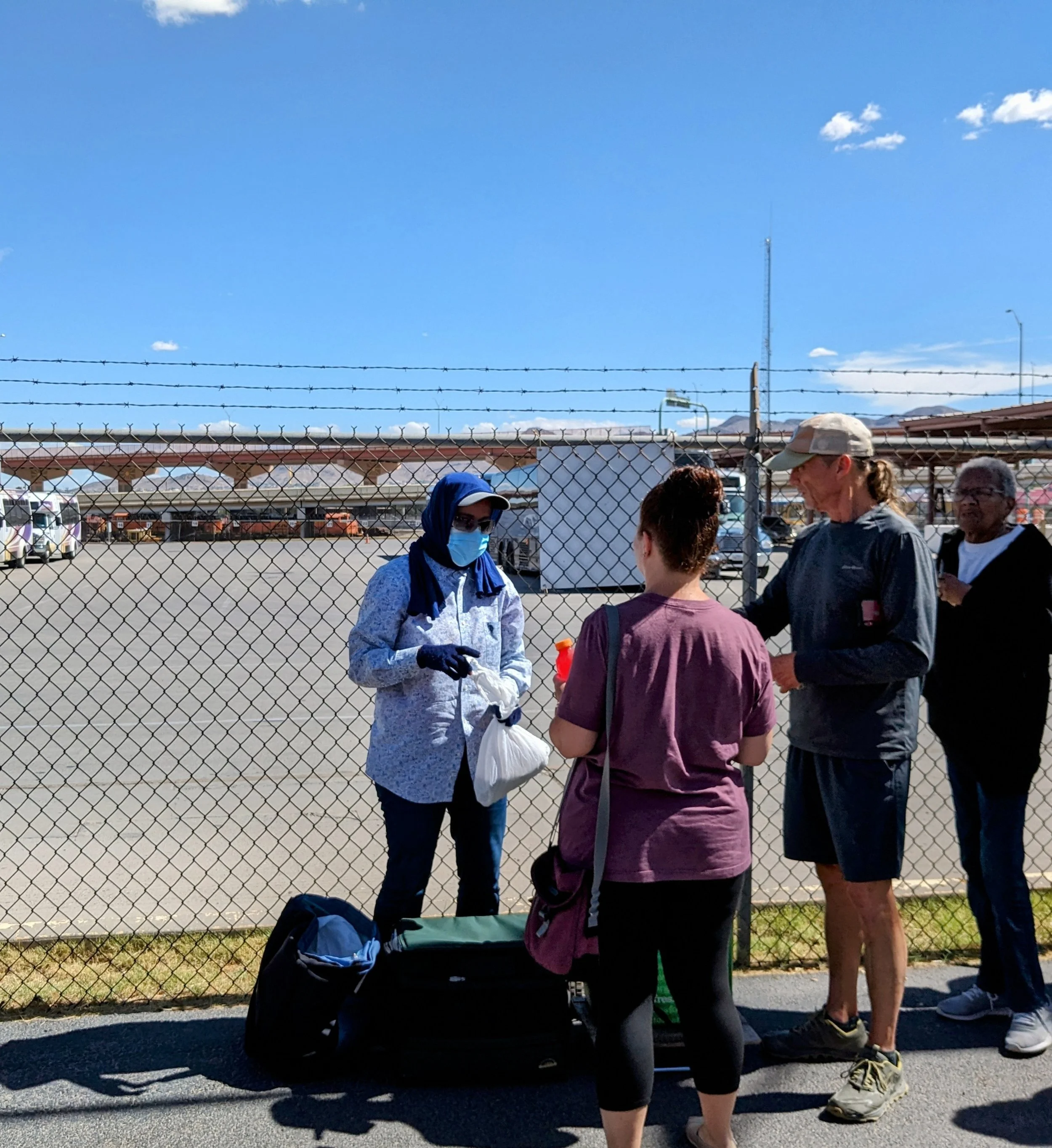
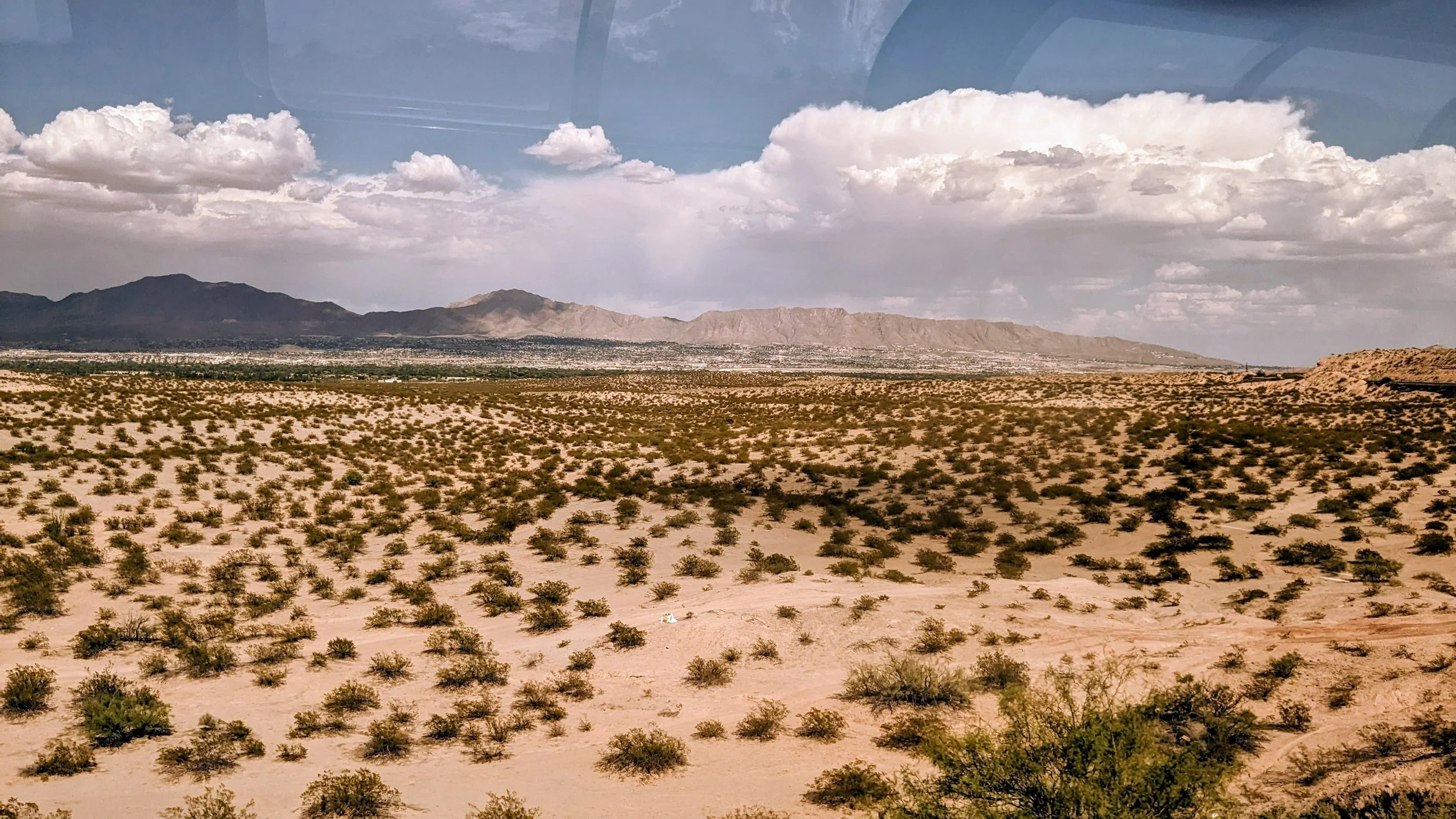
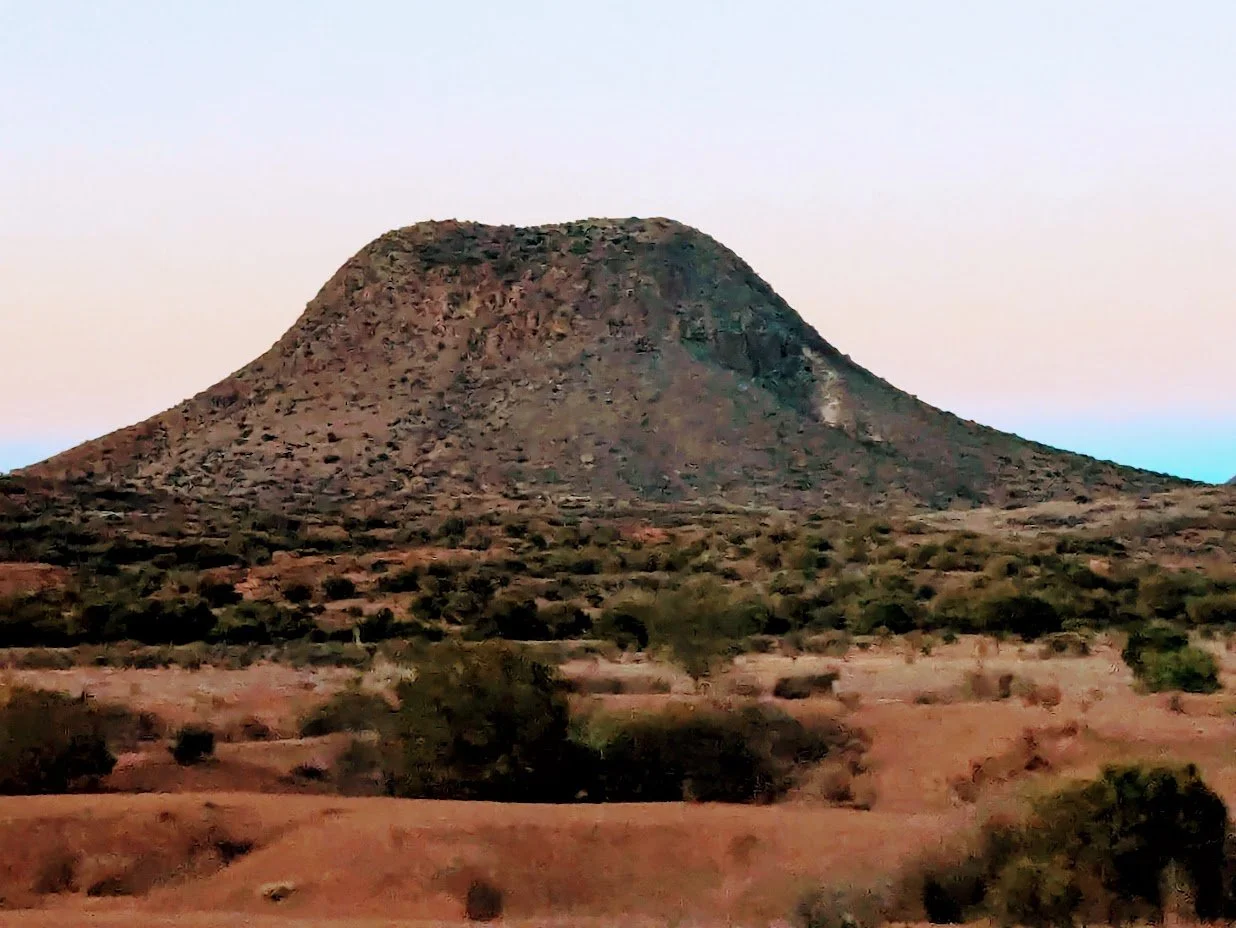
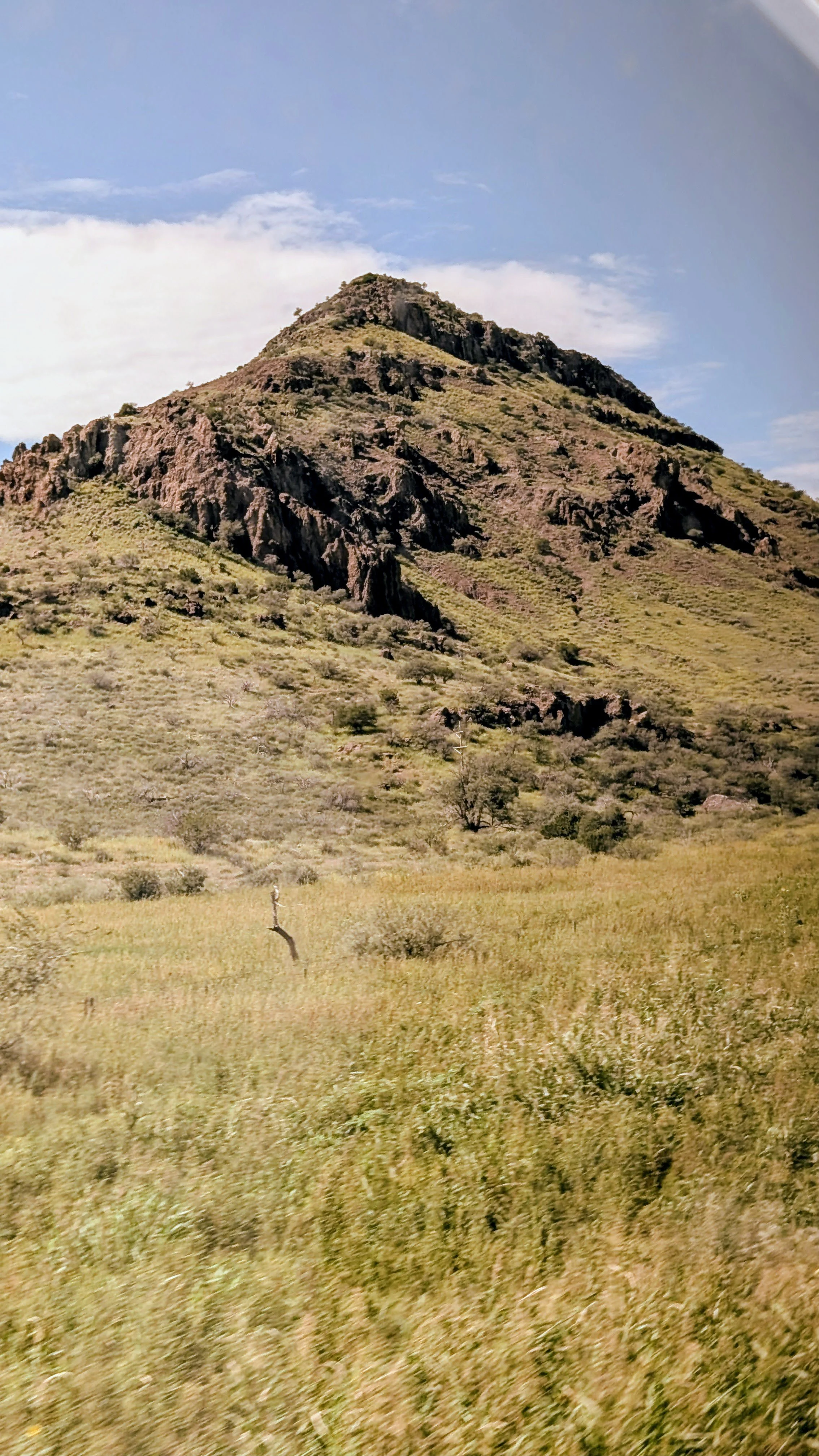
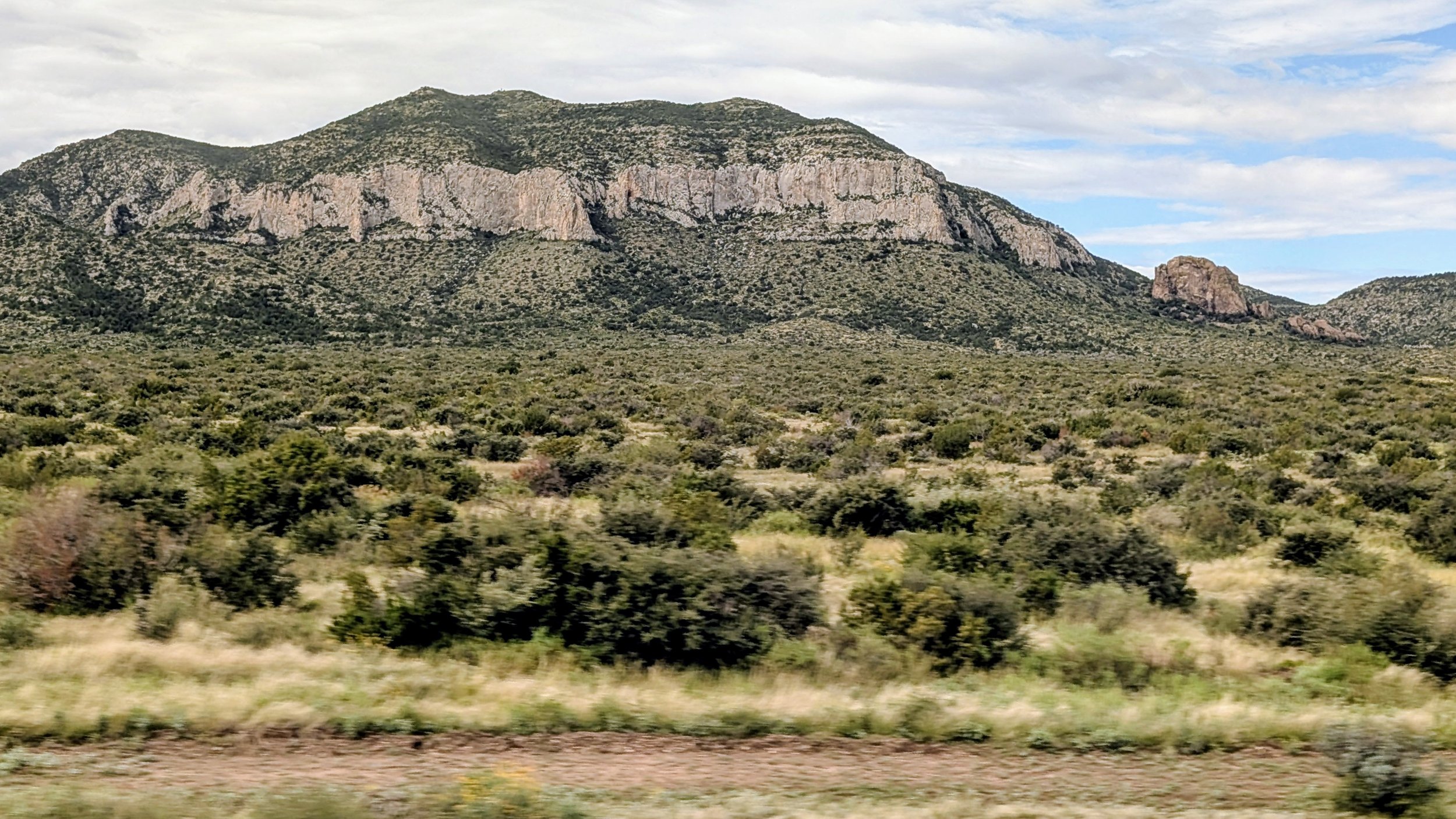
Another 2 hours and we cross the Rio Grande into Texas and arrive at the fabled city of El Paso. Although it’s history goes back some 420 years to the time of the Spanish explorers it became known to me and many others when Marty Robbins sang of it in his classic country song, ‘‘El Paso’’ the story that tells of a man so taken by a beautiful Mexican maiden with eyes that were ‘‘blacker than night’’ that he lost his life for just one kiss from her. What’s not to love about a place where songs like that sprang from? I didn’t see Felina, but no stop in El Paso would be complete without a couple of hot beef and bean burritos from the Burrito Lady, who always arrives to greet the passengers with her homemade burritos, hot and so, so tasty. What a perfect treat for our quick stop in this truly Tex-Mex city. We are running along the Mexican border now, and that much-talked-about, ugly Wall is quite visible. The geographical scenery is similar to what we’ve been observing since we crossed into Arizona. Rugged rocky hills and isolated mountain ranges, which rise sharply from the desert floor, are all around us, as well as flat desert valleys. In southern Arizona and southwestern New Mexico, you’ll pass through the Sonoran Desert, and then as we go through southeastern New Mexico and south Texas, we see the Chihuahuan Desert. The long views across the open land show mountains on the horizon. This is what’s known as the High Desert that we hear about in Western movies and literature.
Now things are changing rapidly, geographically speaking. We move from the High Desert to the High Plains or Llano Estacado, a very flat elevated plateau made up of short prairie grass, which makes good grazing land. This land stretches North through the central US right up to Canada. This is major farming and ranching country.
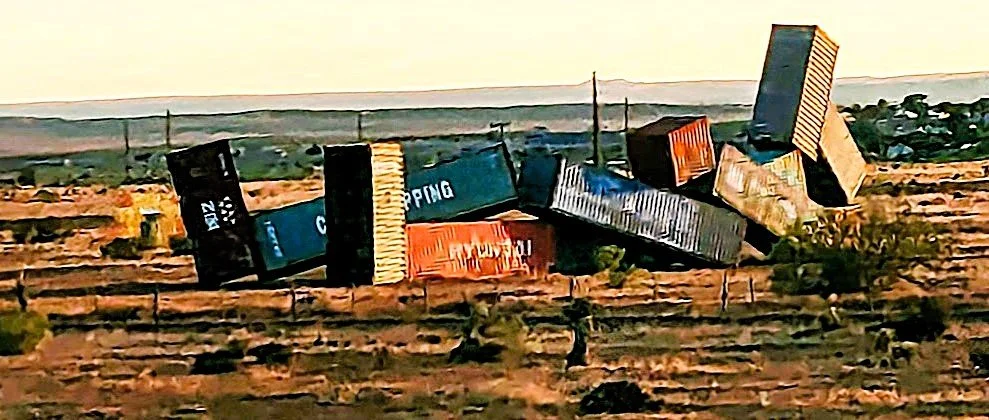
At precisely 1,000 miles from Los Angeles, we pass the small west-Texas town of Marfa. It is famous for the Marfa Lights, which are coloured lights that are off in a southwestern direction toward the Chinati Mountains. They twinkle, move about, blend, disappear and reappear, or so the locals say. I’m sure there’s a scientific explanation for this phenomenon, but I prefer to remain ignorant and just enjoy the folktales. Marfa is also famous for its series of giant murals of scenes from the movie, Giant’’ which was shot here in 1956. The murals depict actors James Dean and Elizabeth Taylor, as well as a vehicle and a full-sized replica of the town’s Hotel. Music by Mike Nesmith plays in the background, lending a cowboy feel to the attraction. What I found incredibly quirky were the shipping containers placed together at odd angles. They sit practically in the middle of nowhere, some distance from the town, in the middle of a field. Perhaps as a draw to the town’s thriving art community.
Just beyond the town of Alpine, Texas, we travel through the area known as the Comanche War Trail. This is where the nomadic Comanche Nation would travel seasonally. Next up is Sanderson, TX, and just a little east of here is where the infamous Judge Roy Bean held court sessions in his saloon, the Langtry. Just beyond Langtry, we cross the Pecos River over a 275 ft. trestle bridge over a steep river canyon. Note of interest: we are continuing along the Rio Grande and the Mexican border, but we will leave it an hour and a half from now, when we reach Del Rio, Texas. We then head due east across Texas on our final push to San Antonio. The landscape changes rapidly to dry, rugged, hilly country made up of semi-arid scrubland as we travel through what’s known as Texas Hill Country. We’re travelling through the night, so we miss getting a good view of this section of Texas.
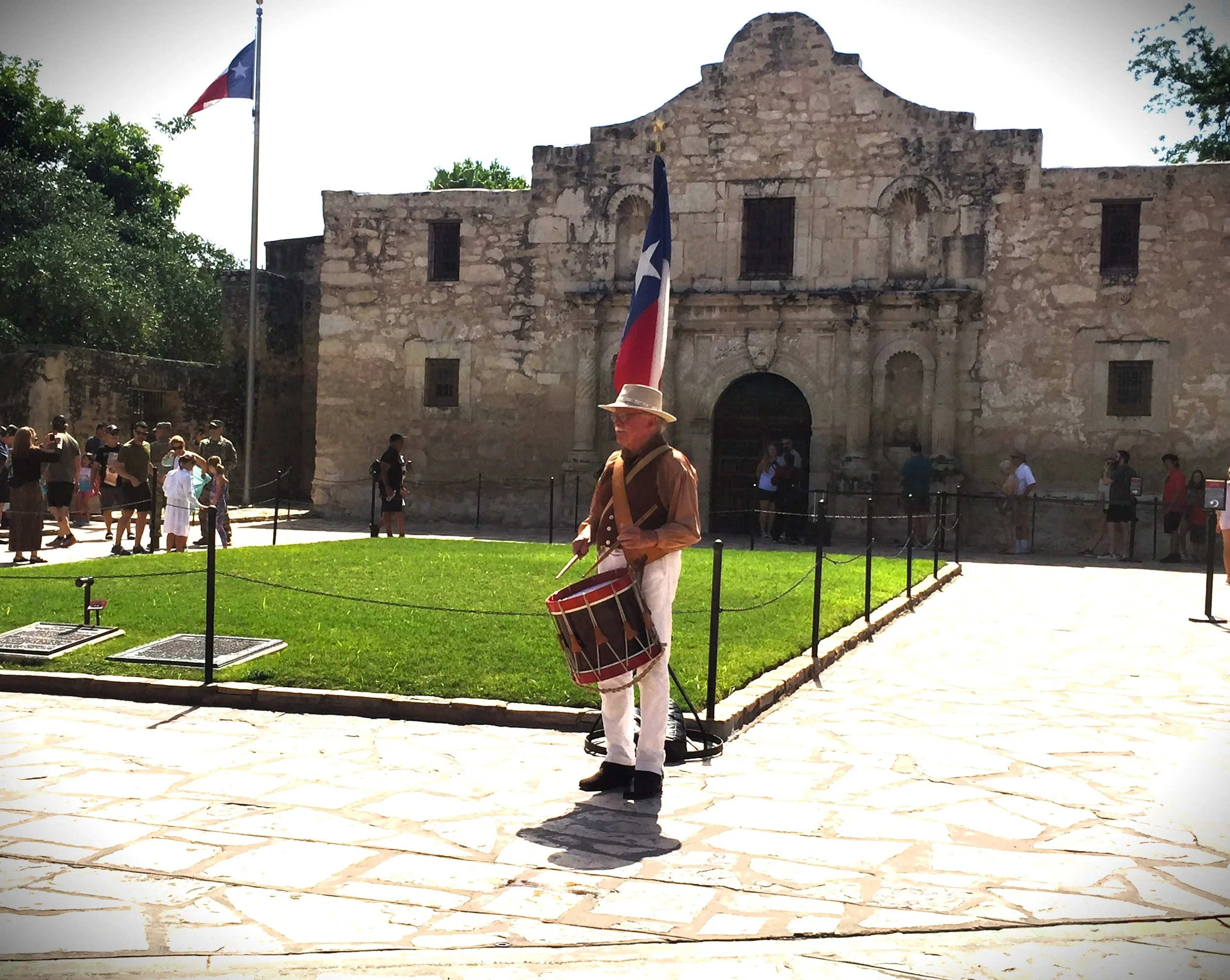
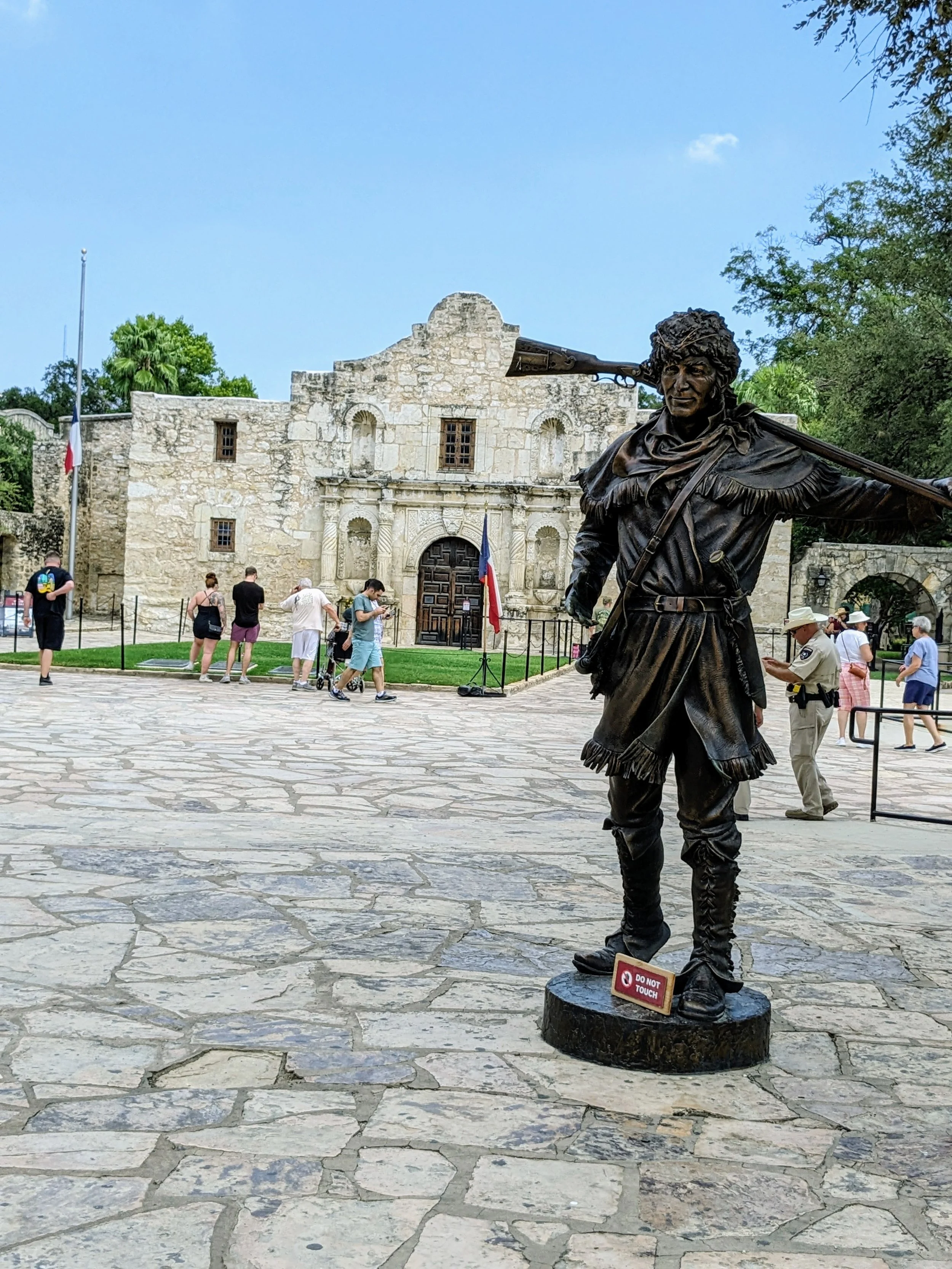
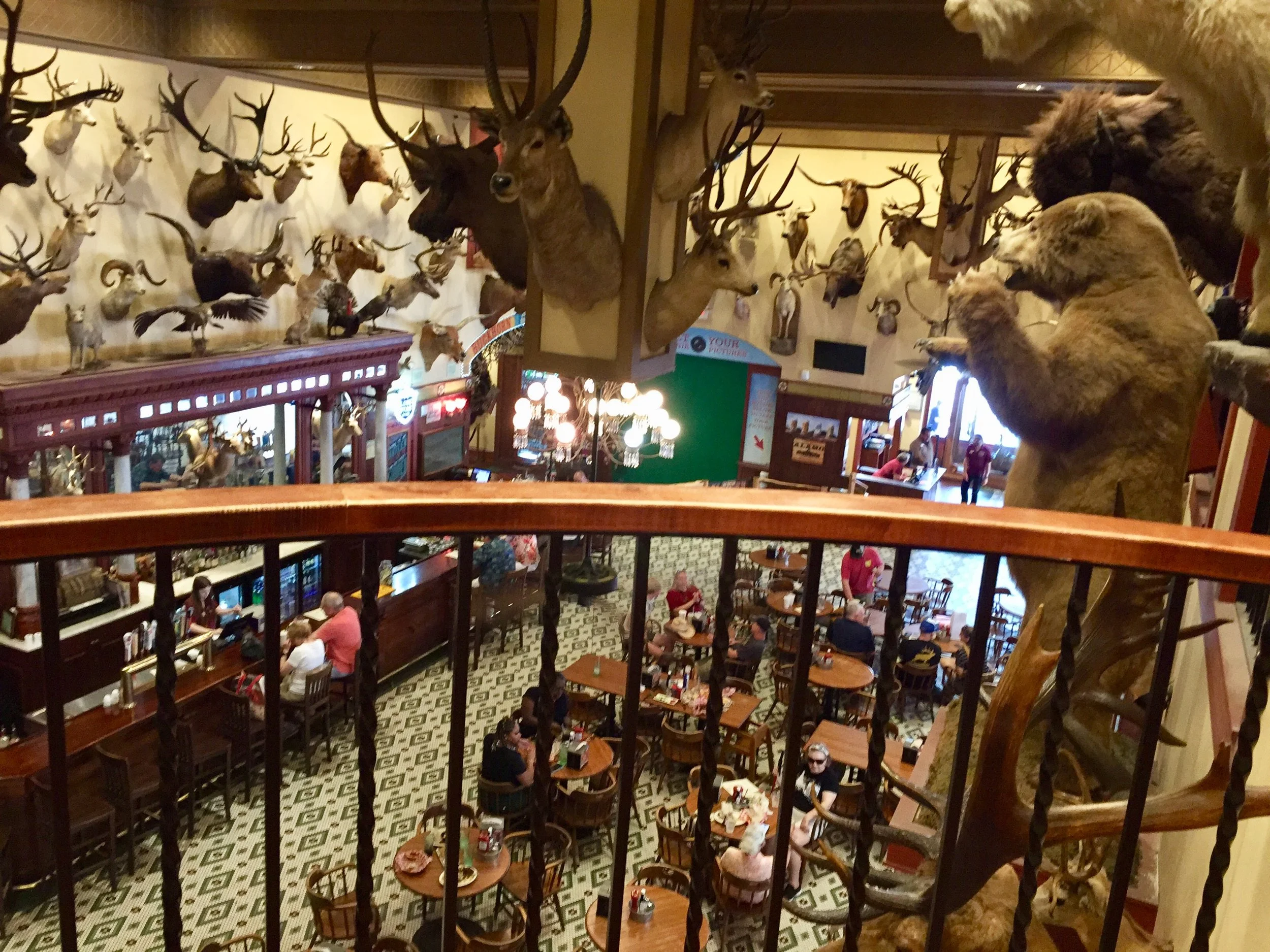
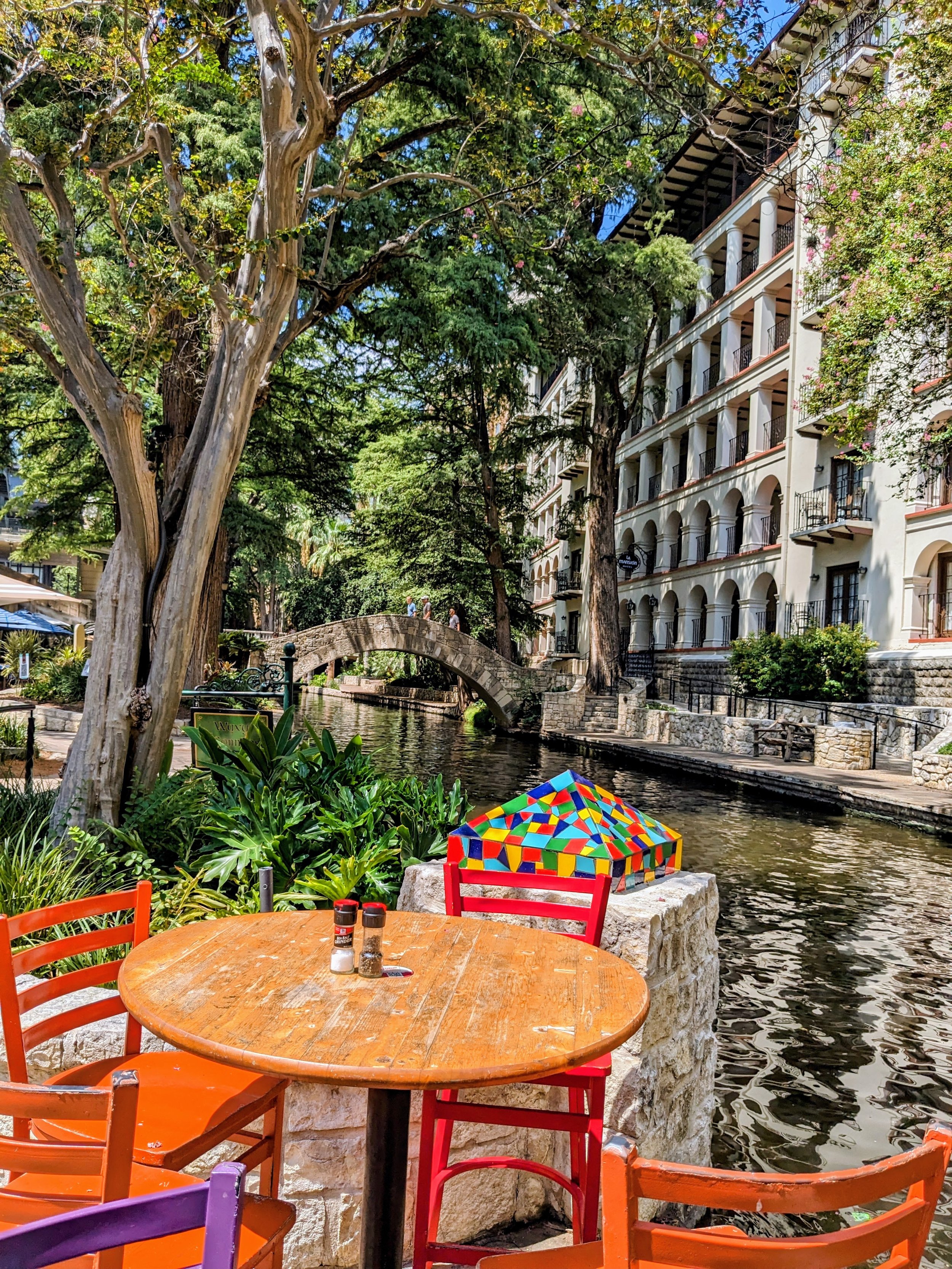
Ahh, finally, San Antonio, my favourite Texas city, because it is full of historical settings with its many missions, dating back to the early 1700s and its deeply Mexican influence. We arrive at the ungodly hour of 5 A.M., so I hope you’ve arranged for an early check-in at your hotel and can grab a few hours’ sleep before heading off to explore this storied city. First stop, the Alamo, which has been lovingly restored to recreate what it must have originally looked like back in the mid 1700s when its construction was completed. Fast forward to 1836, when the famous battle took place as Texan and Mexican forces stood off against one another. With the Texas flag flying proudly and a single drummer playing the Three Camps on his drum as he parades back and forth in front of the mission, it’s hard not to tear up when thinking of the tragic event that took place here. How I wish my Dad could have been with me as I stood there recalling the brave men who lost their lives that day. I remember, like it was yesterday, watching him shed a tear as John Wayne fell, the last to finally succumbed to Santa Anna’s army. This is quite the park with its many artefacts spread throughout the grounds, as well as several bronze statues of the men who fought the good fight and gave their lives that day. It’s easy to spend several hours here, but we need to move on as there is so much more that we want to see in this historic Southern Texas town. First, a stop for lunch at the famous Buckhorn Saloon. Its walls are covered with the stuffed heads of every animal imaginable. Not just the local sort but the collection springs from all over the globe. Upstairs is an exotic animal museum with a P.T. Barnum section that is a bit on the Side-show scale. The museum downstairs is more to my taste, the Texas Ranger Museum, which is a memorial to Pioneers, old trail drives and Texas Rangers and is chock full of old west memorabilia such as the actual firearms the Rangers used, their sidearms, shotguns, outfits and badges. There is even the actual car that Bonnie and Clyde were driving when they met their untimely demise. This is the third such car I’ve seen on my travels that is supposedly their car, strange, eh, haha.
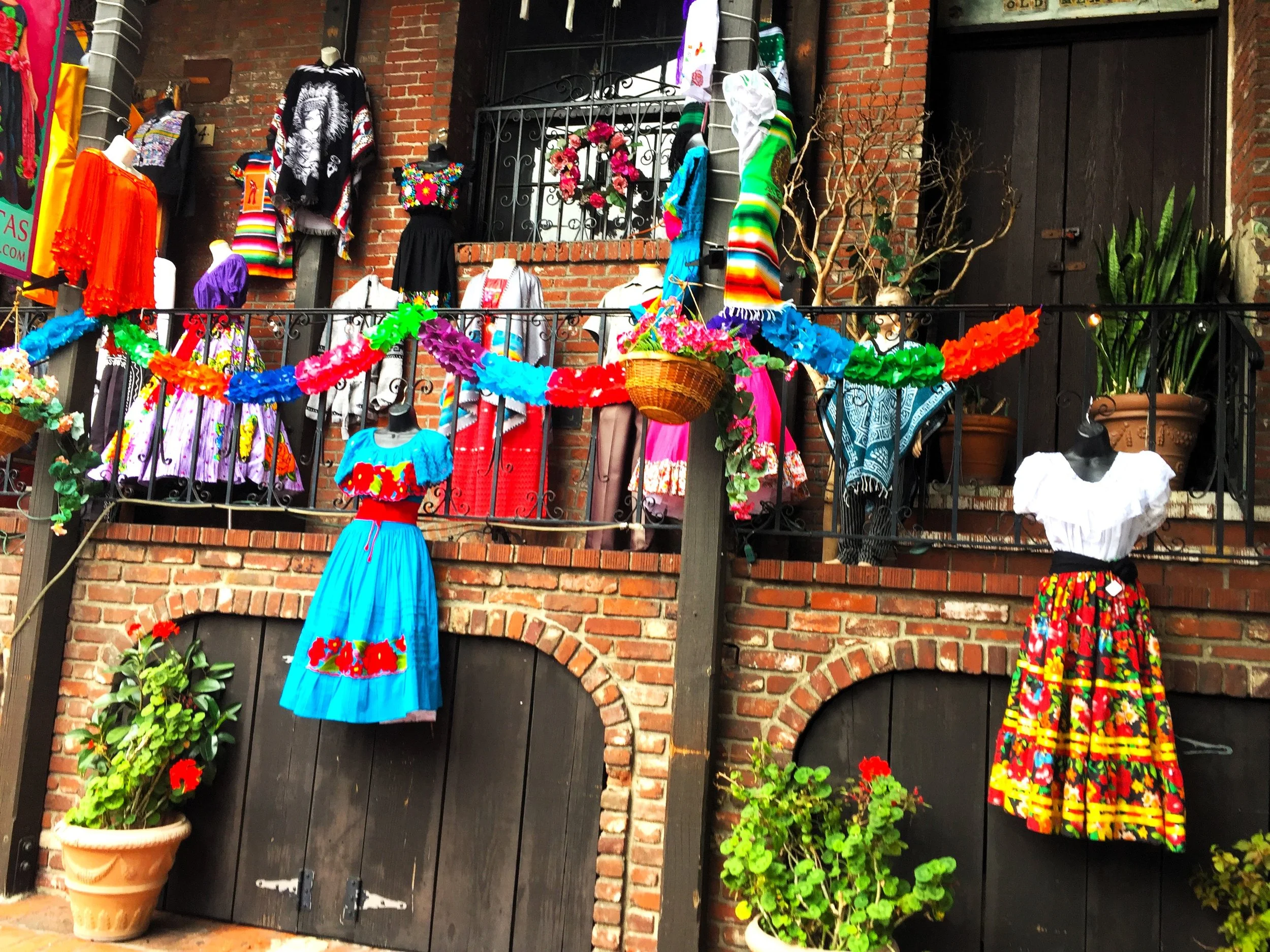
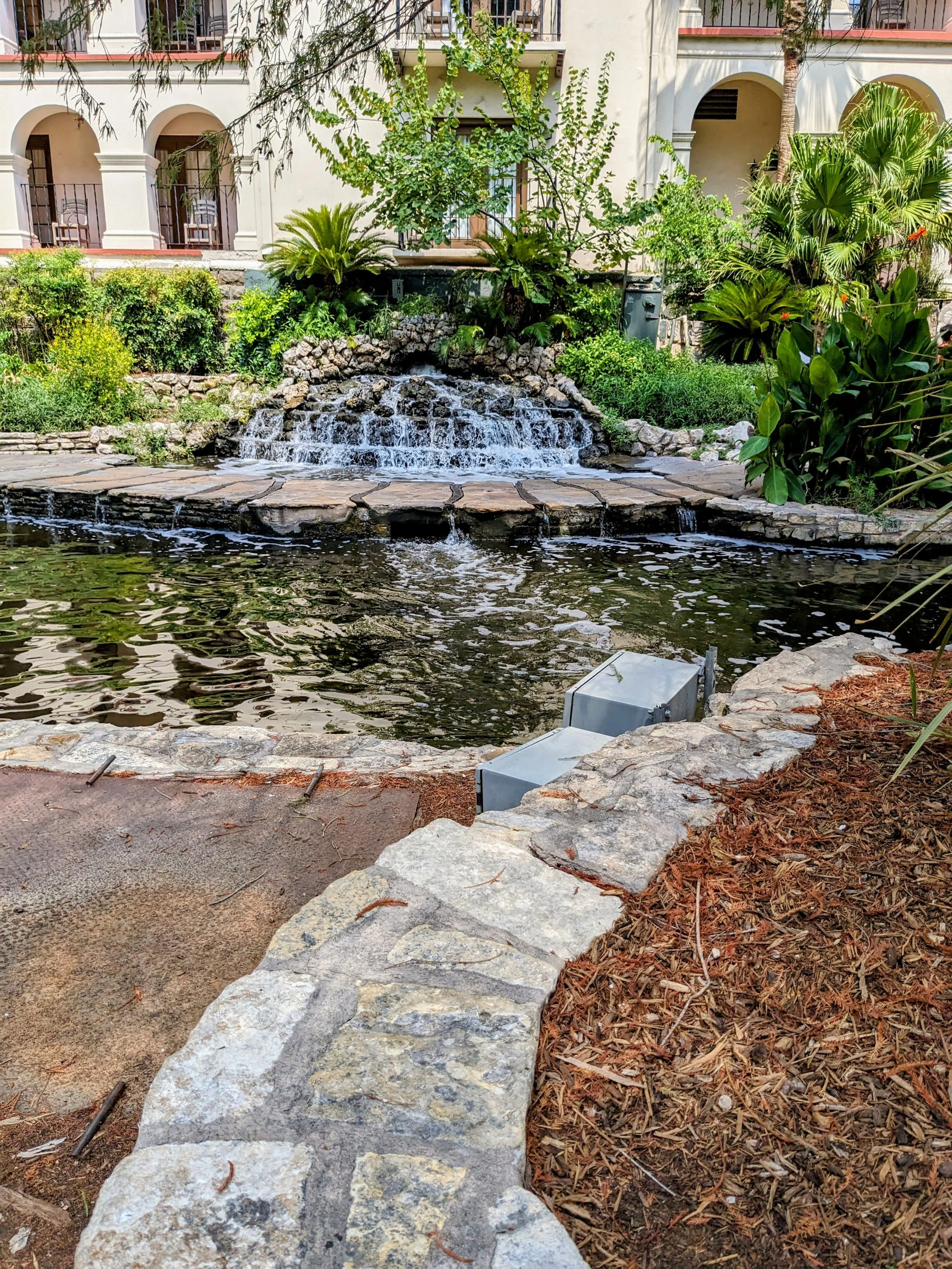
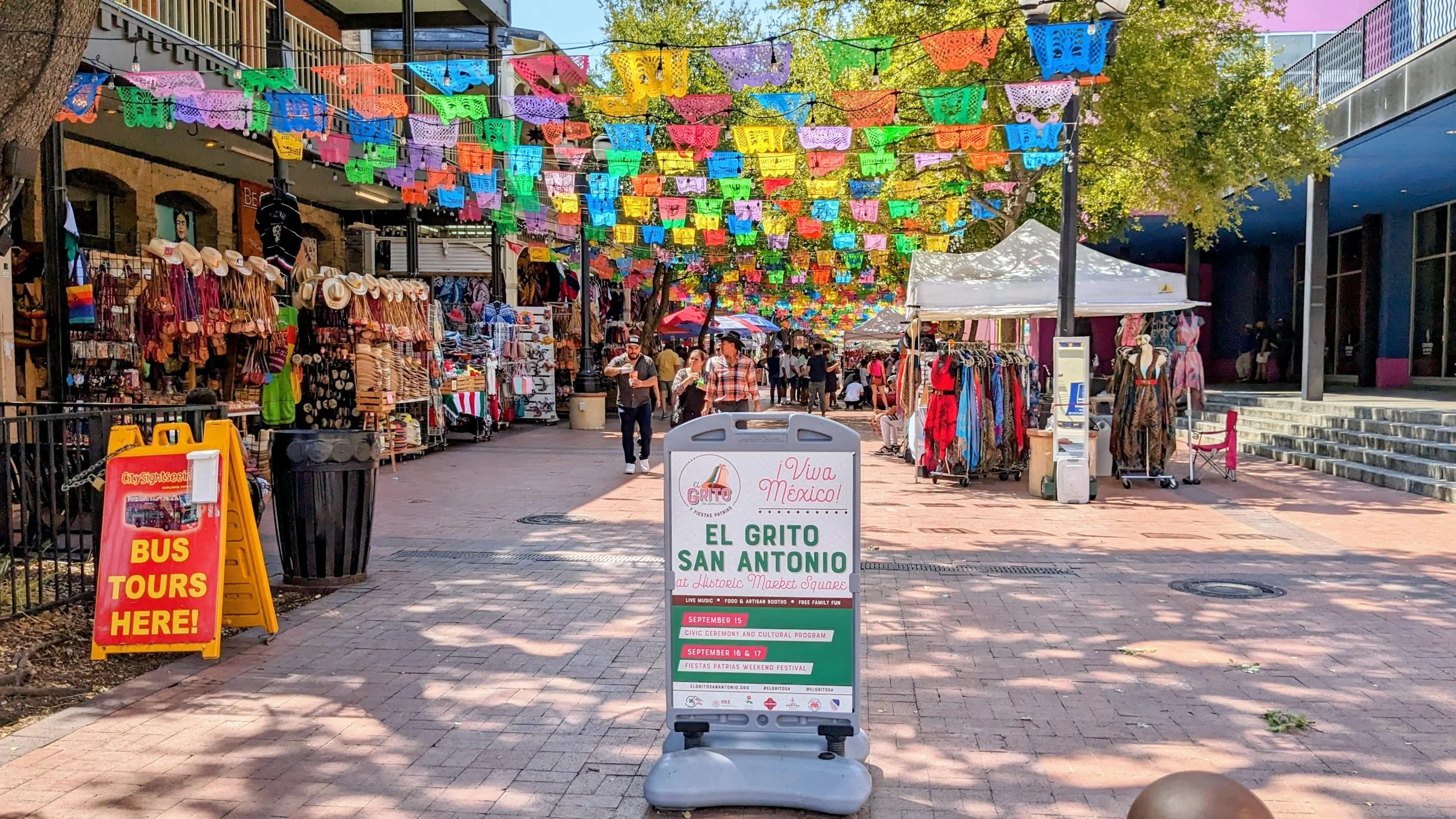
Well, with our stomachs and eyes full, we’ll mosey down to the Spanish Governor’s Palace, which is a 1749 Spanish stucco residence built for the captain of the Presidio San Antonio de Bexar. It has 10 rooms full of period pieces and a pretty courtyard with a large fountain at its centre. Right next door to this is the beautiful San Fernando Cathedral, which was completed in 1738 and at one time housed Santa Anna. We continue our stroll for another few blocks until we come to the Historic Market Square. This 3 block square is home to over 100 shops selling all manner of Mexican handicrafts from beautiful, multicoloured blouses and skirts to finely crafted leather work such as belts, boots, and even holsters in case you should have the need for one. Stetsons are everywhere, I have purchased 2 here on my travels, and there are toys of all sorts, my Granddaughters love the marionettes I got them. The Talavera Pottery is so colourful and comes in all shapes and sizes. I couldn’t resist getting a couple of the cute little green and blue turtles for the girls. I think I’d better slow down a bit until I check the space left in my suitcase, it’s a good thing I can wear the Stetson on my head. That’s enough souvenir hunting for one day now it’s dinner time, and there is the most exciting-looking Mexican restaurant here that I just have to try. I was very glad that I did, I stuffed myself on dishes that I can’t pronounce, let alone spell, so pictures will have to suffice. The walls of the restaurant are covered in the gaudily decorated men’s Charro suits and ladies’ China Poblana dresses of Mariachi bands from the past. Well, that’s it for today, back we go to the Hotel for some much-needed sleep.
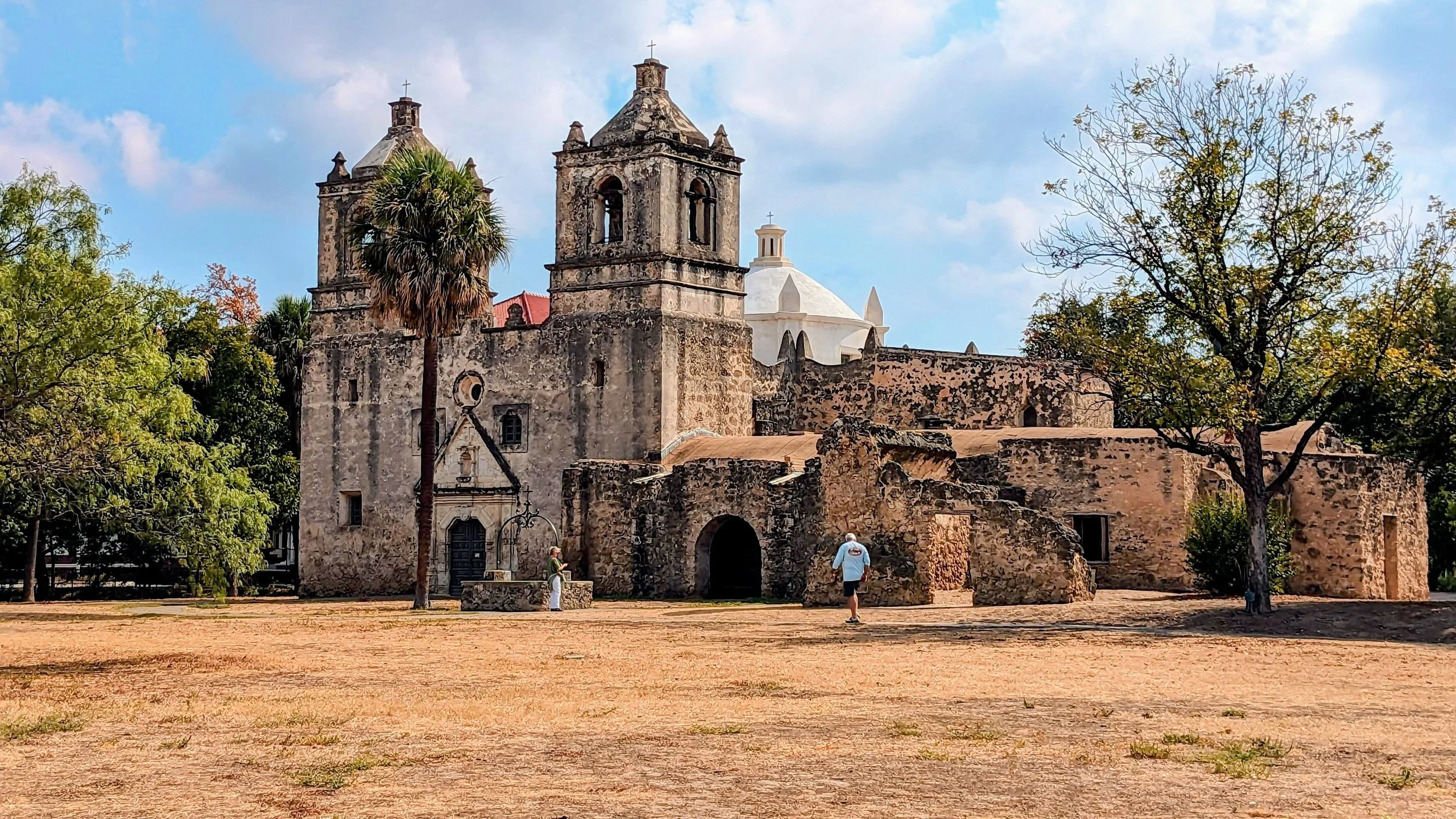
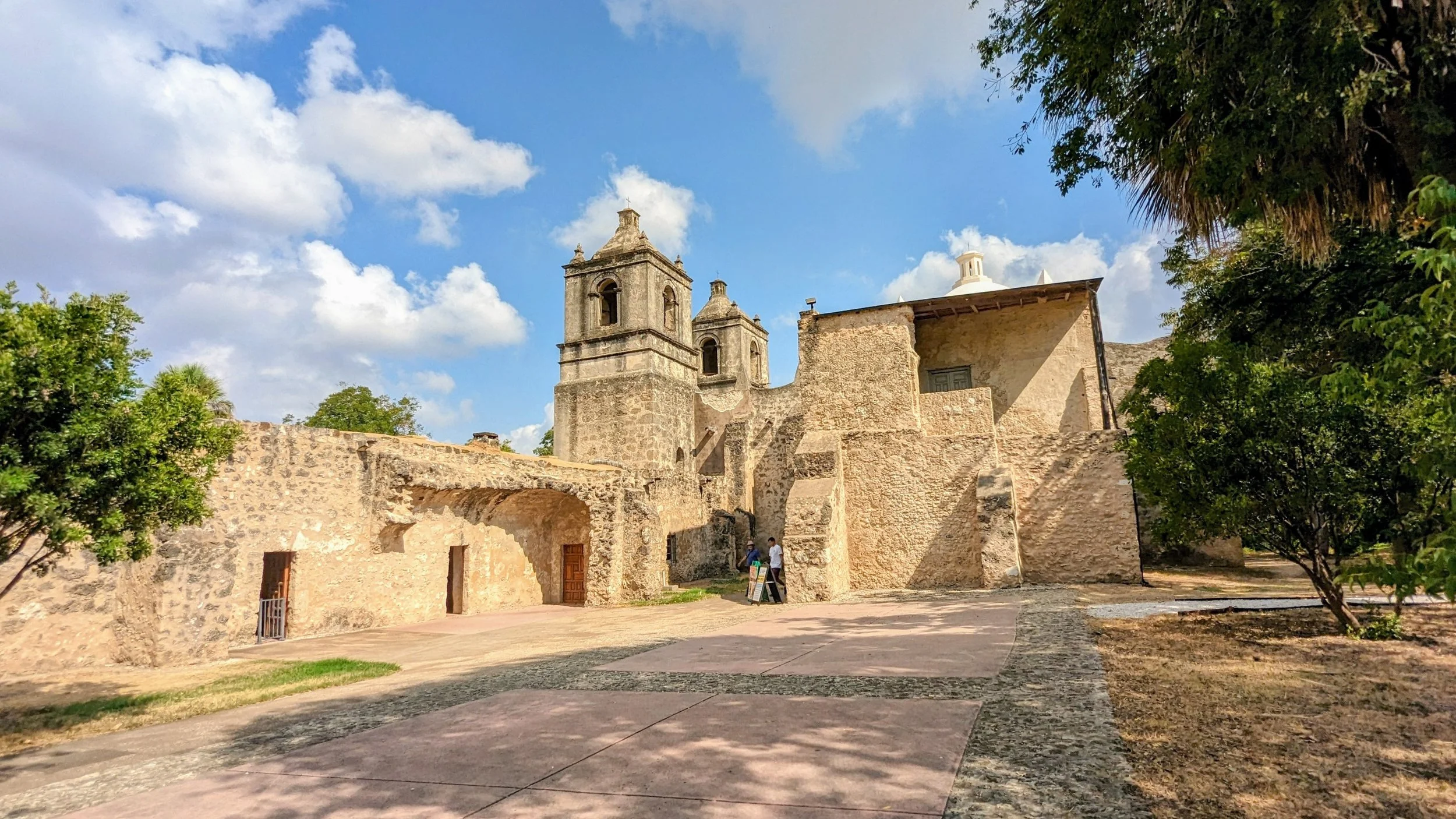
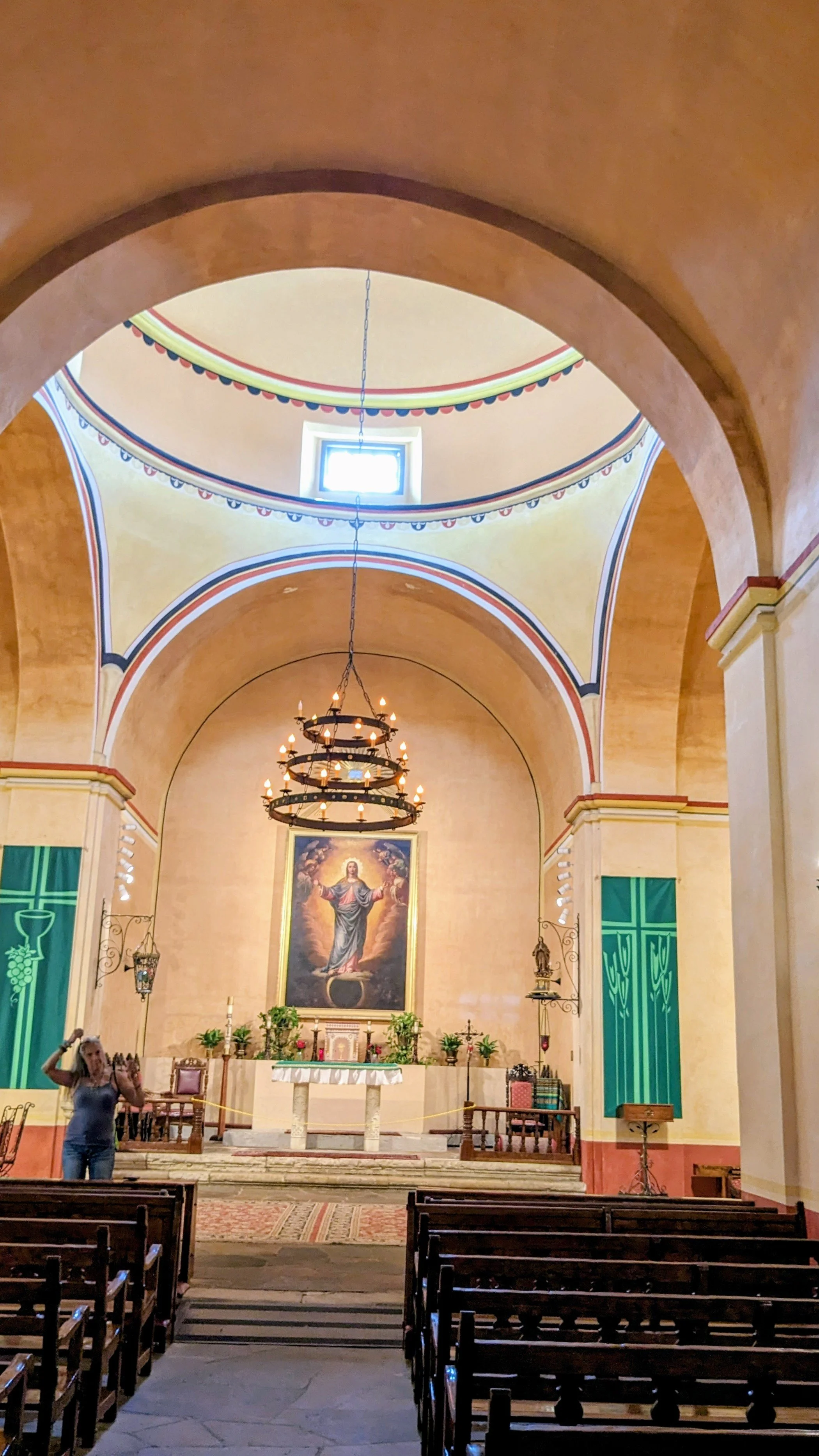
All rested up and ready to explore? If so, it’s off we go on our tour of San Antonio’s Missions. The buses here are perfect for today’s route, and so we’ll get to explore more of San Antonio and its strongly Mexican-influenced architecture. First up, working from the city centre out is the Mission Concepcion. Dedicated in 1755, this Spanish Colonial landmark is America’s oldest unrestored stone church. It was near-awe-inspiring to walk through the grounds and reflect on the centuries of history contained within those ancient walls. Mission Concepción offers a unique and tangible connection to the past, making it an essential stop for anyone exploring San Antonio’s rich heritage. Mission Concepción consists of a sanctuary, nave, convento (stone friary), and granary. When originally built, brightly painted frescoes decorated both the exterior and interior of the building. Traces of the frescoes still exist on the weathered facade of the building.
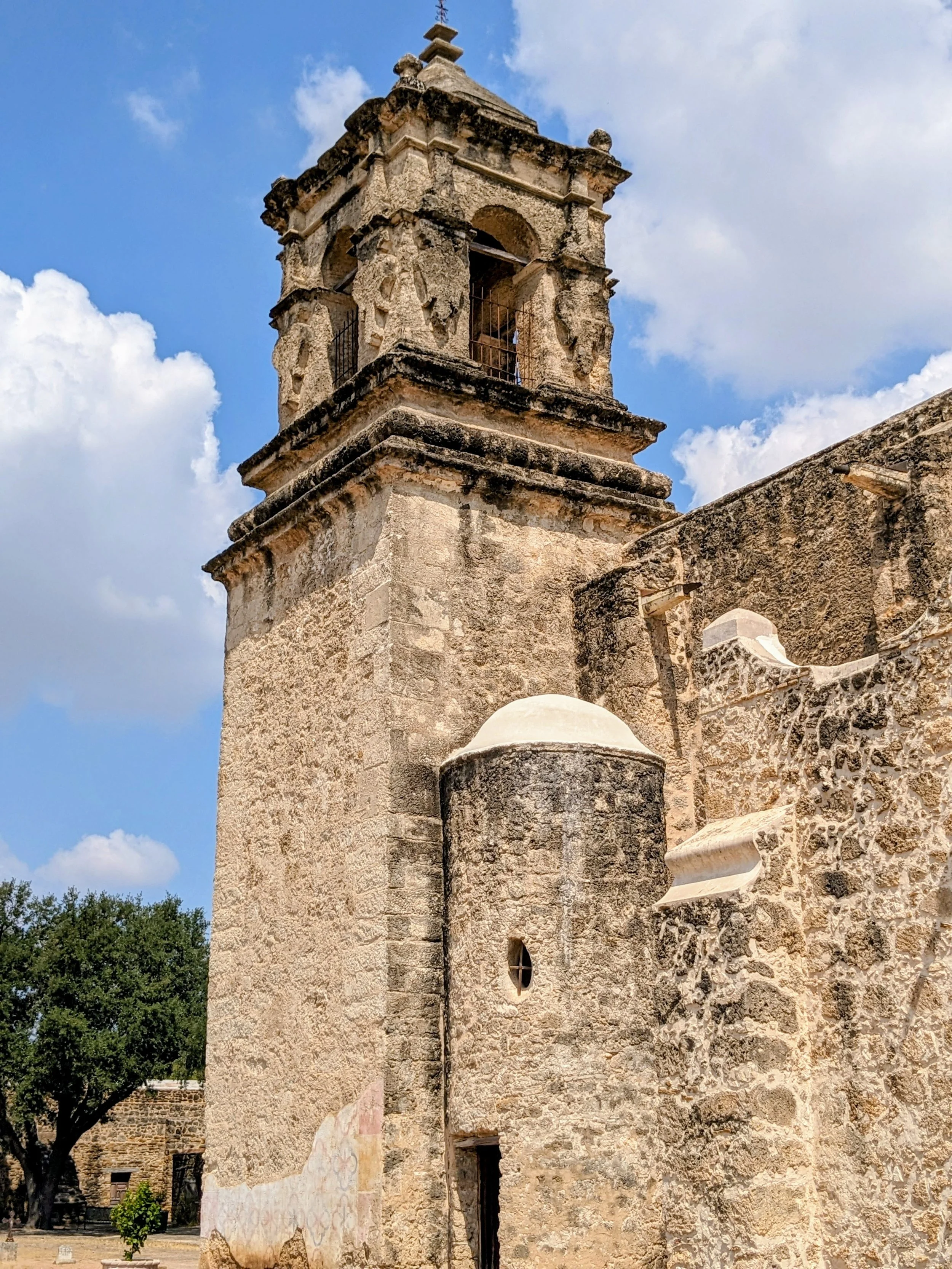
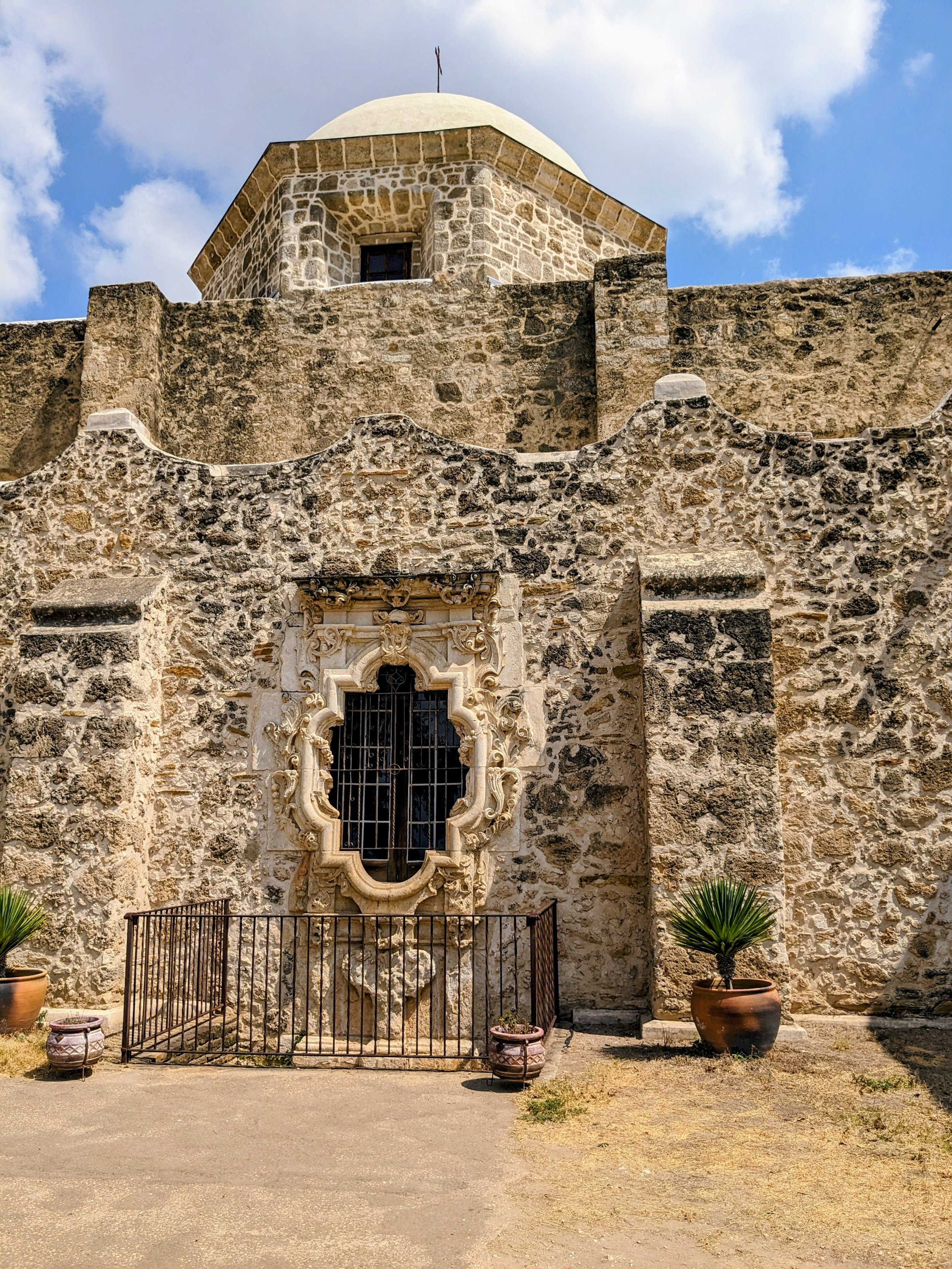
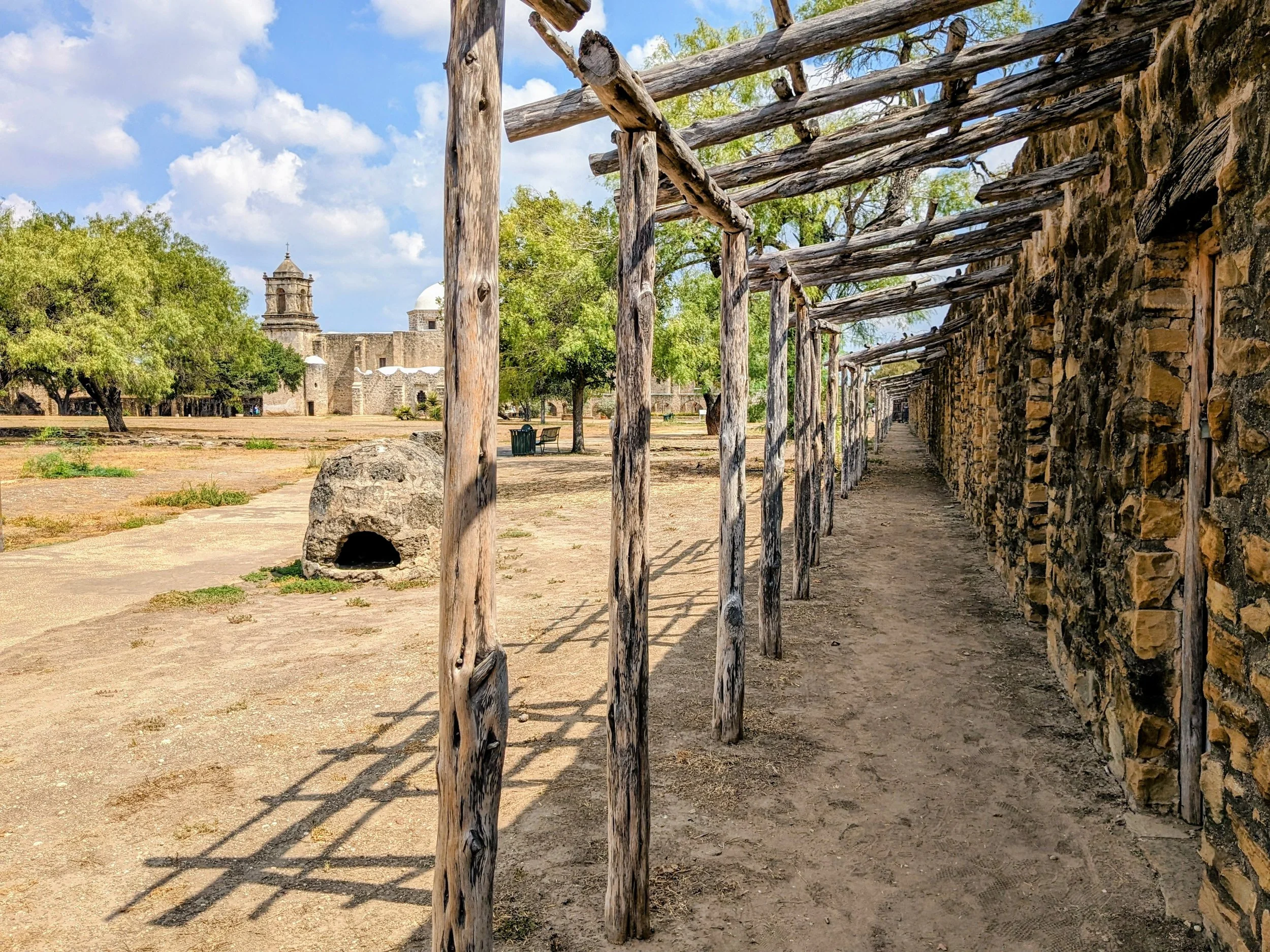
Next up, Mission San Jose, the largest of San Antonio’s 4 missions. I was most impressed with the way it has been preserved and restored to its original grandeur. The covento, or stone friary, is not restored, but the masonry work is still intact, giving it the look of a Roman Aqueduct. All around the grounds of the mission are high stone walls, which have the dwellings of the Mission Indians set into them. Inside of the church is a stunning altar painted a robin ’s-egg blue surrounded by gold-leaf ornamentation.
There are still 2 missions, Mission San Juan Capistrano and Mission Espada, but the buses don’t connect with them, and the walk is a bit far, especially in San Antonio’s sweltering heat, which is usually in the 92-93 F ( 33-34 C)range in June and September but frequently hits 100°F (38 C) and higher. One day I’ll rent a car while I’m here and that will allow me to explore a little further afield. With a few hours left, I wander through the La Villita Historic Arts Village, a block of 18th. century Spanish and Victorian preserved buildings, which are now an artist community. I just love the Spanish-Mexican style of the buildings and the Mexican vibe of the friendly neighbourhood.
Off we go again and it’s another early morning. We catch the train that takes us North to Fort Worth at 6:48 A.M., but it’s well worth it because we’ll arrive in Ft. Worth at 1:57 P.M., which is great because we will have the afternoon and evening to do some in-depth investigating of this Cowboy City. The land we’re travelling through is changing gradually from the edge of Hill Country into rolling prairie and then flatter plains. It’s made up of low limestone hills, rocky ground, and a few scattered trees, mostly cedar and oak. Around 9:30 A.M. we come to the Texas State Capitol, Austin Tx. a pretty Texas city known as the Live Music Capital of the World. This nickname wasn’t given easily; they truly deserve the laurel. There are literally 1,000s of performances, well-known festivals such as South by Southwest and the Austin City Limits Music Festival, and of course, the very well-known TV show, Austin City Limits, which has been running for some 50 seasons now on PBS. If you want a great way to get tutored in Country Music, you have to give this show a watch. Well known for its eclectic music scene, this city is where so many of Country music’s stars got their start. There is the iconic State Capitol building, one of the largest in the US, and due to the presence of several tech companies such as Dell, Apple and Tesla, Austin is also known as ‘‘Silicon Hills’’. Austin deserves far more attention than I can give it on a quick blow-through on the train. I would like to wander through its many parks, stroll along Lady Bird Lake or have a swim at Barton Springs. Austin is a quirky, creative, artsy city when compared to other, more conservative Texas cities. Is it any wonder their slogan is; ‘‘Keep Austin Weird?
It’s getting close to noon hour as we roll through Taylor, and Temple, Texas, and the land is beginning to flatten out into what we would think of as rolling prairie, but as we move further north past Waco, it becomes quite flat, making for broad agricultural areas. This landscape does not change again until well into central Oklahoma.
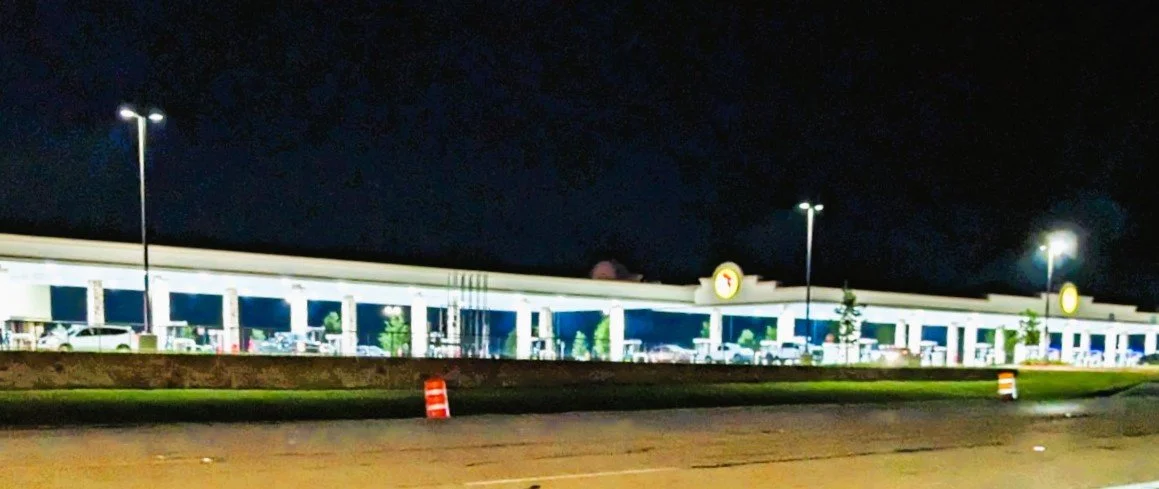
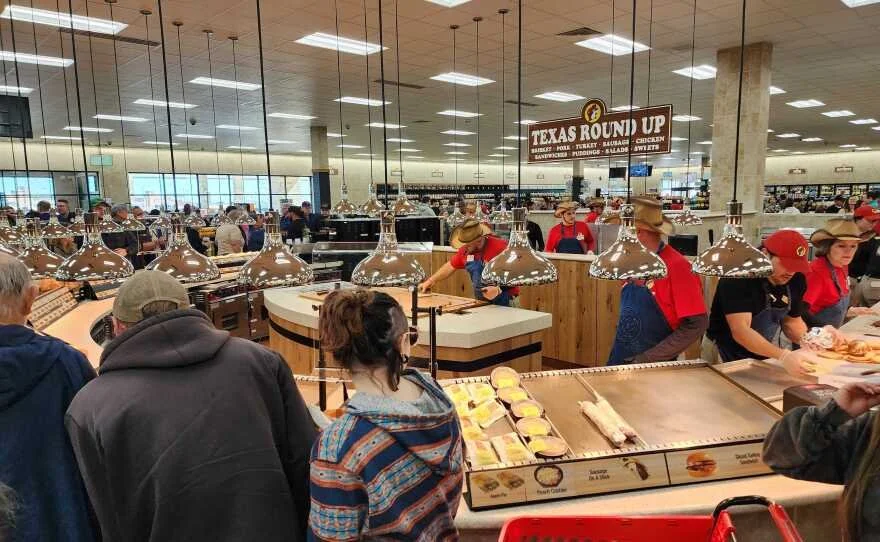
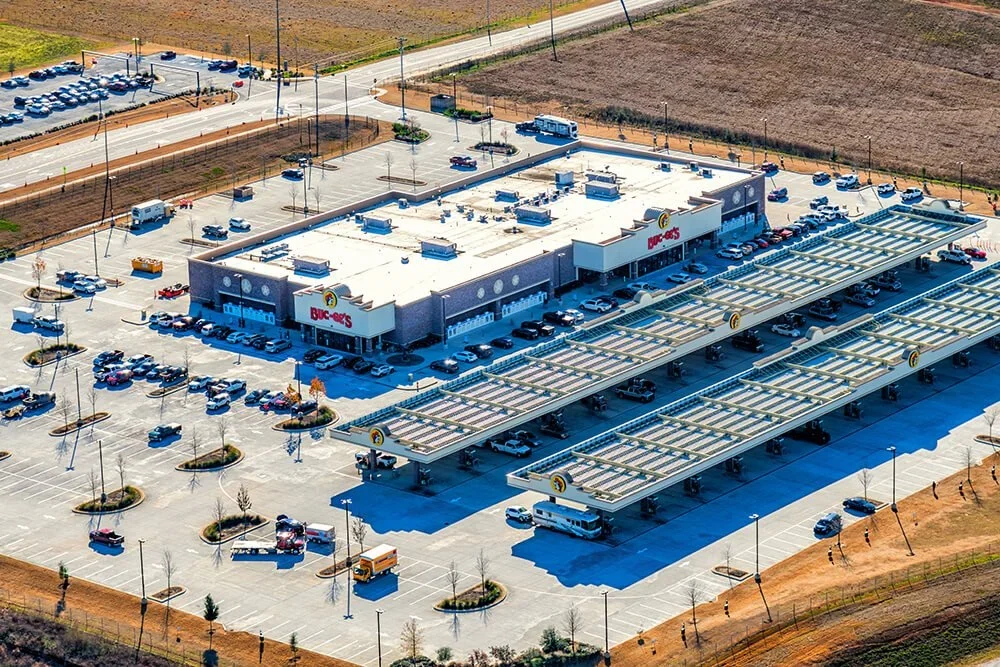
On my driving trip, which I will tell you about shortly, just as I passed Hillsborough Tx. I had to pull over to get a look at something one would only find in Texas, the state where everything is bigger. As it turned out, it was the largest filling station I had ever seen, Buc-ee’s it’s called. I pulled in and took a look around. It made most supermarkets seem tiny. They served every kind of Western food imaginable. Their signature dish is Texas BBQ brisket sandwiches made fresh on the spot while you watch, but they also have pulled pork sandwiches, sausage sandwiches, fried chicken sandwiches, and for breakfast, they have a selection of breakfast tacos, burritos, bowls, as well as a large selection of Jerky. For the sweet tooth, there’s kolaches, which are savoury sausage/cheese, sweet fruit-filled pastries and Buc-ee’s own snack, Beaver Nuggets, a sweet caramel-style corn puff. Remember, this is a gas station, so it’s only natural that they have 120 pumps to serve you. Only in Texas, eh?
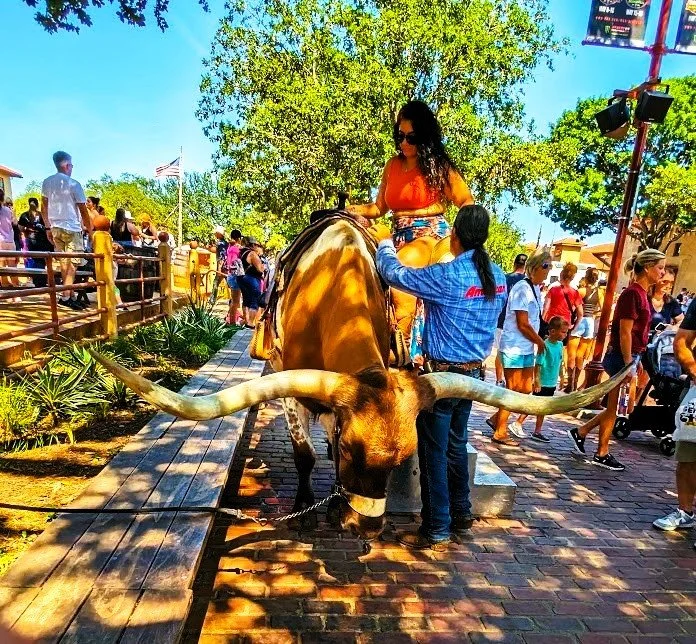
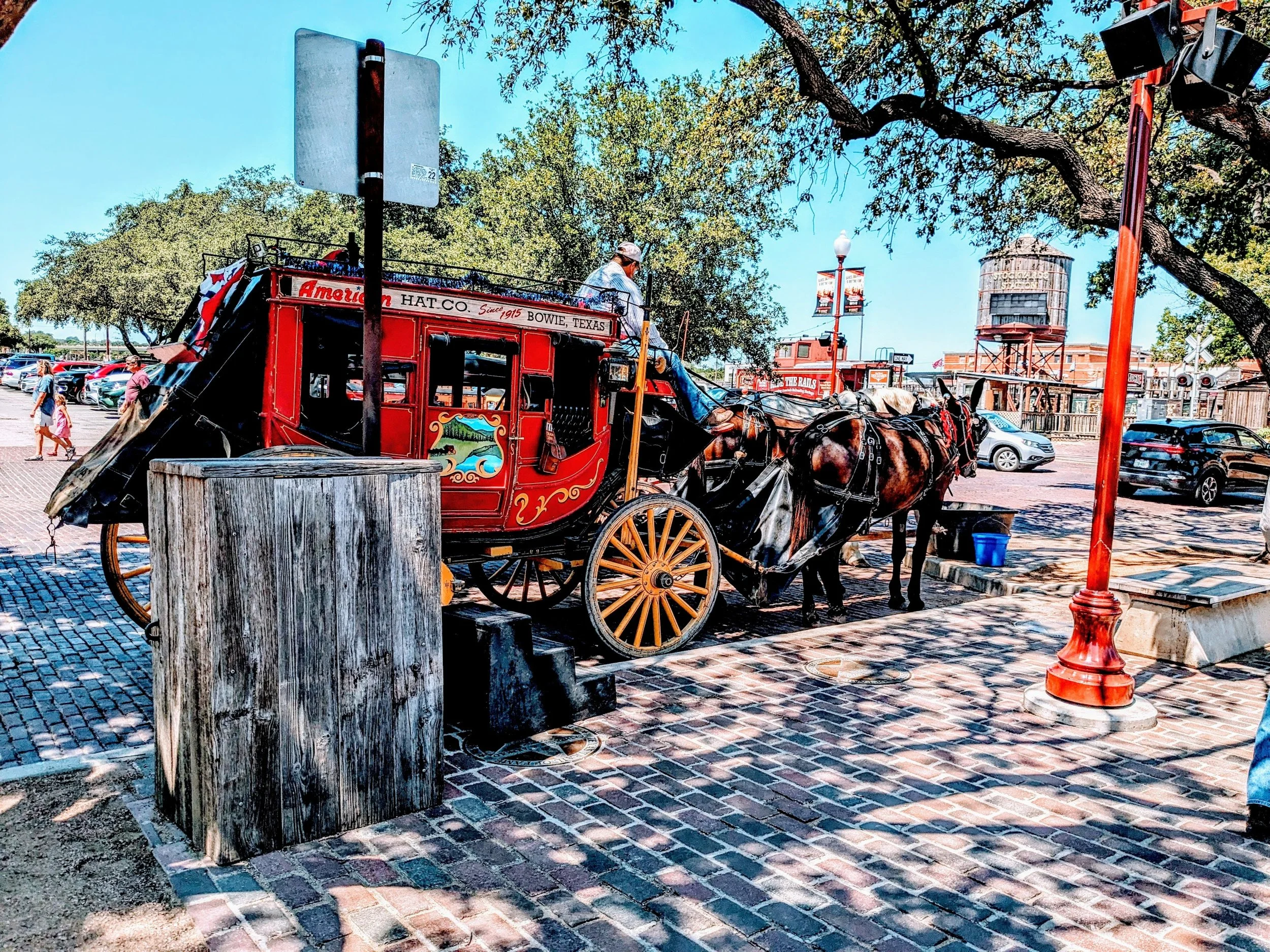
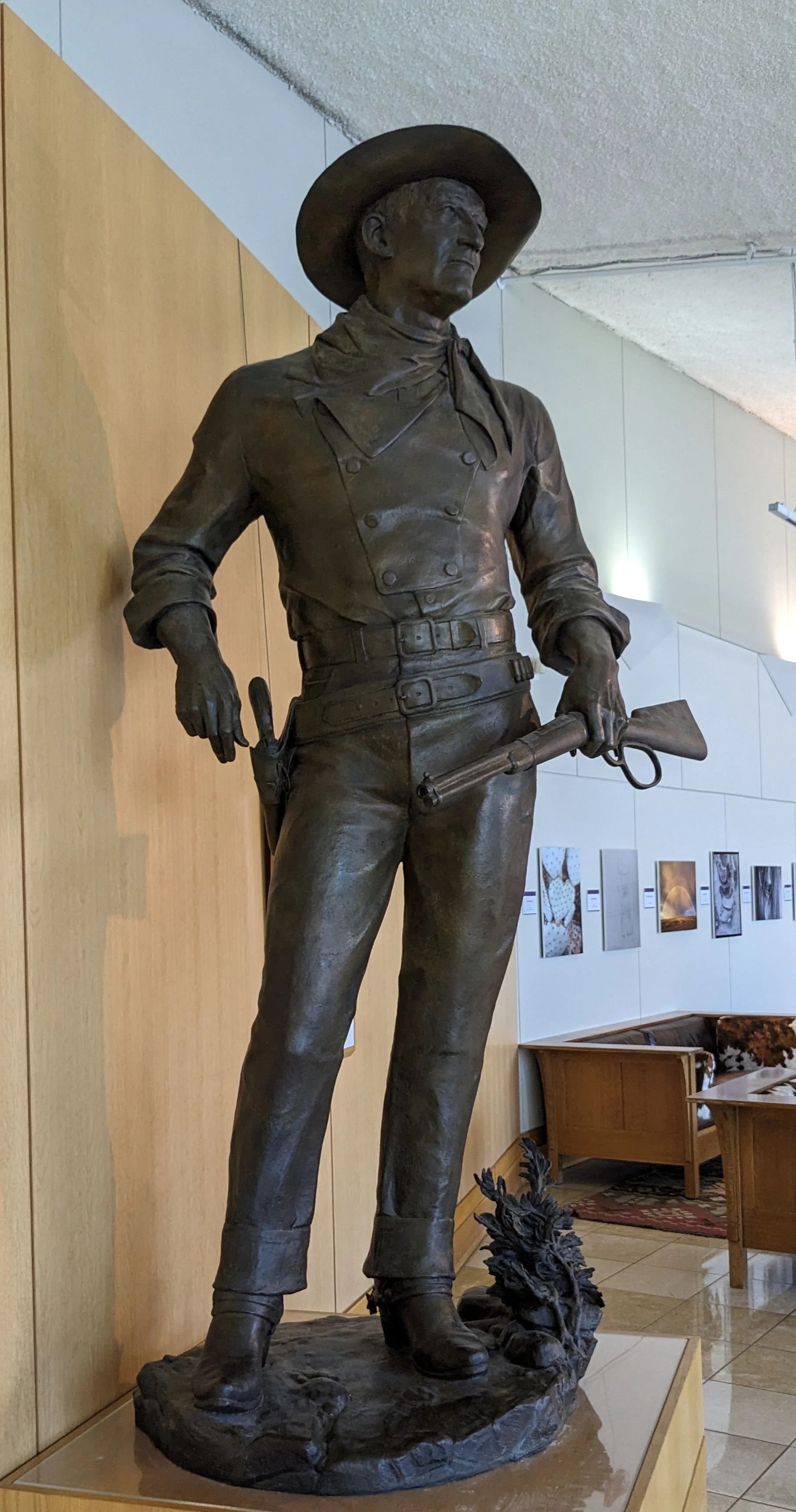
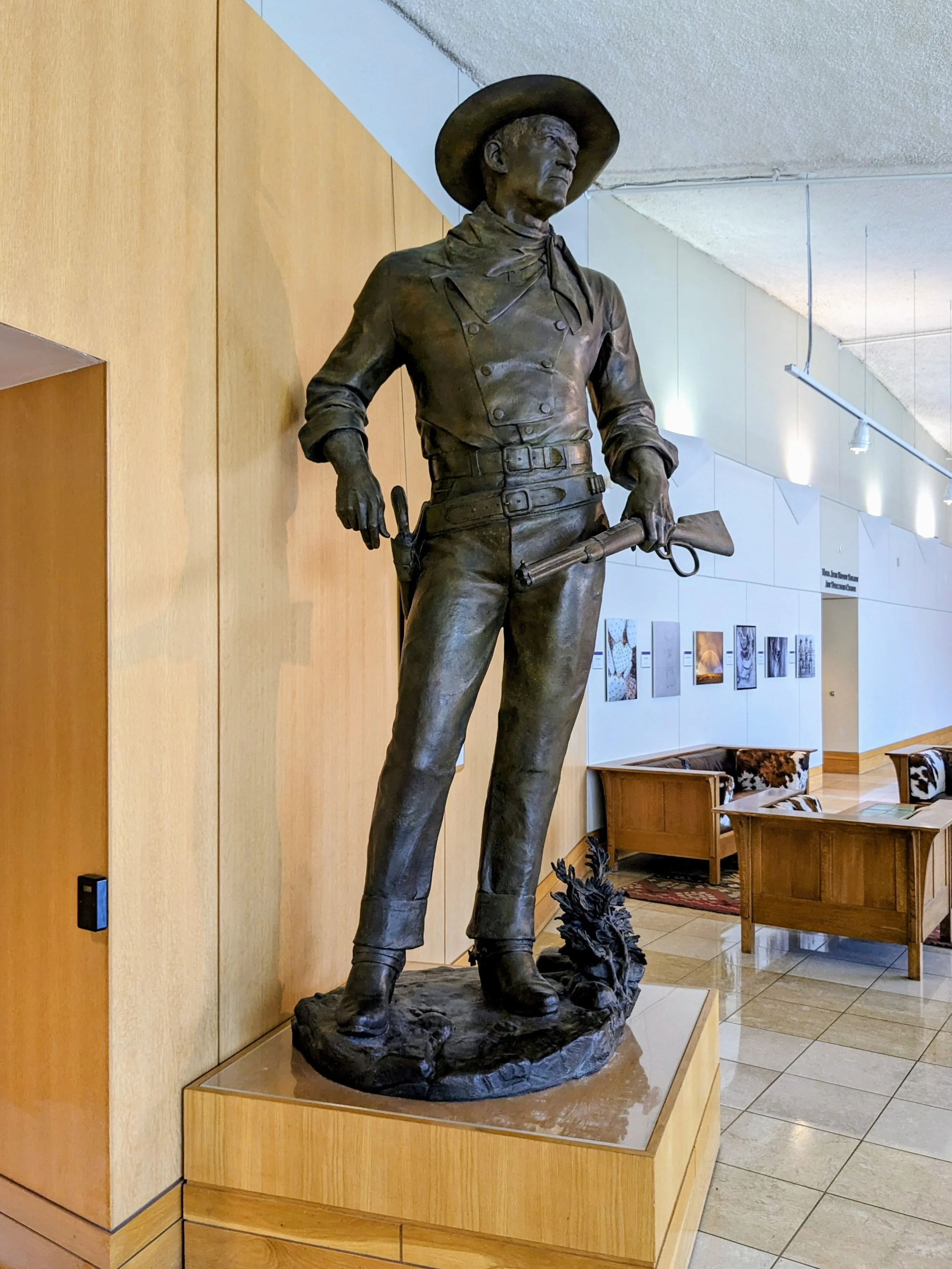
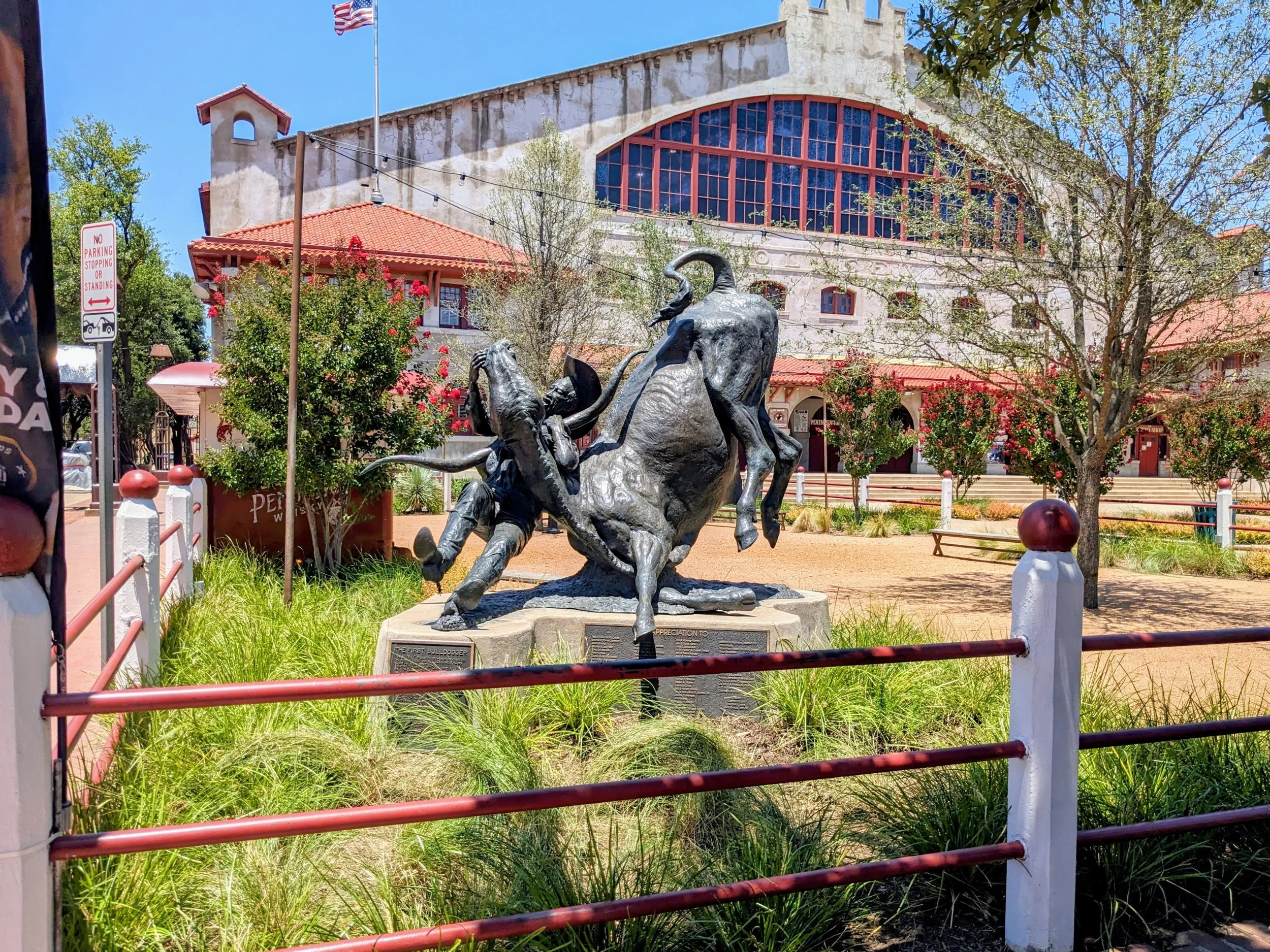
Well, here we are at Fort Worth, Texas, " Cowtown’’ and I’ll be jumping-off here for a few days so that I can have a good look around this historic town as well as taking some time to explore the great Texas Panhandle. Time to dig out my Stetson and cowboy boots, a fellow has to fit in, eh? I quickly drop my bags at my hotel and make my way to ‘‘The Stockyards’’ a 5-6 block area in the historic section of Ft Worth. It’s jam-packed with 46 restaurants and bars, 54 shops and over 20 attractions such as the John Wayne Museum, the twice-daily Long-Horn cattle drive, Billy Bob’s Texas, a 3-acre Honky Tonk complete with a professional bull riding ring, the Stockyards Museum, oh, and of course the Stockyards Championship Rodeo. Browsing the shops alone can take a full afternoon with merchants selling everything from local handicrafts, leather goods, every kind of stuffed animal and fur that you could imagine, turquoise jewellery, a record store specialising in Country and Western vinyl, quite a few western wear shops, and even art galleries. I spent the afternoon browsing the many shops, watching the cattle-drive and having dinner at my favourite Texan restaurant, Riscky’s BBQ. My mouth starts watering as soon as I arrive at the Stockyards and have to use every bit of my willpower to wait until dinner time, as the smells hit you as soon as you set foot in the Stockyards. For $19.99 USD you can order the All-You-Can-Eat Beef Ribs. They are the best ribs I have ever eaten, and together with the ambience of the place, people laughing, having a wonderful time, toe-tapping western-swing music playing, and the western decor all serve to make it more of an event than simply a meal. I have been 3 times and have yet to finish my 2nd. platter of ribs. Now, loaded up on carbs and protein, I make my way to the John Wayne Museum, which is full of memorabilia about this giant of a man and certainly the hero of my youth. Once again, I wish my Dad could have been with me; he would have had a blast, for John Wayne was his favourite actor and watched every movie he ever made, usually with a tear whenever The Duke was shot. After having a good look around this museum, it’s time for the Stockyards Championship Rodeo and what an awesome time I had there. I loved watching the cowboys put their horses through their paces as they chased down and corralled the cattle or helped the cowboy rope the steers. Having had a horse in my younger days, I have a special feel for these strong, intelligent animals. Then comes the bull riding, which is always an exciting event, and my heart is always in my mouth as the cowboy tries to last that twisting, flying ride for a mere 8 seconds, which must seem like 8 hours. All too soon the night ends, and it seems as if it were only 5 minutes ago that the riders opened the show with the Grand Entry, and here it is time to hang up my hat for another year. But this adventure isn’t quite finished just yet.
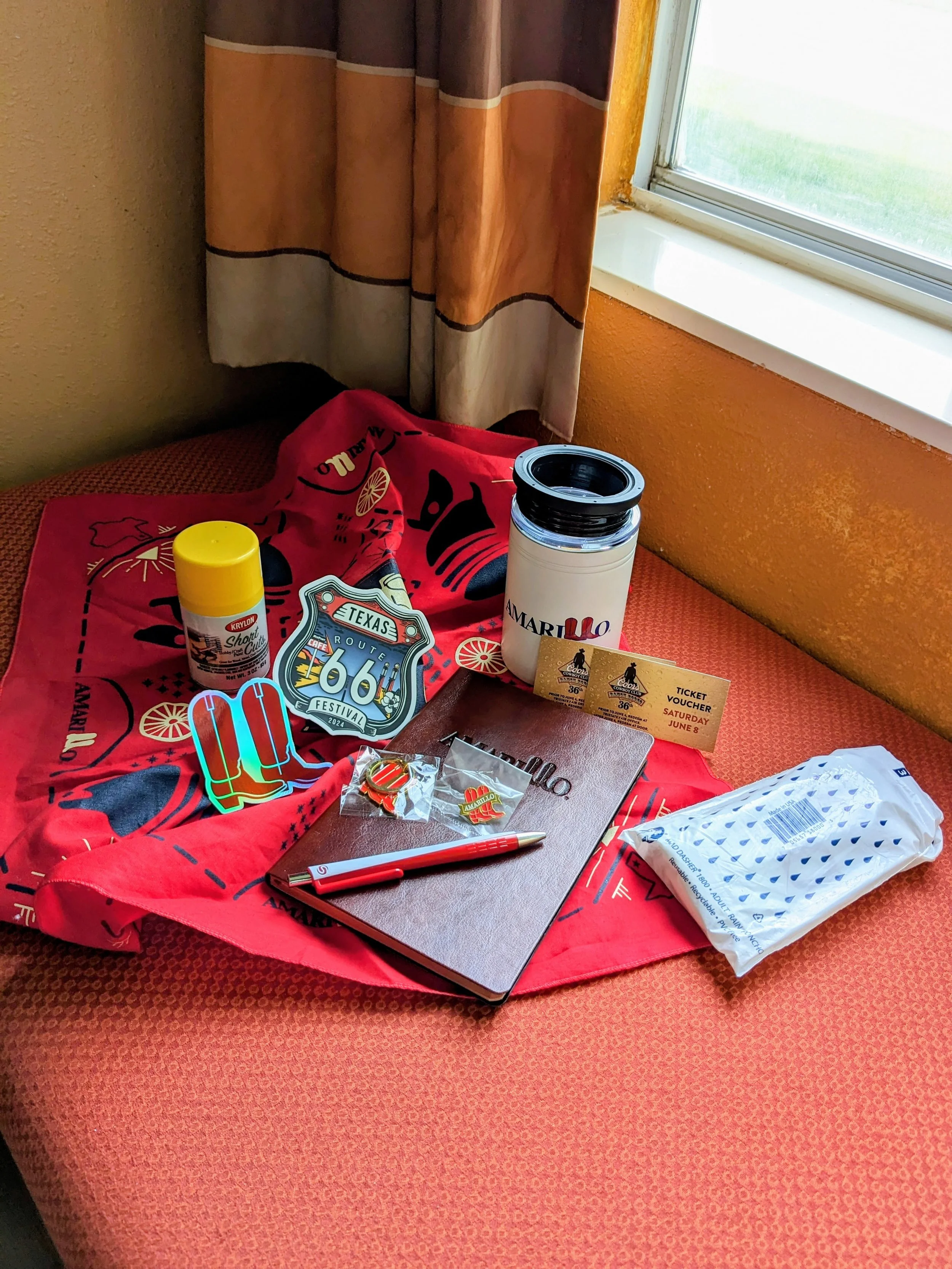
In the morning, I pick up my rental car and head out for a 3-day trip around the Panhandle. First stop, Amarillo, where I had to spend 2 nights, as there is just so much to see and do here. The drive from Ft. Worth is a long 5-hour, non-exciting drive (note, I don’t like to use the word boring, something is always worth looking at on these trips) without scenic stops. The gently rolling hills turn to flat prairie as we get beyond Wichita Falls and start heading west. The wide open plains dominate the landscape, and we’re seeing more cattle ranches now as well as farms and wind-breaks that keep the soil contained and in the winter, snow from drifting too badly across the highway. Closer to Amarillo, the soil becomes richer and is used for crops such as sorghum and wheat. Just as I get to the outskirts of Amarillo, the highway merges with the iconic ‘‘Rte. 66’’ or Rte. 40 as it is now known. I begin to see the odd motel and restaurant that were built back in the 40’s or 50’s and still have that nostalgic look to them, with the huge neon signs advertising their businesses; coming through at night would be a sight. Finally, after a few wrong turns, I arrived at my hotel, where a big surprise awaited me. I had been in touch with a Lady, Luz Aguilar, who runs the Amarillo Tourist Bureau, to gather information on what to see and do when I was there. Through the course of our conversations, I became known as ‘‘Cowboy Bob’’ and when I went to register, the Lady at the front desk said, You must be Cowboy Bob’’. Well, you could have knocked me over with a feather!! ‘‘How on earth did you know that?’’, I asked. ‘‘Why, I have a gift bag for you from Luz’’. Wow, the bag was full of Amarillo paraphernalia; a travel mug, a big red Amarillo sticker with Amarillo’s symbol, a pair of red cowboy boots on it, a red kerchief that had ‘‘Amarillo’’ on it (I had been collecting these on my travels), a nice journal with ‘‘Amarillo’’ stamped on the cover, and another sticker of the Texas Rte. 66 symbol, a pen, a raincoat, a keychain, a lapel pin in the shape of the Amarillo Cowboy Boots symbol, a can of yellow spray paint (what the heck, I thought only to find out later it was for spraying on the buried Cadillacs at ‘‘Cadillac Ranch’’, look it up) and 2 tickets to the Rodeo that was running that evening and the next, WOW!! I quickly changed into my cowboy gear and was out the door, headed for my 2nd. rodeo. It was great, by the way. More amazing horse manoeuvring and cattle roping, no bull riding, but still pretty exciting and a whole lot of fun.
Off to bed, tomorrow is shaping up to be another great adventure.
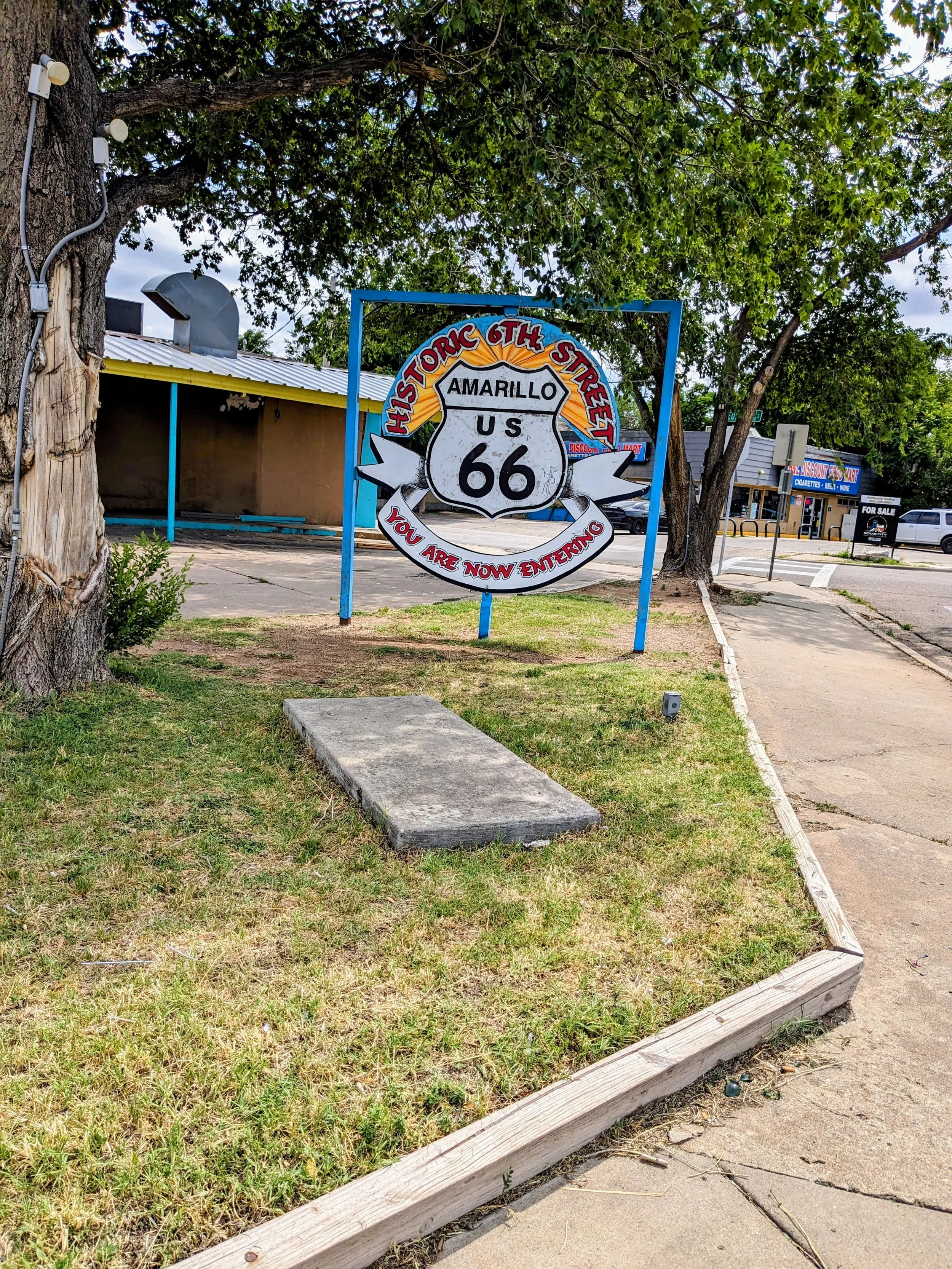
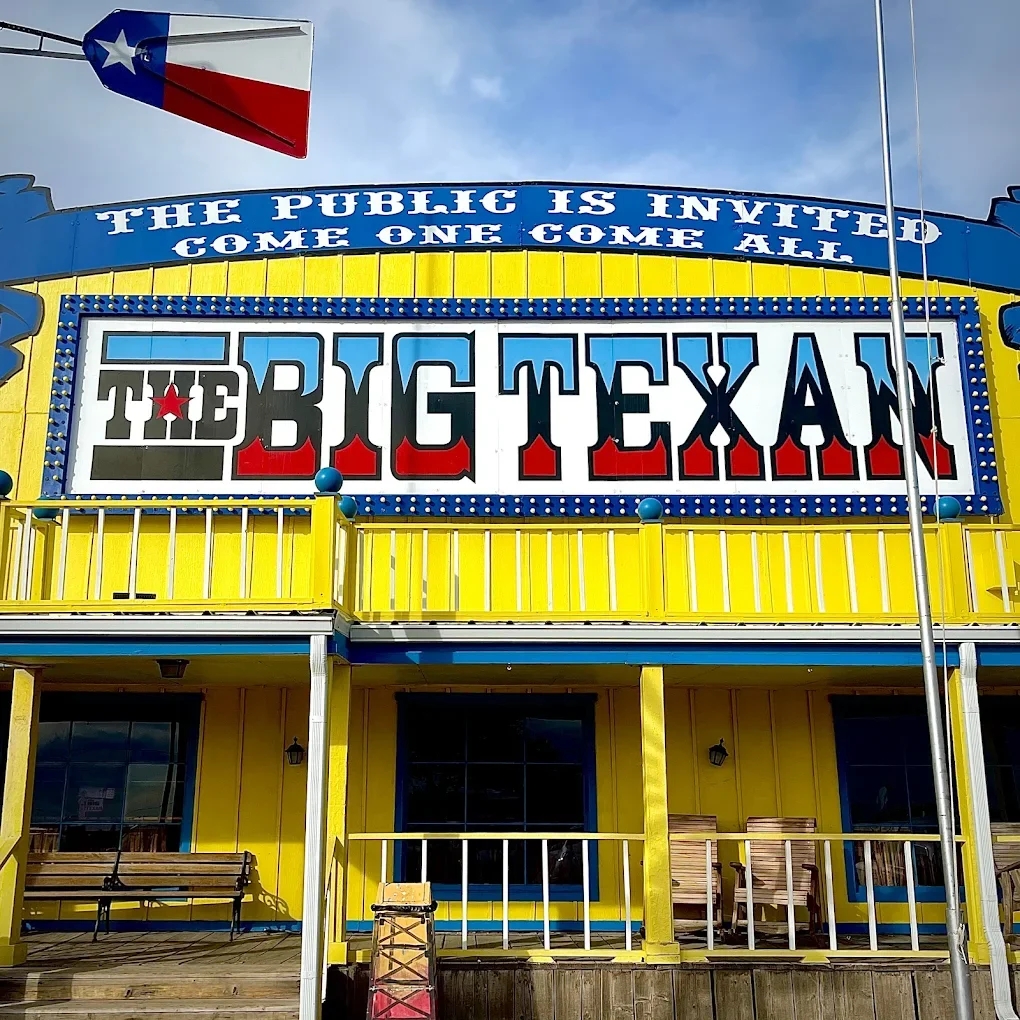
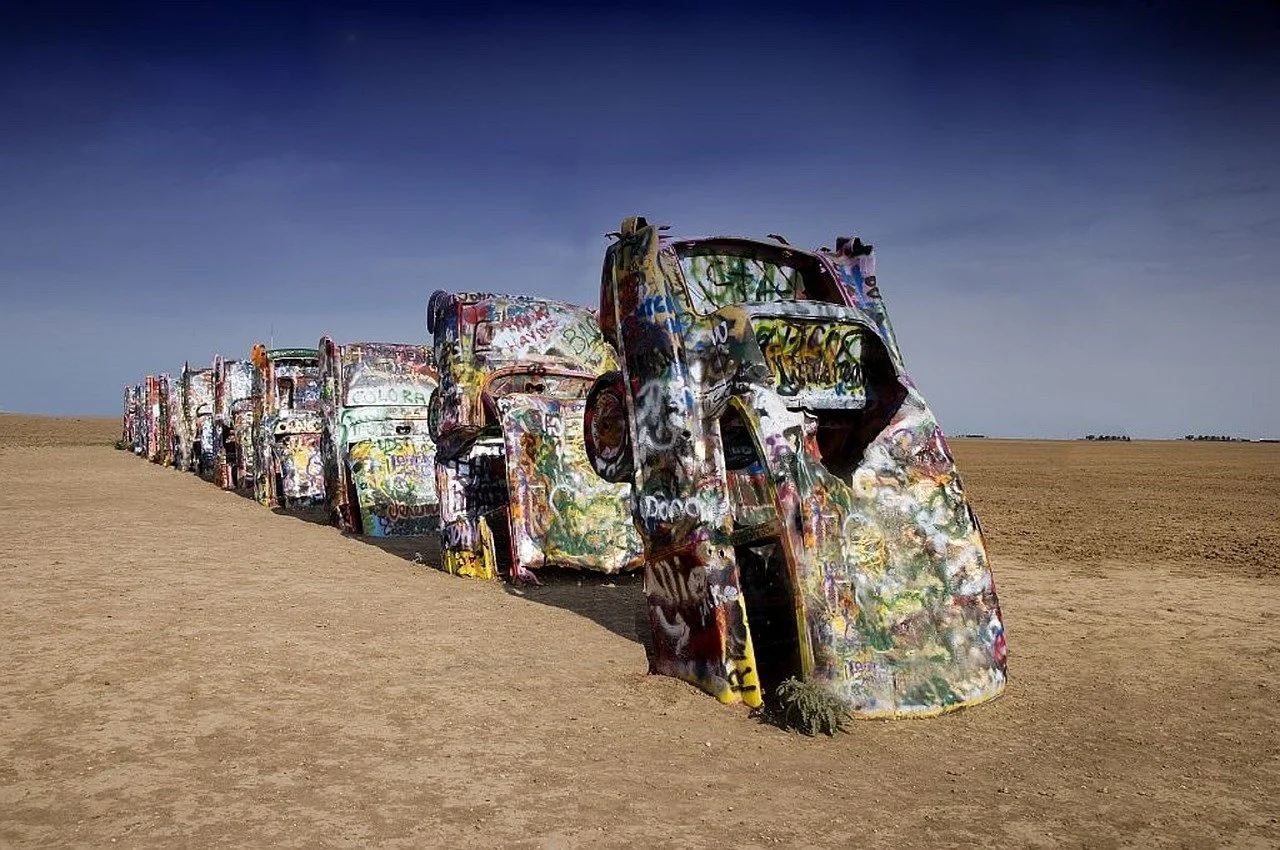
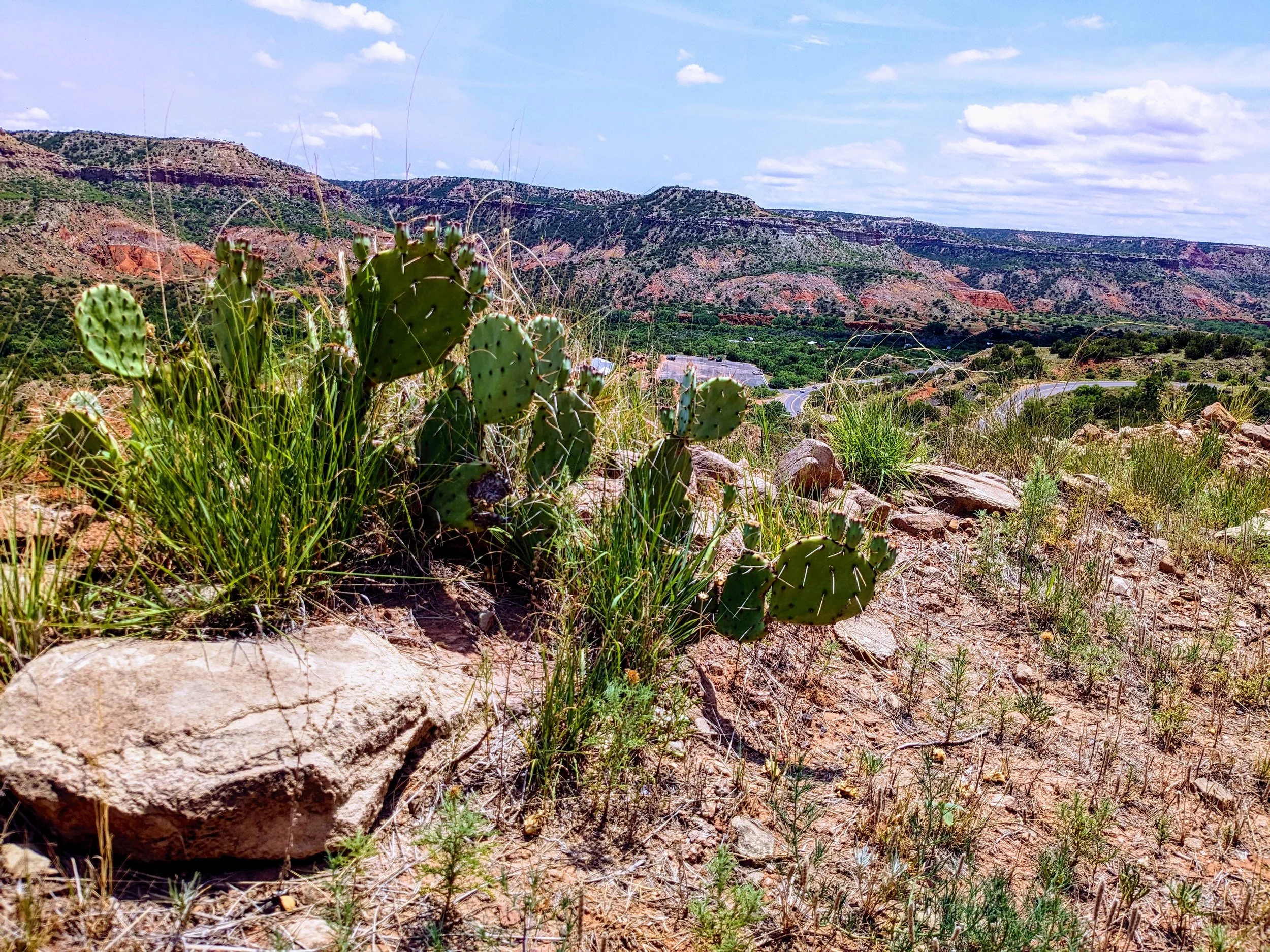
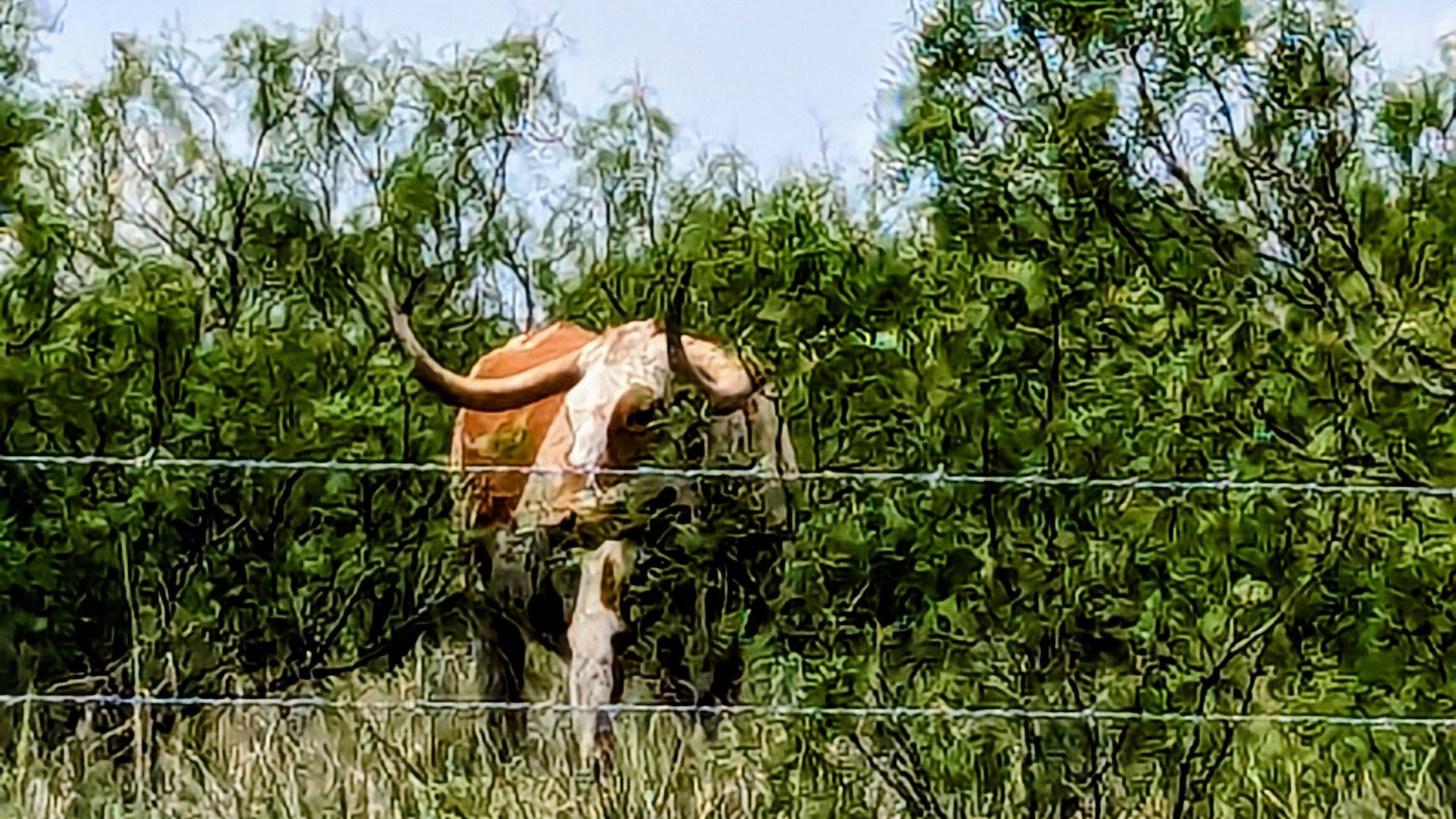
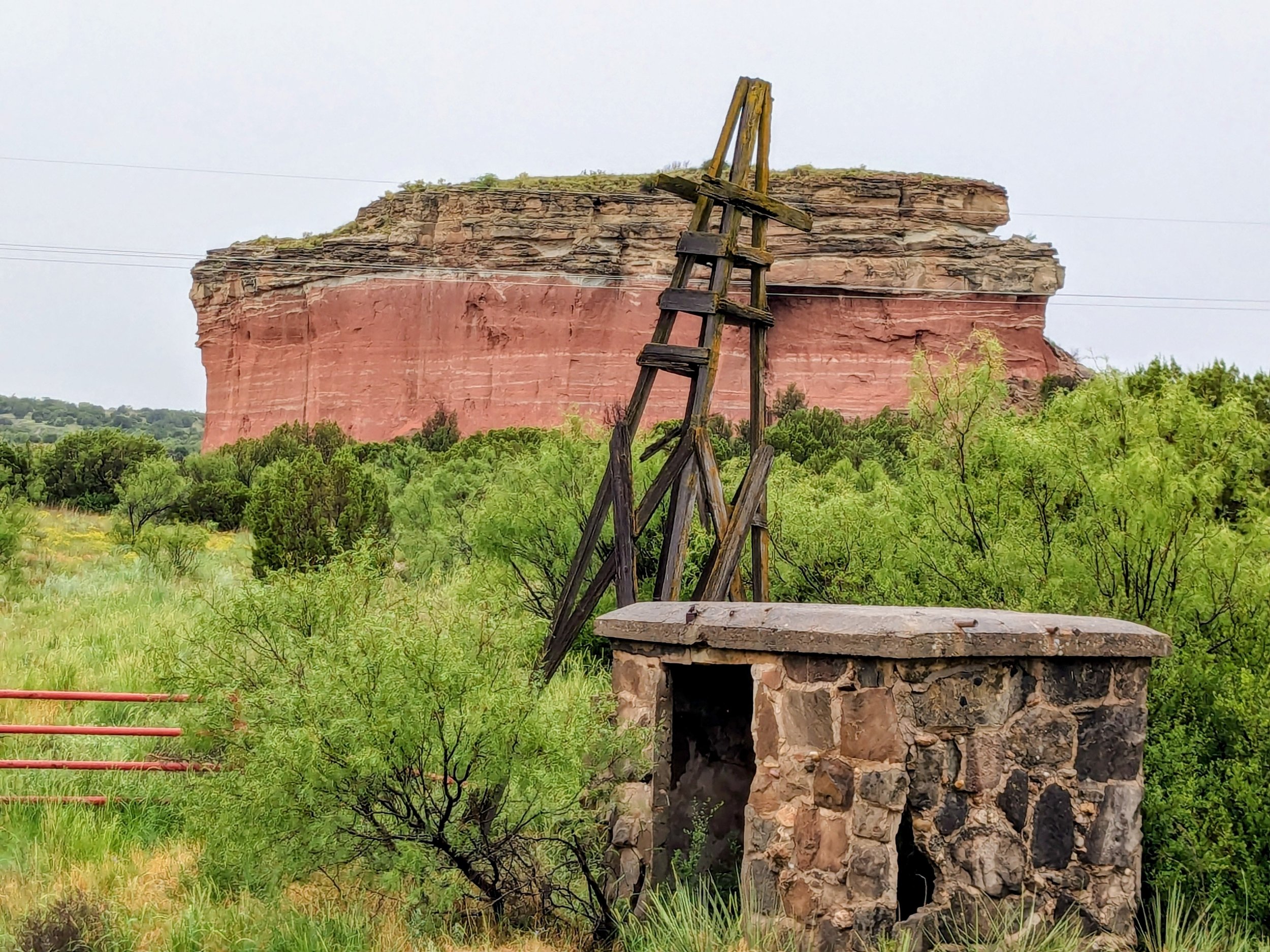
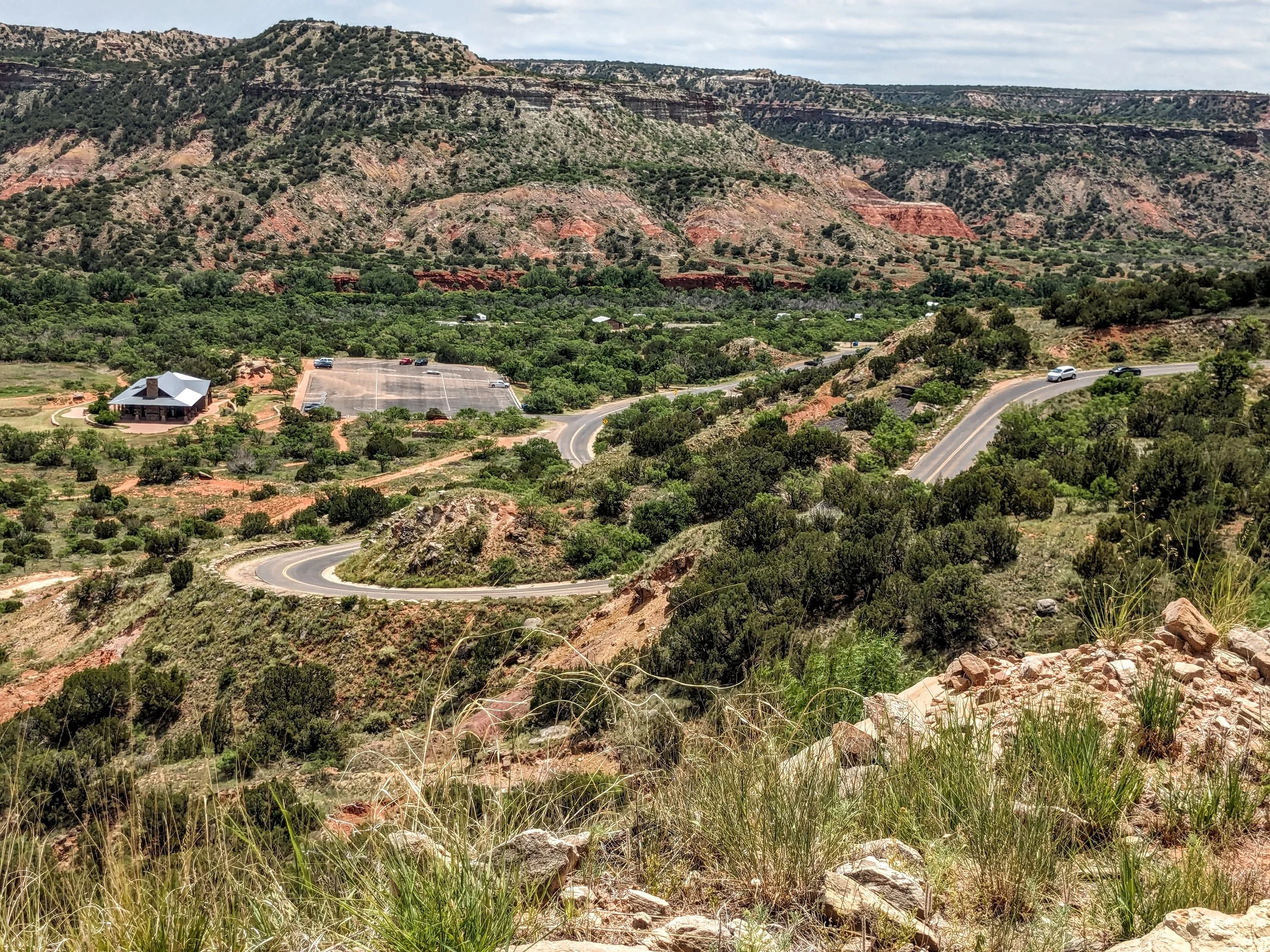
I was out the door bright and early and drove straight to Palo Duro Canyon, some 25 miles south of Amarillo. It is the 2nd. biggest canyon in the States and is simply awe-inspiring, a photographer’s delight. With lots of scenic look-offs, it takes well over an hour to drive around its 16-mile loop, which takes you up and down the 8,00-1,000-foot canyon walls. Oh, and at the very beginning is a Texas Longhorn pasture where you can see these magnificent, majestic-looking cattle grazing in the wild. Next, I headed for the town of Canyon and decided to take a side road to get there; it turned out to be one of the best decisions I’ve made on my travels. While it isn’t noted on any of the tourist maps I’ve been using, this drive was simply amazing. It makes a wide circle around the Palo Duro Canyon, and the road travels through several steep hills and dips that are lined by those high red rock buttes that seem to be indigenous to this area of Texas. I think it took me 2 hours to make the 30-minute trip, I just had to stop every 500 yards to get another one of those ‘‘once in a lifetime’’ shots. Oh, and I saw my first Roadrunner, but not for long; it was moving pretty fast, so no pictures. I made the loop around the canyon, which took me through the towns of Tulia and Canyon and then returned to Amarillo, where I did a little more Rte. 66 exploring. Amarillo is just about at the midpoint of this storied road, which runs for a total of 2,449 miles from Chicago, Illinois, to Santa Barbara, California. Here in Amarillo, you can see quirky and even famous attractions such as The Big Texan Steak Ranch, which still runs the 72-ounce steak challenge. Finish the entire meal, baked potato, shrimp cocktail, salad, roll with butter, and of course the 72-ounce steak in one hour and your meal is free. Surprisingly or perhaps horribly, 12 % of the folks taking up the challenge finish it. Then there are the Historic 6th. Street Antique Shops, a couple of blocks of retro/antique vendors. I spent a couple of hours just browsing the treasures; it’s too bad that I was limited to the room left in my already overflowing suitcase. I pretty much had to resign myself to collecting fridge magnets; they pack well and brighten up the kitchen. Please do not ask Marcia for her opinion on my latest collection fetish. Also, a little further out of town is the famous Cadillac Ranch, a series of 10 Cadillacs from 49-63 buried nose-down to their midpoints. People are invited to spray paint anything their heart desires. When I went past this spot, I still didn’t know why Luz had put a can of yellow spray paint in the bag she left me. What an opportunity I missed. One other spot I visited was the Rte. 66 Visitors Centre, which was chock full of Rte. 66 memorabilia. I can’t say that I’ve ever been made to feel more welcome in my travels. The Ladies who ran it were so nice and showed a real interest in where I was from and how my travels brought me here, I think I ended up sharing my entire history with them. We often think of Americans as a stand-offish sort of people, but I must say that my travels have dispelled that myth entirely. It seems that no matter where you go, you will always meet people who are just as friendly as the folks back home. My Dad often told me the story of a traveller who came upon a town, he asked the first person he met what the people were like in this town. The local asked him what they were like in the town he came from. Oh, they were a miserable bunch, he said, well, the local said I’m afraid that’s just what you’ll find here. Later that day, another stranger came into the town and asked a local the same question, the local responded the same as he had the first time, What were the folks like in the town you just left? Oh, they were really friendly people, couldn’t do enough for you, well, said the local, that’s what you’ll find here. I ended the day with a trip to ‘‘Golden Corral’’ an all-you-can-eat buffet that I’d seen ads for but is not located in Canada. They had a wide variety of dishes, but as it is with any buffet, the quality just isn’t there. I did my duty, though and filled up anyway. I tucked into bed early, full, exhausted and satisfied with another great day of seeing new sights.
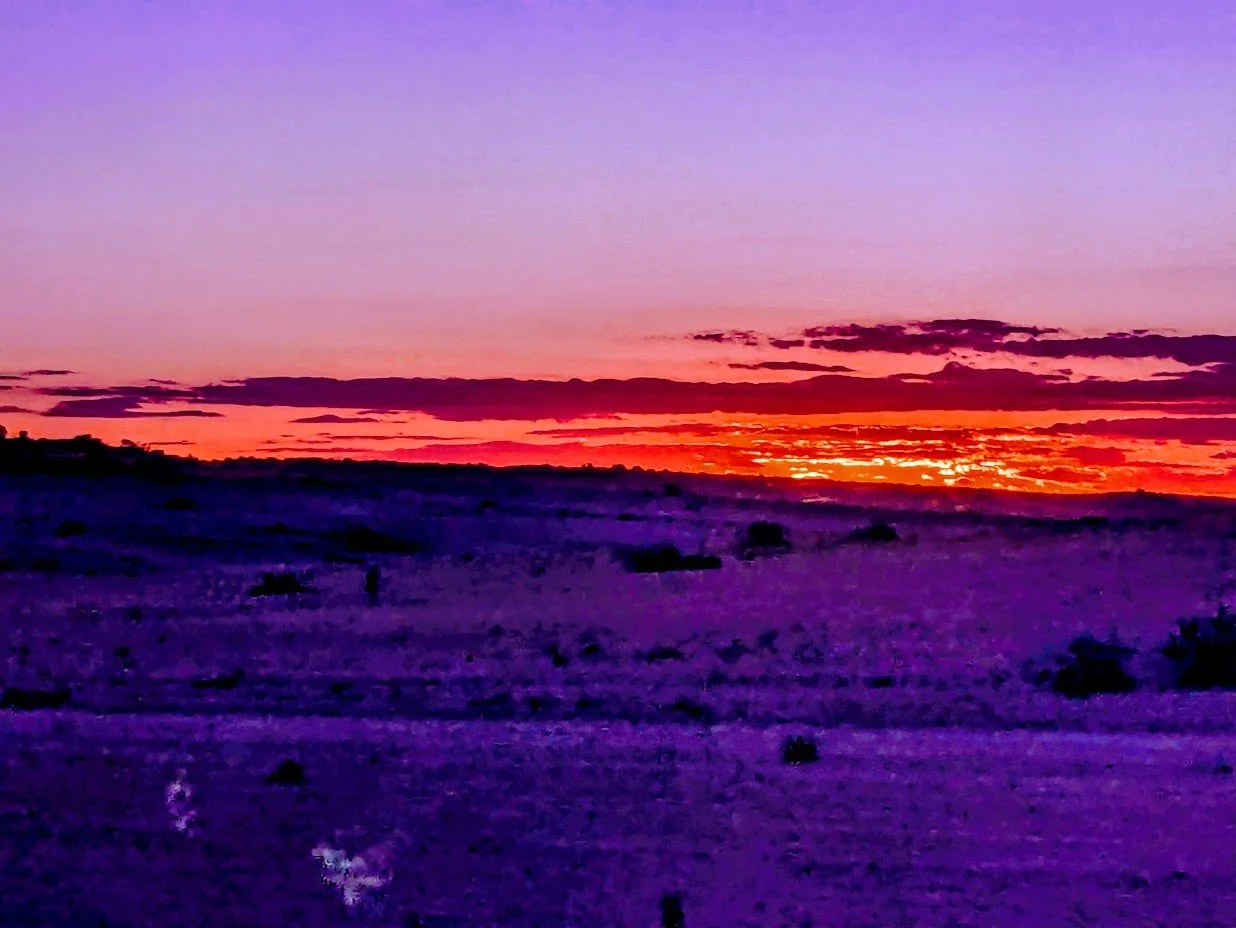
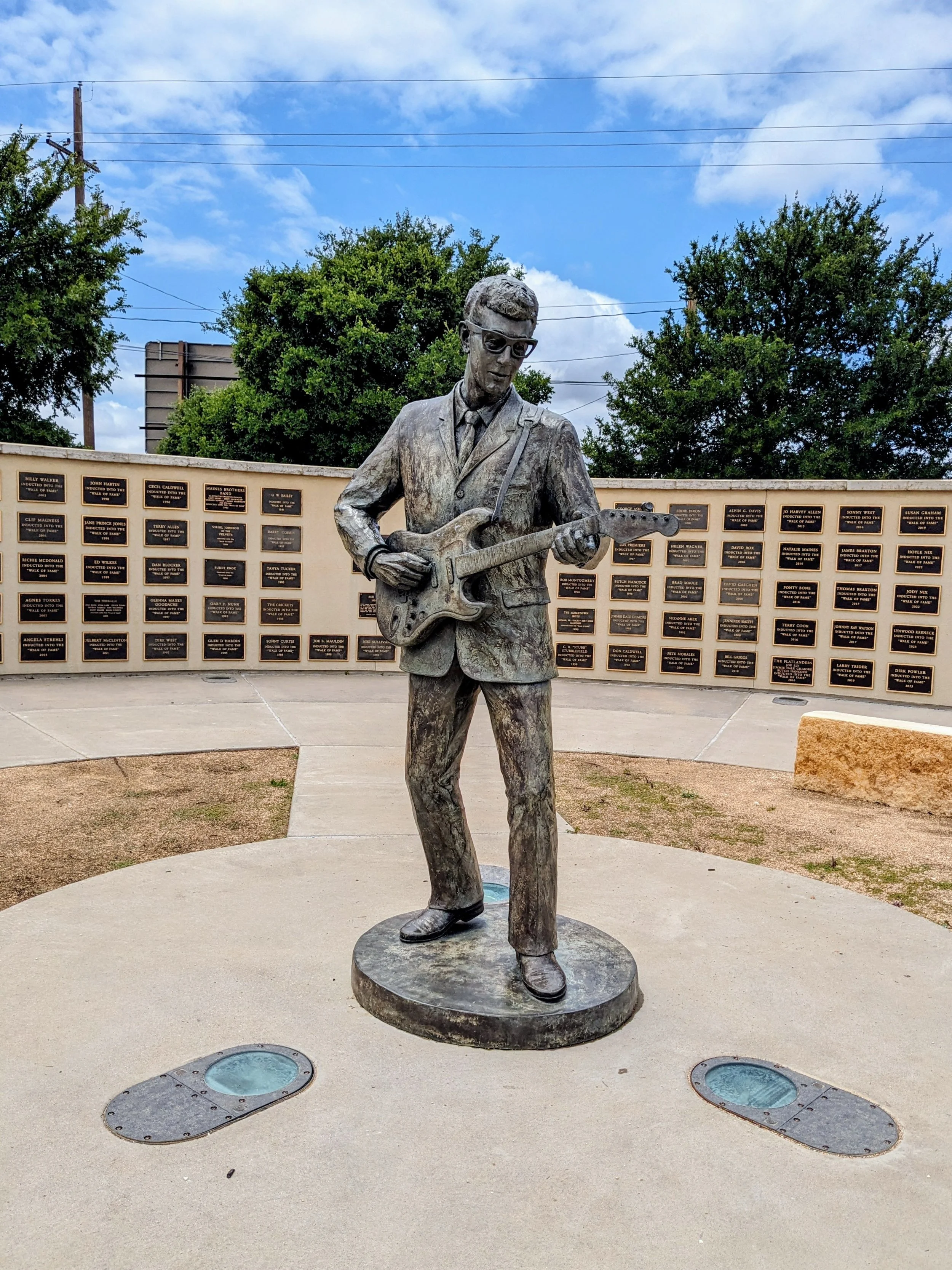
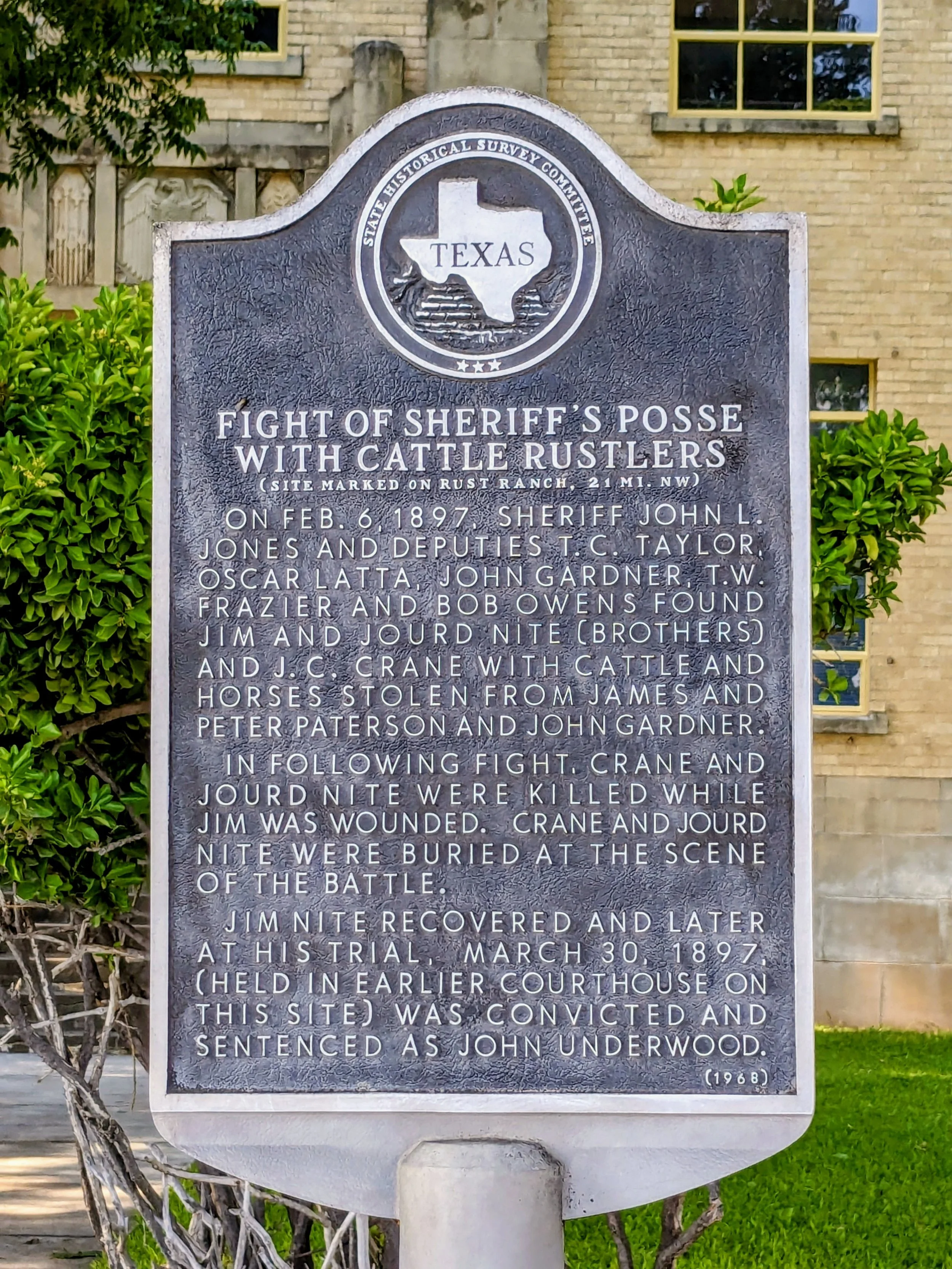
Up early and off on my journey around the Panhandle. I took the long way around so that I could recreate my drive through the back road around Palo Duro Canyon. Even the 2nd. time was a thrilling experience. I reconnected with the southern highway at Tulia and went straight down to Lubbock Tx. Aside from the Palo Duro Canyon, the landscape along this part of the drive is flat, flat, flat as far as the eye can see. There’s not a tree in sight; this land is used mostly for the growing of cotton, grain crops and cattle grazing. So it’s a long, uneventful drive to Lubbock, but once there, things get a bit more interesting as this is the home of Buddy Holly, and I immediately seek out the memorial to him. There was a large statue of this pioneer of Rock and Roll and a Walk of Fame in his honour, which had plaques for just about every star to ever come out of Texas. Back on the road, I stopped at a rest stop that had a Tornado Shelter, wow, never saw one of these before. Now I’m coming to Oil country, black gold, Texas tea, and the fields surrounding the highway are littered with oil rigs and tall stacks or ‘‘flare stacks’’ that belch the flames that burn off the excess natural gas. Along the highway are some pretty weeds, purple with yellow centres, and sagebrush abounds. Every so often, you see big, nicely painted decorative gates with the name of the ranch on them, but you never see the ranch, which must be several miles down the driveway. Don’t they love placing roadside plaques to commemorate an event that took place on this spot years ago. One such plaque read; ‘‘Fight of Sheriff’s Posse with Cattle Rustlers’’. About dusk, I arrived in San Angelo, my stopover for that evening and just as I drove into town, I saw the most beautiful sunset of my life. San Angelo is a little city, known mainly for its Air Force base. As it didn’t hold too much for one to explore, I had an early evening.
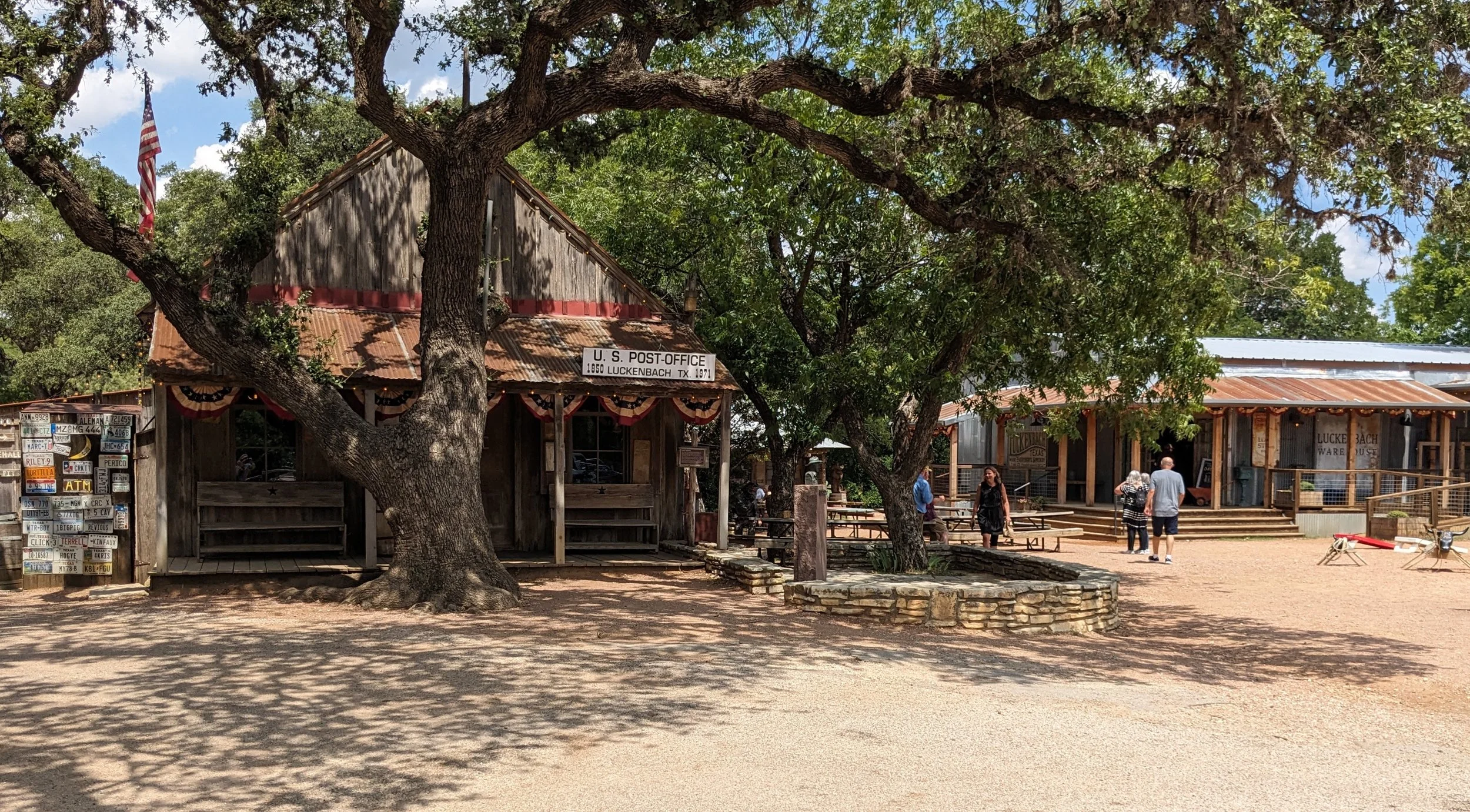
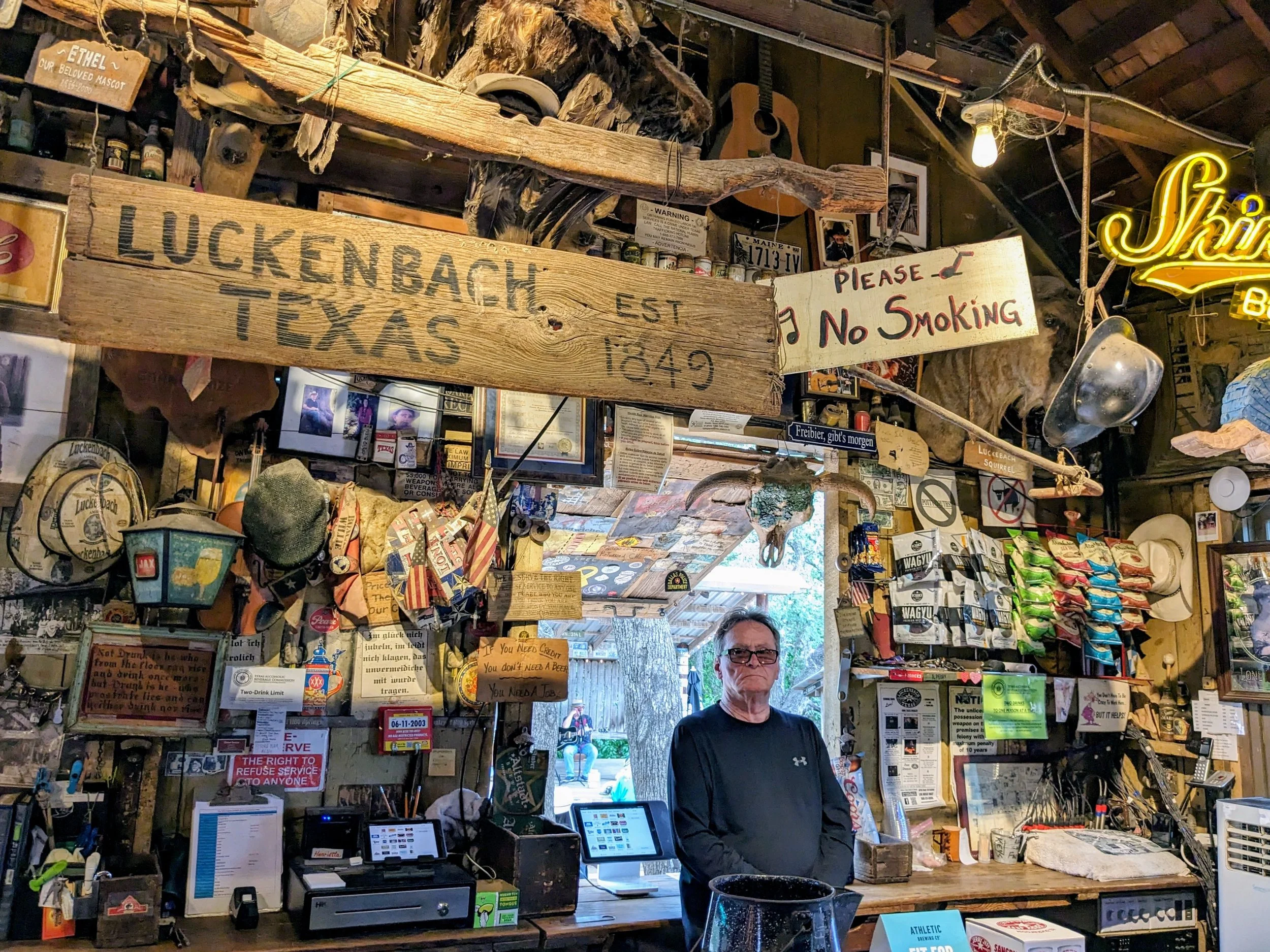
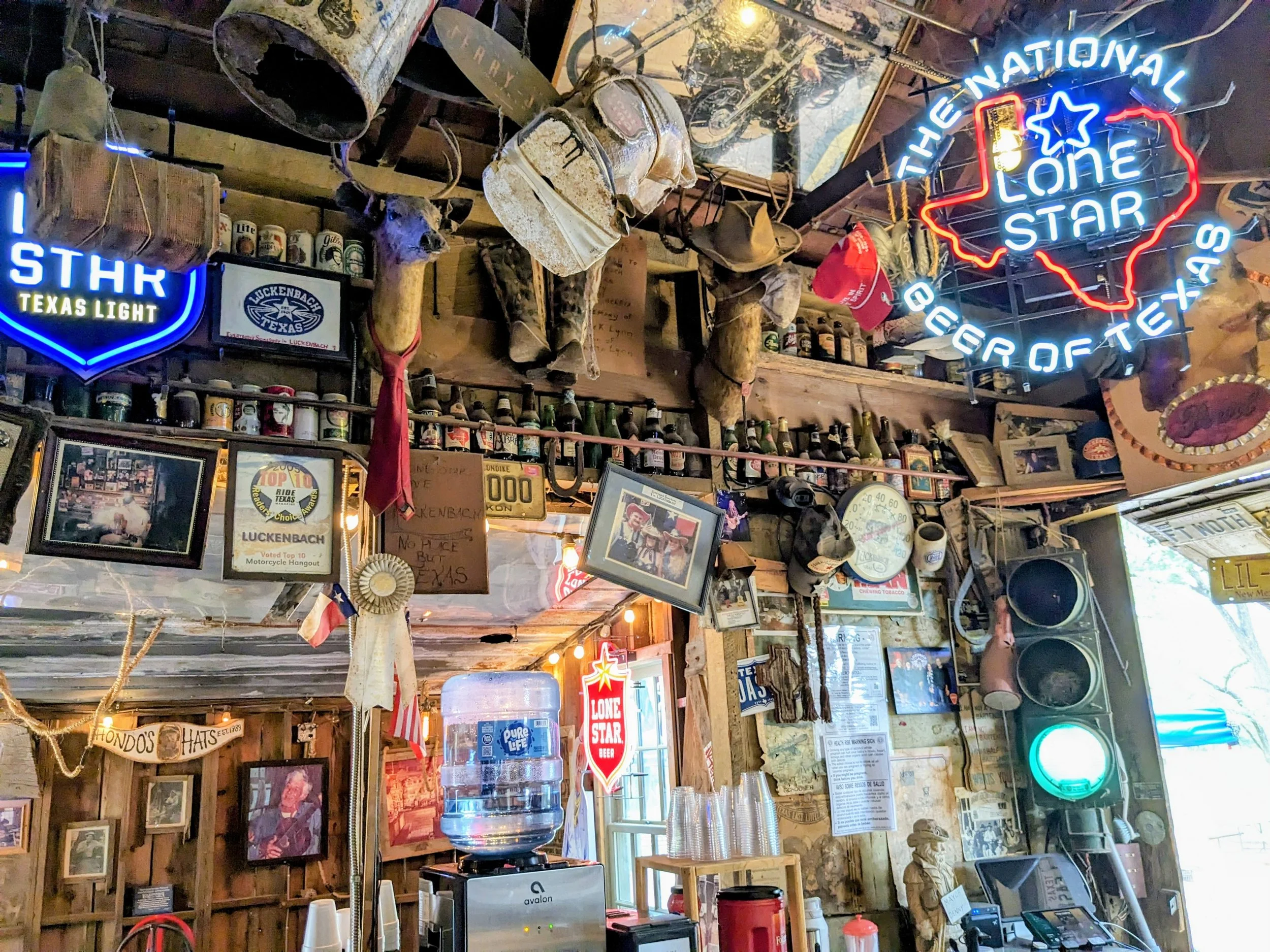
The next morning, I headed for Fredericksburg, a city with a German influence, known for its wineries, but still a typical Texas town, its Main St. full of Western Wear shops. I made a quick tour of several of the more interesting shops and almost bought another pair of cowboy boots, but these were the kind with high heels on them so when I went to stand up and got dizzy, I passed on them. Now it’s off to the town I most wanted to visit on this tour, Luckenback, Texas, the town of the Waylon and Willie song, ‘‘Luckenback, Texas (Back to the Basics of Love)’’. I had to drive up and down the road going to it several times before I realised that I was in it already. Talk about a town where if you blink, you’ll miss it. It is more of a hamlet of several buildings, a General Store/Post Office, a Dance Hall, and the Bar. It’s really just a cluster of historic wooden structures in a rural setting. It’s often described as: ‘‘a town with three buildings and a whole lot of charm’’. I got my souvenirs, of which they had some pretty unique ones, I’m a sucker for trinkets and headed east towards Austin. The landscape around here is totally different from yesterday’s drive. It’s what’s known as the Texas Hill Country and consists of gently rolling hills made up of thin soil with limestone exposed and patches of scrub. There are large Oak and Cedar trees through here, giving it a park-like atmosphere. This is the Texas one sees in postcards. About half the way there, I got caught in a real Texas downpour. I had to pull off the road for 10 minutes. I’ve never seen it come down like that and now know how ‘‘flash floods’’ occur. Finally, I get underway again and make my way to Austin, which I take my time going through as I had only a glimpse of it when passing through by train. It is a wonderful city, and now I have the chance to get a good look at some of the beautiful homes here. It’s a shame that I had to have the car back in the morning, I would love to have explored this magical, musical city in depth and stayed a night here. Headed north to Fort Worth, I passed Temple, Waco and Hillsborough, which is where I came across the Buc-Ees that I wrote about earlier. Finally, I get back to my Fort Worth hotel around 10:30 P.M., safe and sound. What a detour this has been and one that will surely hold a place of honour in my travelogue of great adventures I’ve had, but I’m not done with Texas just yet. I have the car until noon tomorrow so it’s off to Dallas in the morning to round out my Texas travels.
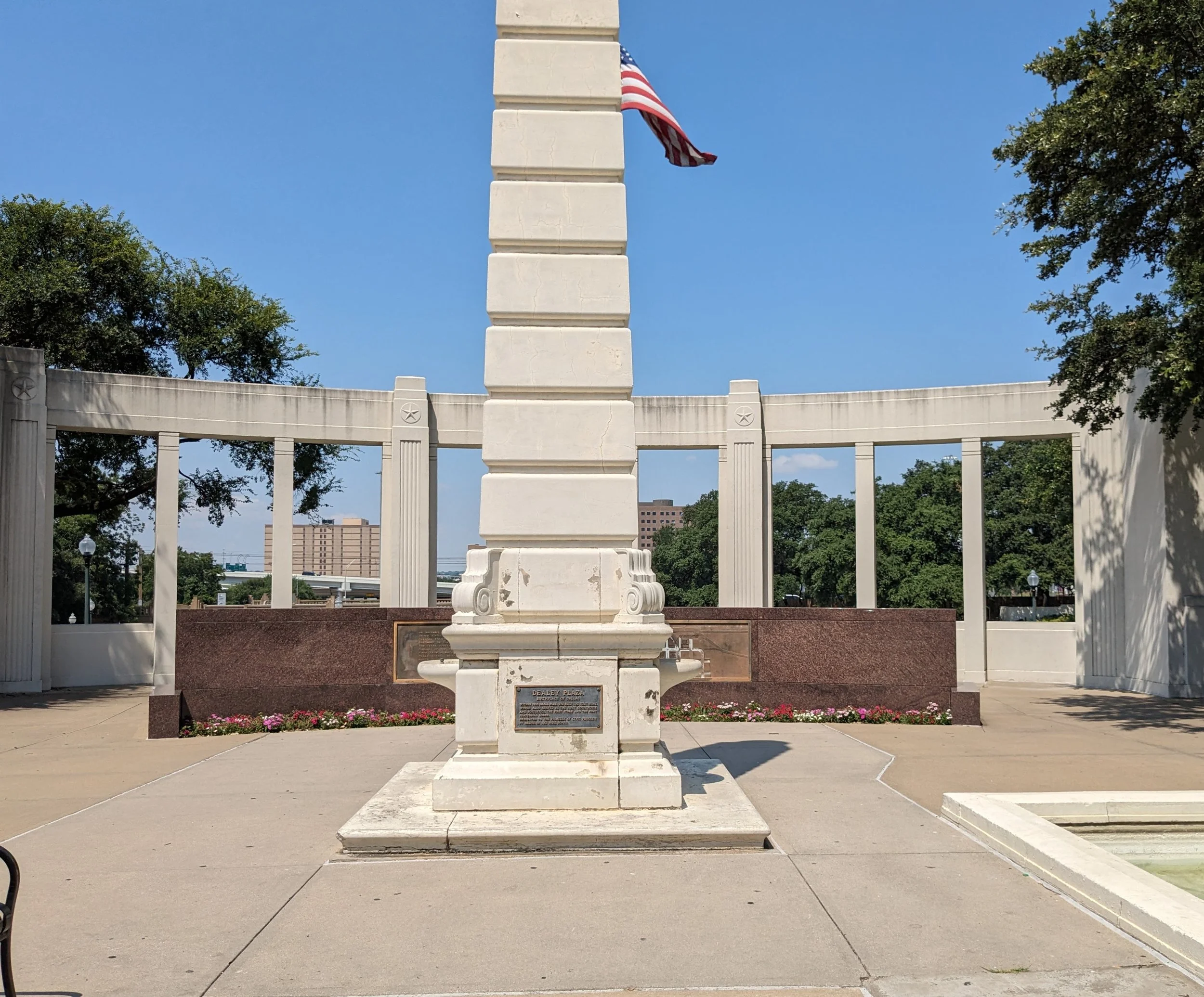
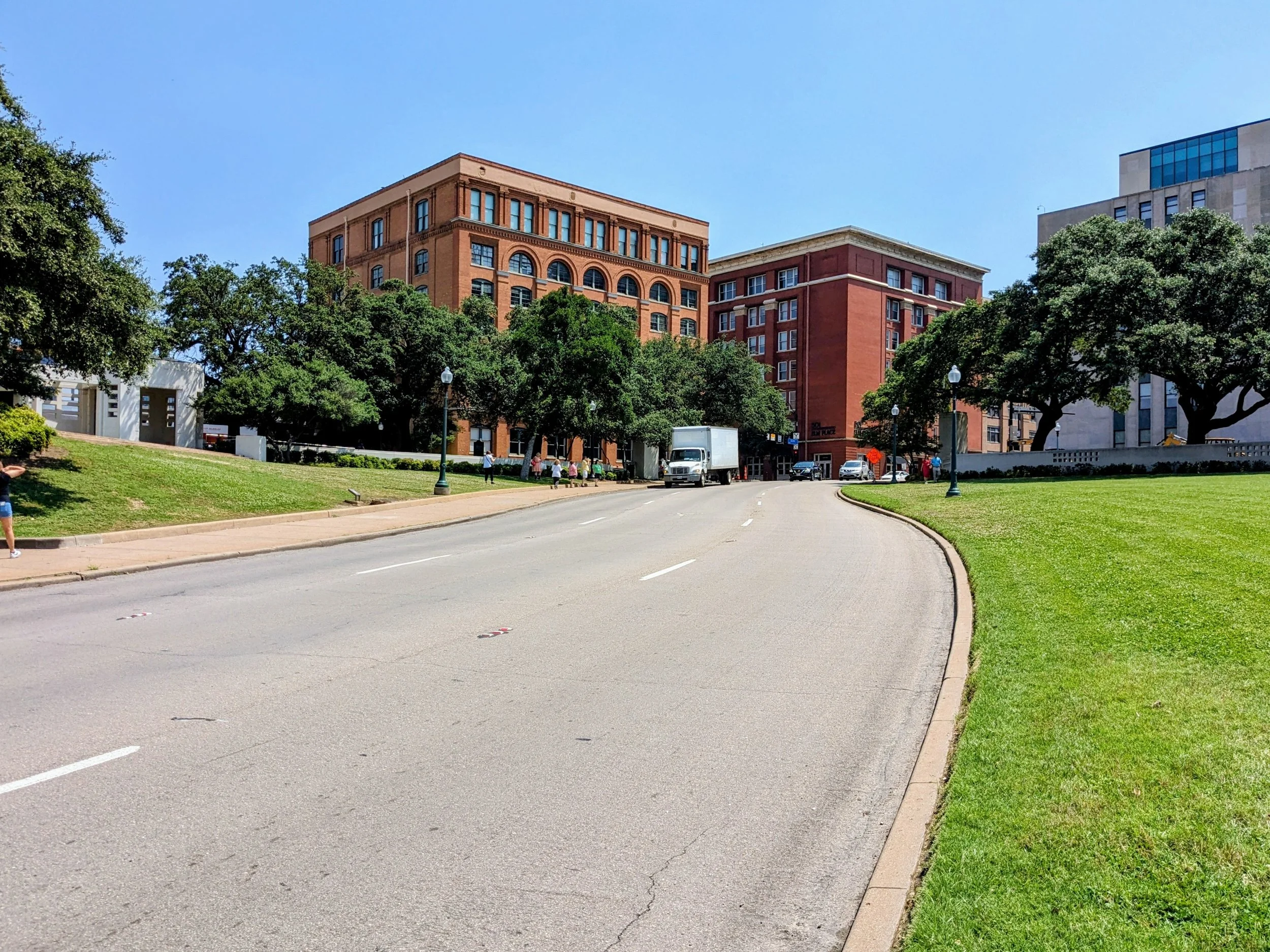
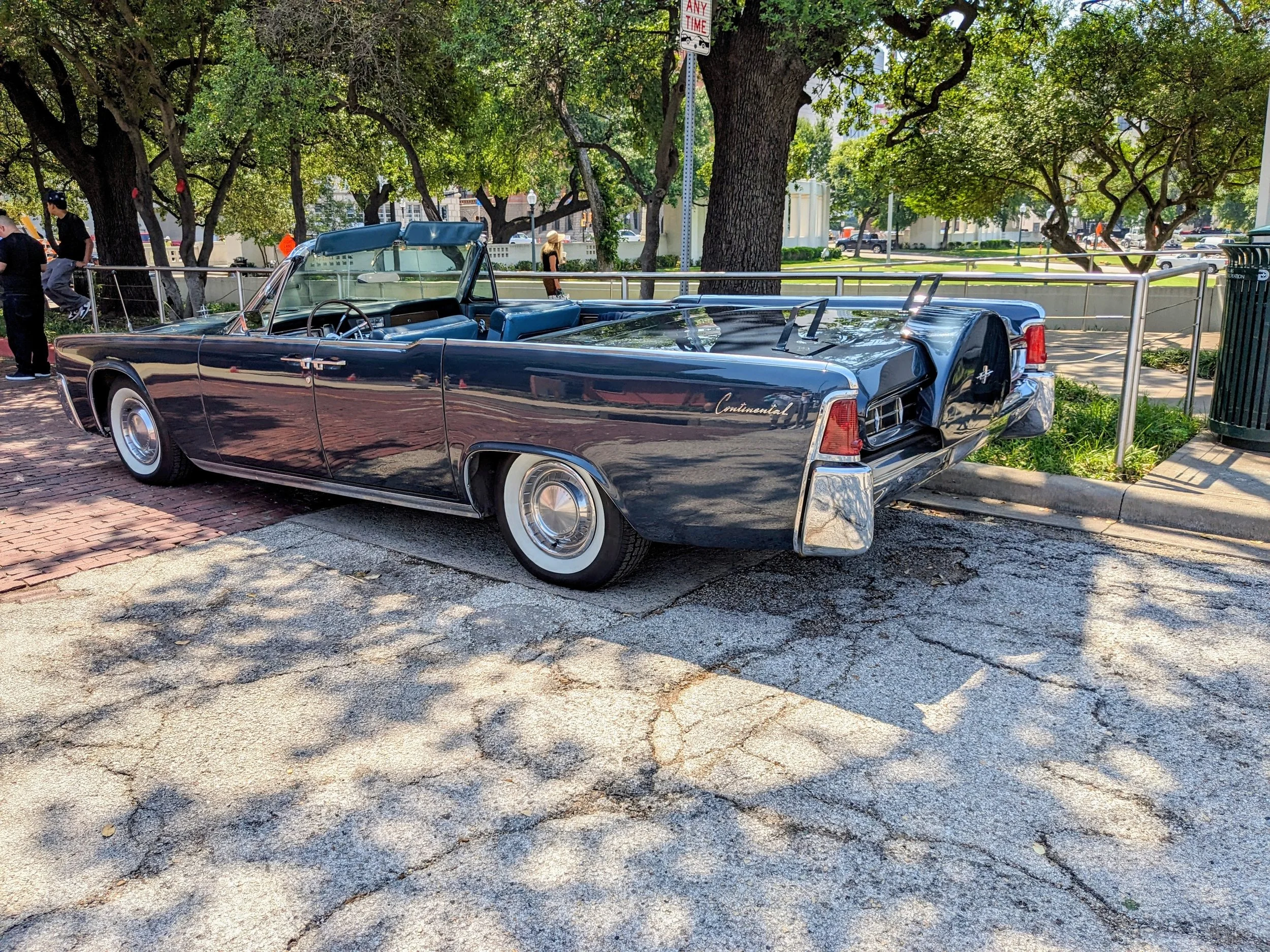
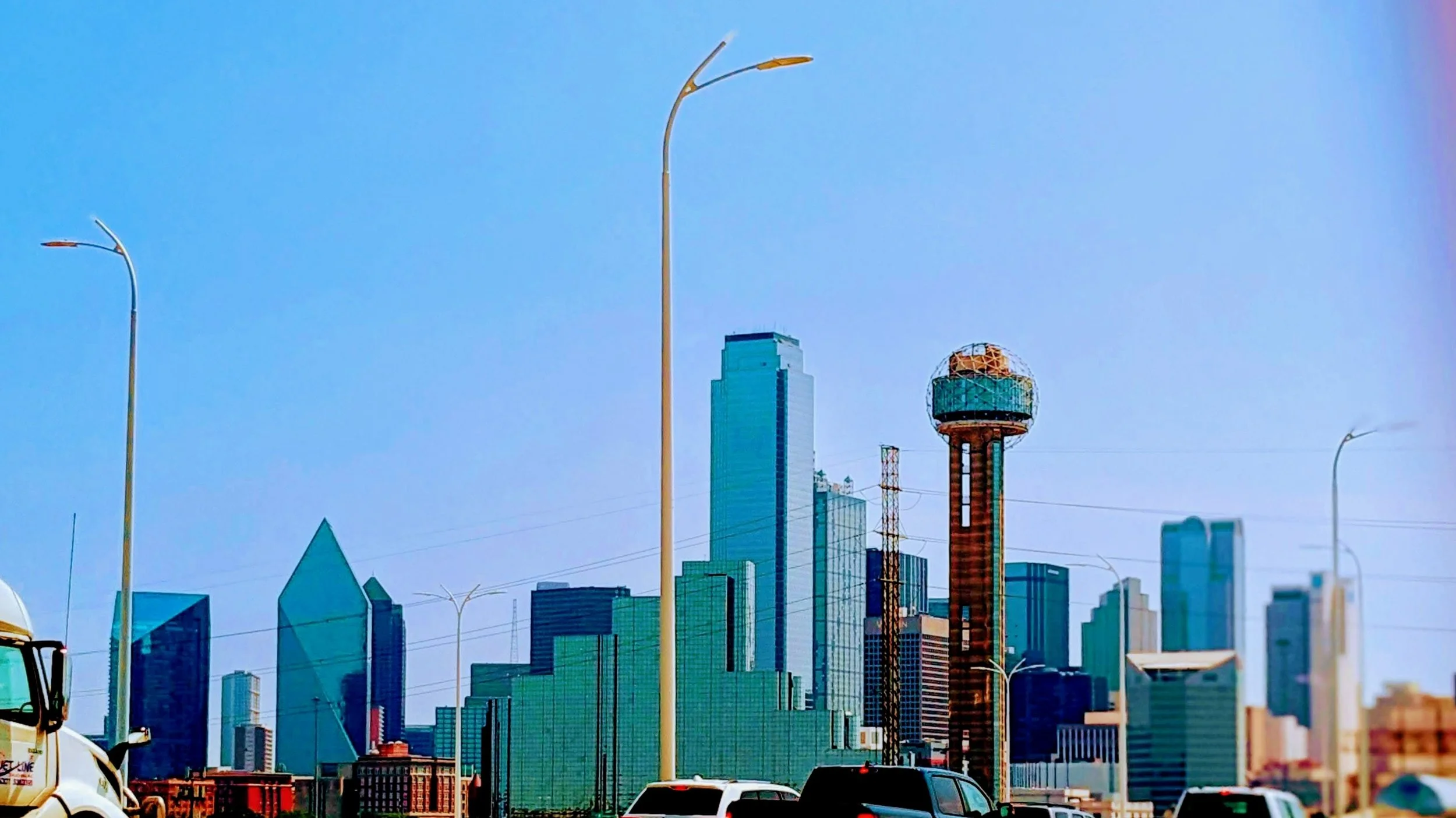
I have the car until noon, so I head over to Ft Worth’s twin city, Dallas, a 45-minute drive. The Dallas skyline is filled with unique buildings, and I would really have liked to have come through in the evening. Parking in the city centre was no problem, so I was able to park close to Daly Plaza and walked around the area, which was made famous/infamous with the assassination of JFK in 1963. I am not one for viewing sites known for their sad events, but having watched the events that took place here on that November day 61 years ago, when, as a 9-year-old, I sat watching the events unfold on my Grandfather’s TV. My memory had this all happening in black and white, so it really brought the entire thing into a new perspective to see it live and in colour. As it was in Memphis when I visited the Lorraine Motel, where Dr Martin Luther King Jr. was so cruelly cut down, this small section of street and park was another place for reverential reflection and prayer for the loss of another great human being. Who knows what these 2 men would have been capable of rendering had they been given a long life? I wandered around the downtown area and was amazed at the brilliant architectural pieces that exist here such as, The Reunion Tower, ‘‘The Ball’’ whose geodesic dome lights up the skyline at night, Bank of America Tower, the green glass tower that’s among the largest buildings in Texas, the futuristic Fountain Place, a sleek, angular glass tower, and of course the impressive Margaret Hunt Hill Bridge and it’s companion the Margaret McDermott Bridge. What a field trip that was. Got the car back and made my way to the train station in time to catch the 2:27 P.M. to Chicago, which gives us another, close to 24 hours of riding the rails.
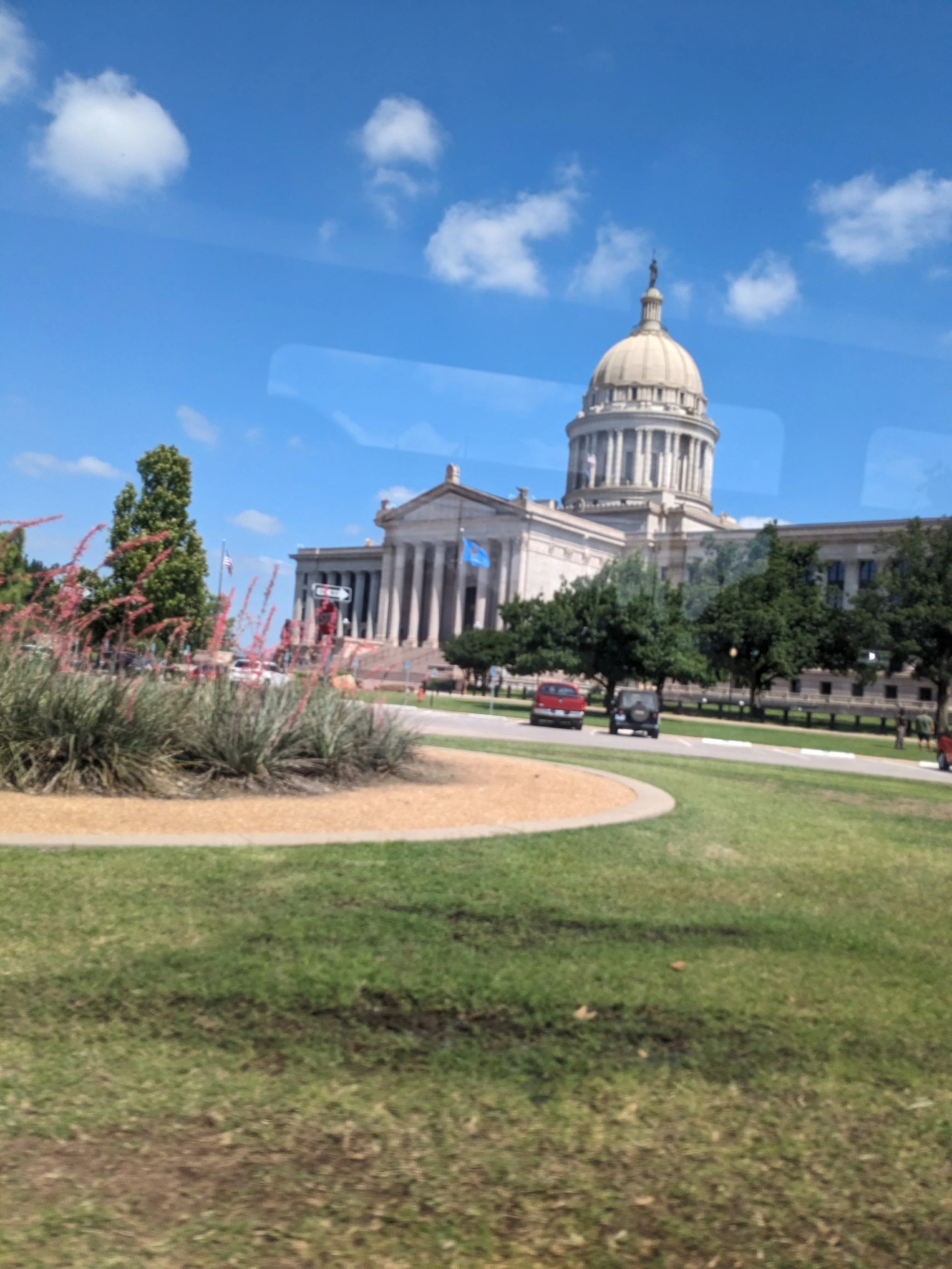
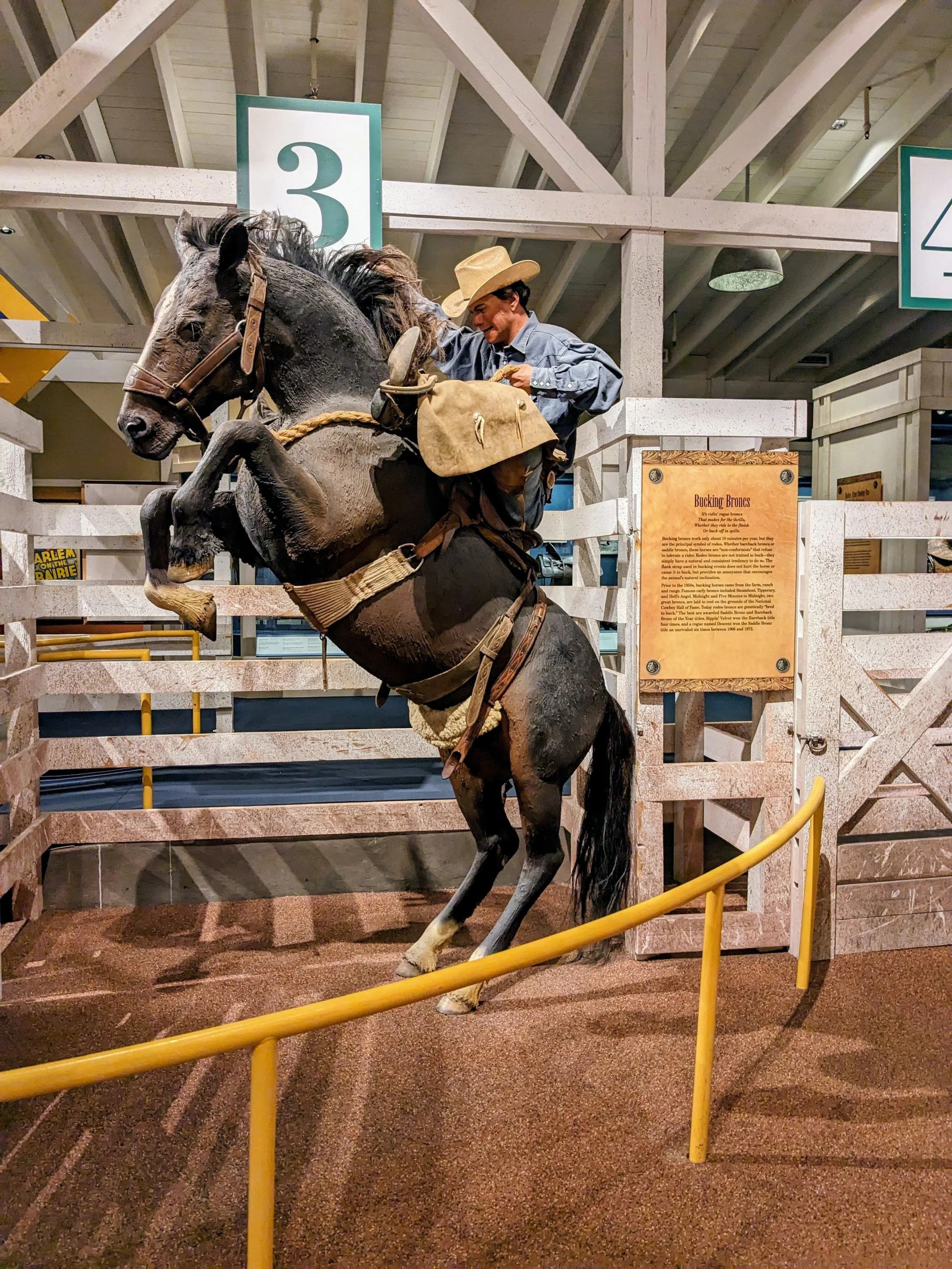
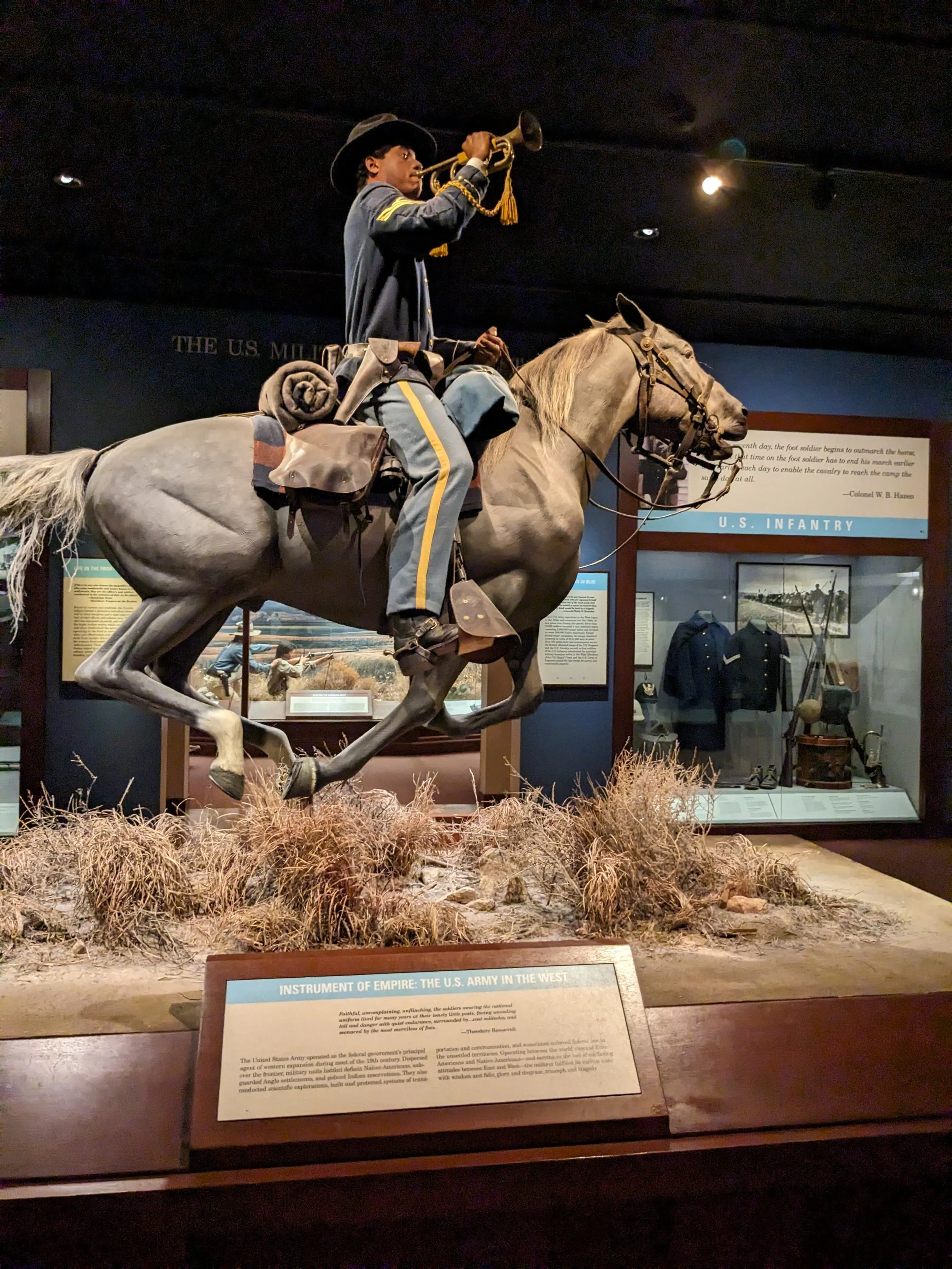
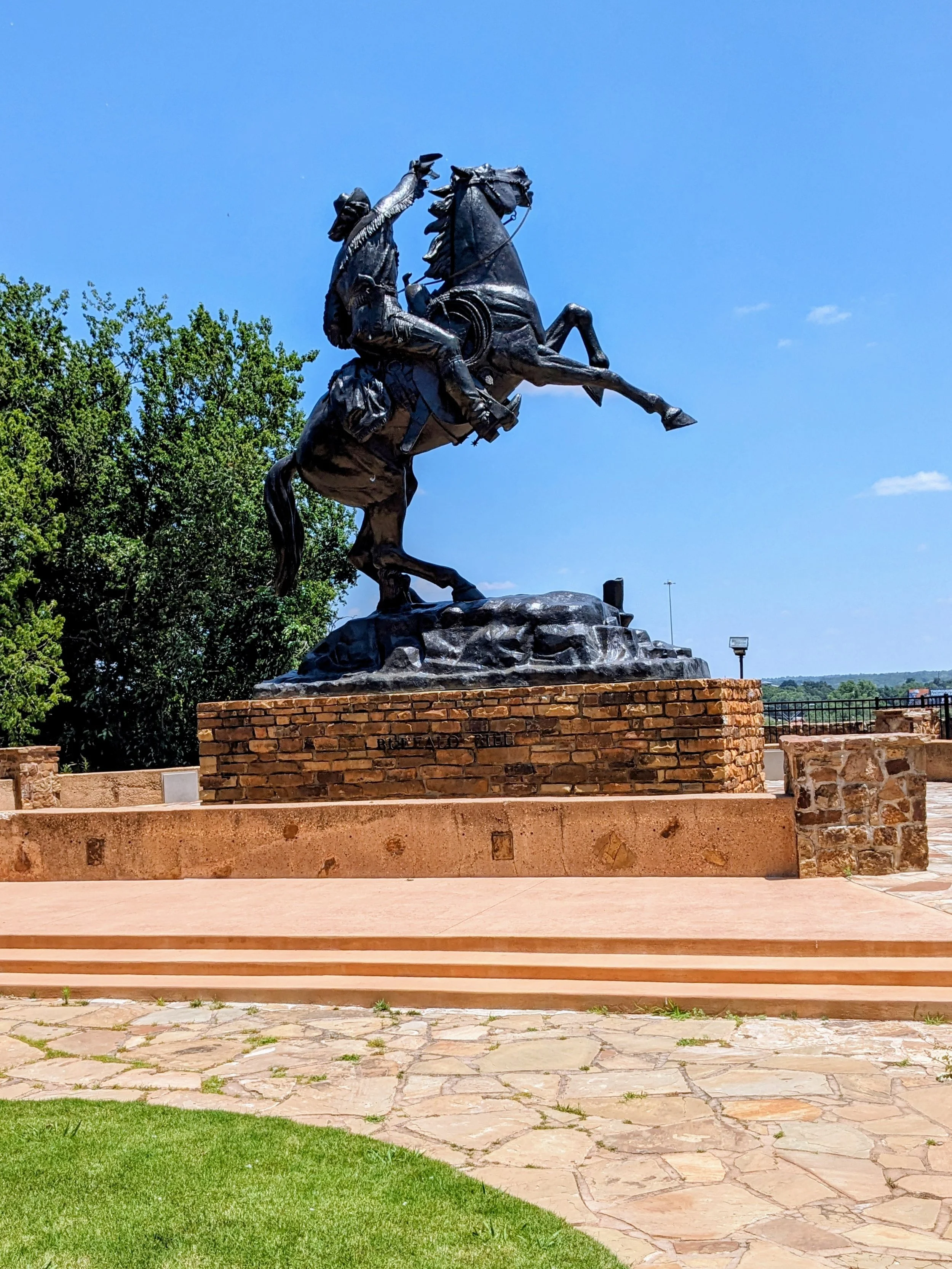
We will stay with the Texas Eagle and make our way north and east but I want to take a little detour first. There is a train called the Heartland Flyer, which runs from Ft. Worth to Oklahoma City with bus service beyond that, which will take you to Newton, Kansas and puts you on the Southwest Chief line. Leaving Ft. Worth at 5:25 P.M. you’ll get into Oklahoma City about 9:30 P.M. which is perfect for getting to your hotel and catching some sleep before exploring this historic hub of cowboy culture. It remains one of the largest working stockyards in the world, largely due to the fact that it was situated in close proximity to the Chisholm Trail. So, at first light, it’s off to the National Cowboy & Western Heritage Museum, probably the country’s premier museum for all things cowboy. The place is huge, its art gallery alone is situated in an incredible 15,000 sq. ft. space. It holds many works of art and sculptures touching on all the western subjects, such as Cowboys and ranch life, Native American life, Western landscapes, and frontier scenes by renowned Western artists such as Frederick Remington, Charles M. Russell, and Albert Bierstadt, to name just a few. I got a real thrill from seeing Remington’s ‘‘The Buffalo Signal’’. Another treat was the photography exhibit of some 700 works by Edward S. Curtis, which documents and brings to life Native American life as it was at the turn of the previous century. But the icing on the cake had to be the gallery that is fashioned after a 1950s Rodeo arena with the displays set within arena fencing, chutes and gates, and even dirt floor staging. The displays within the arena include full-sized, life-like events such as bull riding, bareback bronco riding, and saddle bronco riding. Along with this are more life-sized, life-like displays of ‘‘timed events’’ like steer wrestling, team roping, tie-down roping, and barrel racing. These displays are so realistic that if one were to close their eyes and take a good, deep breath, they would hear the creak of leather, the grunts of the animals and the smells that only a farm or ranch can give off.
I then took an Uber across town to the First Americans Museum and was very impressed by this huge 175,000 sq. ft. museum which is dedicated to the 39 Tribes that call Oklahoma home. It is a very interesting and informative centre showcasing their tribal history, cultural traditions and languages as well as a look at contemporary Native life.
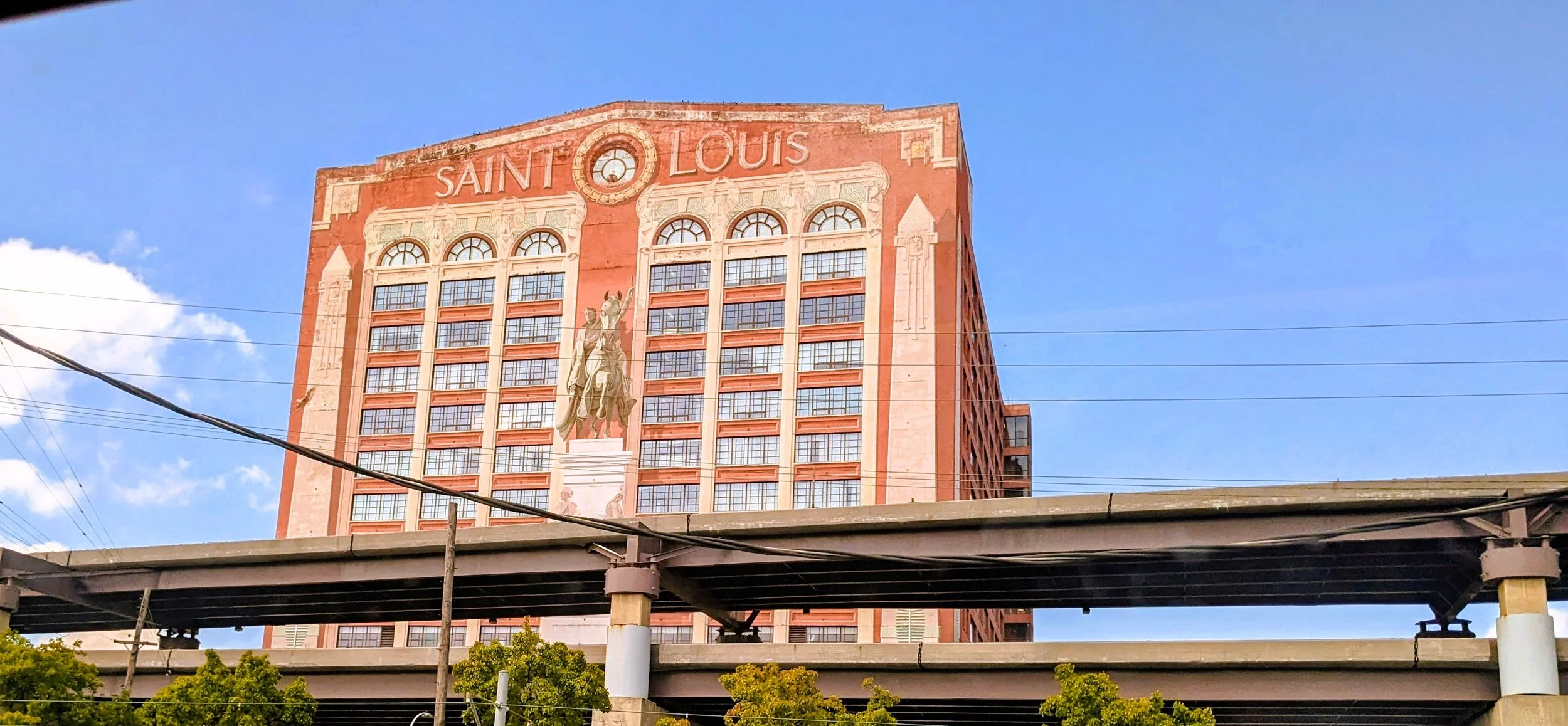
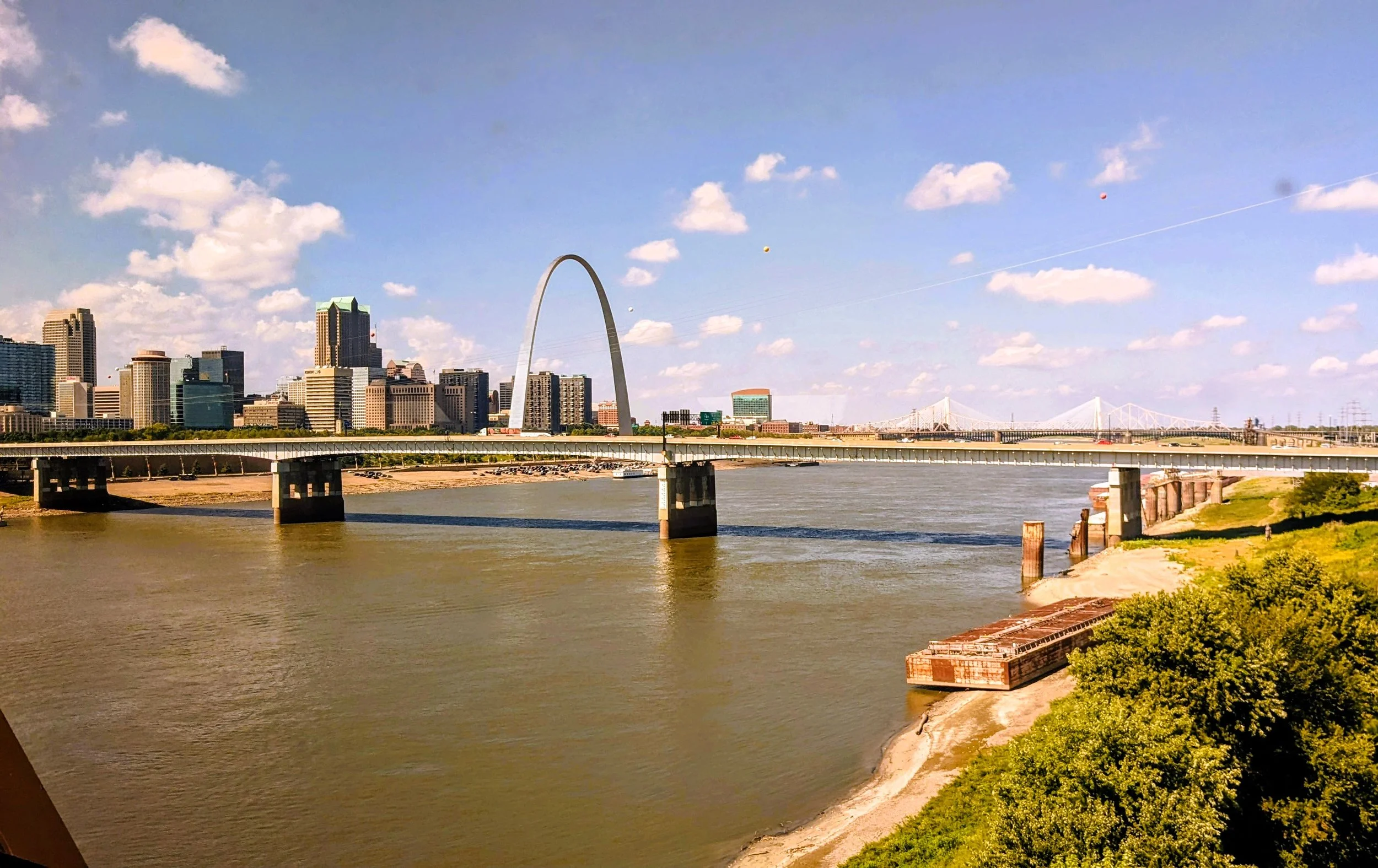
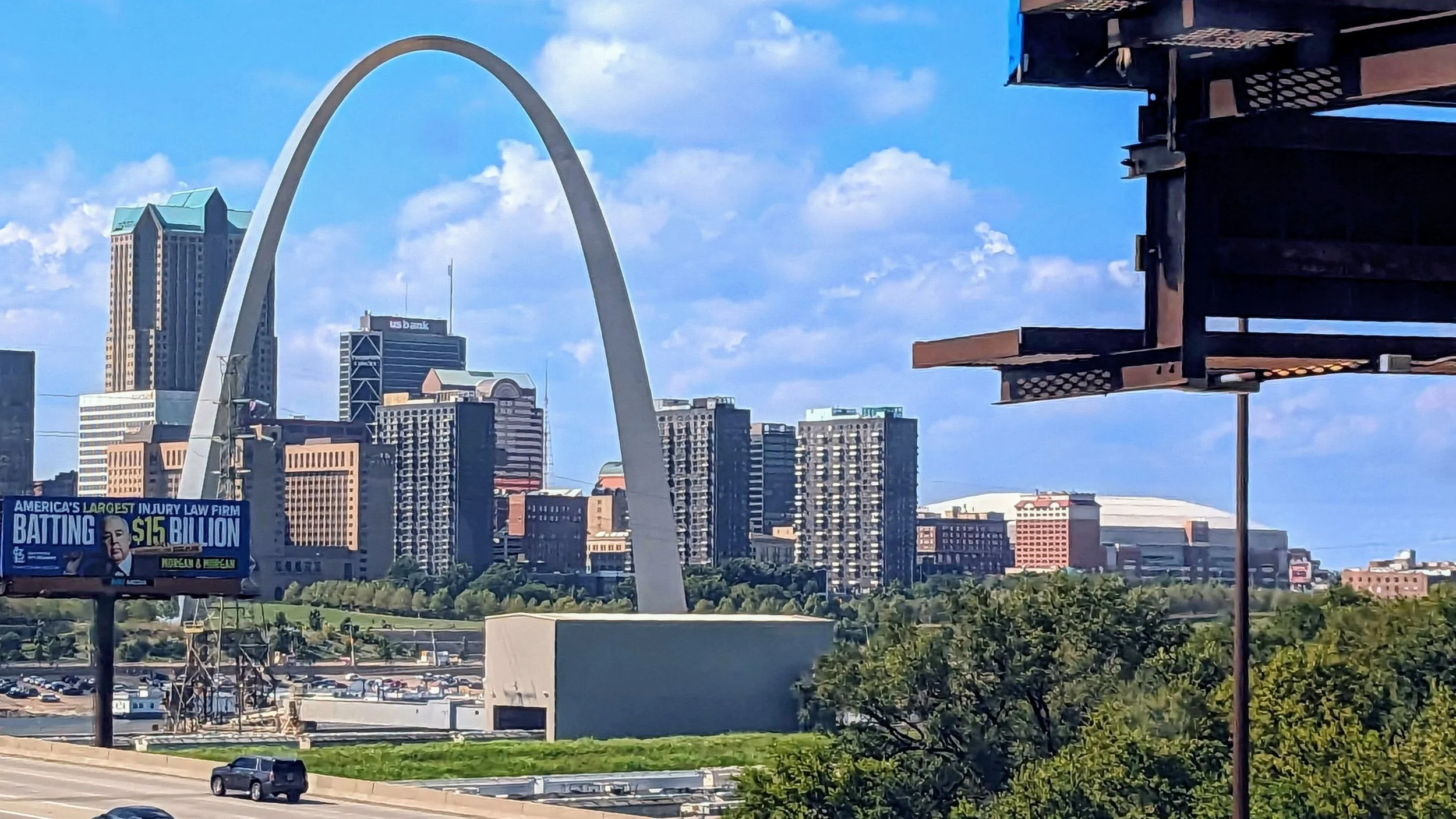
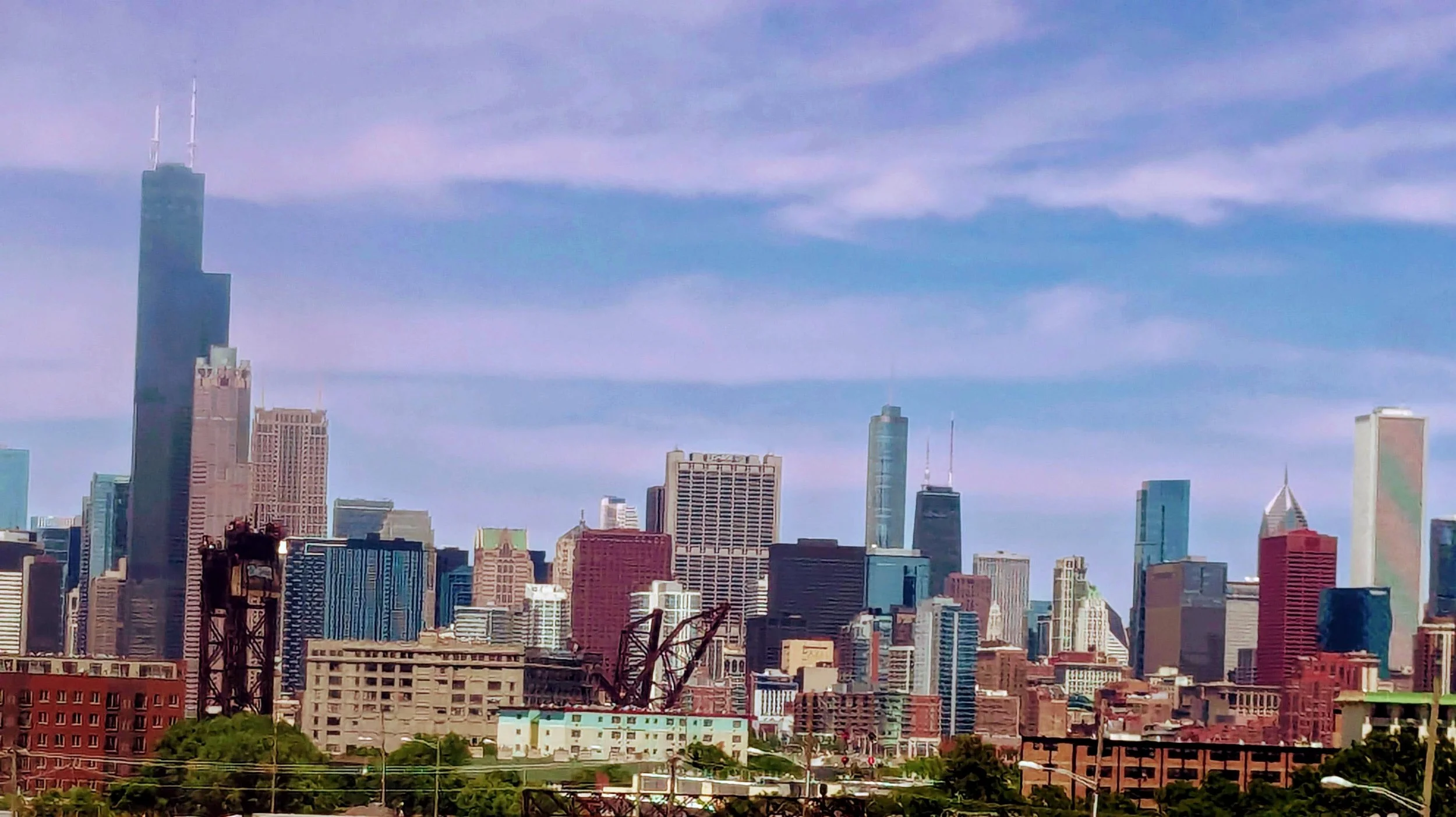
Wasn’t that a nice little detour? So now we’re back in Ft. Worth, and we’ll start off by going through Dallas again; however, this time I don’t have to watch where I’m driving and can get a great look at the city. It is very impressive as you drive towards it and the skyline unfolds before you. Got more photos, close-ups of the skyline and bridges that I couldn’t get while driving, another plus for train travel. After Dallas, we head due east and cross into Arkansas at Texarkana, then it’s Arkadelphia, AR, at 10:00 P.M. and Little Rock, AR, at 11:32 P.M. It’s pretty dark as we pass through these cities, and there isn’t a whole lot to see, so maybe it’s time for some shut-eye. I drift off to the gentle swaying of our train and don’t wake until I hear the early call for St. Louis. It’s daylight now, and at Pevely Mo. we begin to see the Mighty Mississippi and will follow it for the next 30 miles where we’ll reach St. Louis Mo.. You can see the Gateway Arch from quite a distance, which isn’t surprising as it is 630 ft. tall, making it the largest arch in the world. Its gleaming silver stainless steel skin shines like a beacon and is illustrious when you cross the Mississippi and see it reflected in its waters. We have a 45-minute stop here, but as the station is quite a distance from where the train stops, it isn’t practical to try and explore it, which is too bad because I’d love to have a St. Louis Cardinals souvenir, my favourite team. Well, the final leg of this incredible journey is coming up, and once again, we will be travelling through the Bread Basket of America, those states that produce large amounts of grain and staple crops such as wheat, corn and soybeans. Missouri sits on the eastern edge of the Great Plains, although it is hilly and forested in the south. St. Louis is also where we make our way into Illinois and continue along the phenomenon of the Bread Basket. At about 10 A.M., we pass through Springfield, IL, the adult home and final resting place of Abraham Lincoln. Southern Illinois is very pretty with its lush, hilly, forested, river-valley terrain, but changes the further north we go into the flat, glacially shaped plains of northern Illinois that stretch into southern Wisconsin. I always like coming into Chicago from any direction, as you can view the stunning skyline of the city from quite a distance. The only downside to arriving in Chicago is that it means the end of our amazing adventure.
I so hope you had as great a time as I did. It’s been quite the journey, but as awesome as it was, I’m looking forward to sleeping in my own bed tonight. Beware, though, I always seem to get this incredible itch after a few weeks to go and do it all again. If I do, I hope you’ll join me.