Welcome back, fellow travellers. Just a suggestion, if you wish to read these posts in some sort of order, I suggest you go from the top of the map to the bottom as I have in writing them. The Empire Builder is the route at the very top of the United States, so that is the reason I started with that one. Next comes The California Zephyr, which runs roughly across the middle of the western US and if it’s epic scenery you’re after, this is the route for you. With the longest daily service in the country, it travels some 2,438 miles in 52 hours, that’s 2 full days plus, and covers the full gamut of topographical settings. You will be treated to such incredible sites as the Upper Colorado River, the Sierra Nevada Mountains, the Rocky Mountains, along with awe-inspiring desert landscapes and, of course, the vast prairies of the Great Plains. I will begin our journey once again in the ‘‘Crossroads of America,’’ Chicago. Having travelled this route from both directions, I don’t find it makes any great difference in the ‘‘timing’’ for viewing the wondrous sites we’ll find along this route. For example, we go through Salt Lake City in the late evening/early A.M., no matter which direction we are travelling from. Denver and the Rockies of Colorado will be in the daylight hours, no matter the direction of travel. So, off we go from Chicago, and we find ourselves very quickly in the vastness of the Illinois prairies and their cultivated fields interrupted only by farms and small forested areas. As we arrive at Burlington we will cross the Mighty Mississippi and find ourselves in the land where the West truly begins. Onward we roll across Iowa’s fertile land, flat as far as the eye can see. Let your imagination carry you back in time 150 years and try to imagine living among field after field of corn with your nearest neighbour several miles away. This is one of the greatest things about train travel for me; all I really need to pack is my imagination. If you have read any of my other writings, you will know that I grew up in Nova Scotia. Canada’s second smallest province. You cannot go more than 50 miles in one direction without hitting saltwater. Our neighbours, while being spread out among tiny communities, were always within sight. Our schools, merchants, churches, and hospital were for the most part within walking distance. Imagine, these people had no services at hand. They were responsible for putting whatever they wanted to eat on the table. Different seasons meant different eating habits. Summers of plenty, prayerfully and winters of near starvation. The infant mortality rate would have been approximately 10-15%, hospitals were for the ‘‘town-folk’’. I try my best to write in my journal daily but with the advent of Google Timeline and similar apps, I can miss a few days or make short notes and take my old, sweet time when I get home and bring it up to date. Actually, I make this a winter chore, it’s a terrific way to pass some cold, dark, winter afternoons/evenings with the added bonus of being able to relive my travels. Around Osceola, IA, we lose the light, so it’s time to update our journals or head up to the Lounge Car for a chance to start a conversation with a fellow traveller. This is another one of the many benefits of travelling by rail; it’s a chance to discover other people’s stories and find out about life in another part of the continent. I think what intrigues me the most is the number of foreign travellers I meet. People come from all over the world to do the same thing that I am doing. I’ve met folks from England, Scotland, France, Germany, Australia, and New Zealand. They always marvel at the size of this country and the myriad differences in the landscape as they travel from east to west and north to south. Most, like myself, have taken advantage of Amtrak’s incredible US Rail Pass. It would be similar to the ‘‘Euro Pass’’ that they have in Europe, which has many deals available to the price-wary explorer. I am hoping to do a similar tour of Italy next year and will be taking advantage of either the EurRail or Trenitalia Passes. Unlike the US and Canada, the countries of Europe have rail passes available that enable travel from one country to another.
Before we bed down for the night, we will arrive in Omaha, NE and cross the Platte River, a stopping place for wagon trains making their way west back in the 19th century. This was a hub for the Oregon, California and Mormon Trails and a last chance to stock up before heading into what was then the Great Unknown. It’s also a last chance for some fresh air as we’ll stop for 15-20 minutes, perhaps for a Crew change. Hopefully, you’ll have had a peaceful rest, as the train’s gentle motion, most of the time, rocks you to sleep and wake up refreshed just as we are pulling into the Mile High City, Denver, CO. Here, we will have a close to an hour stopover. If you did a little homework and Google Mapped Denver and have a bit of the daredevil spirit as I do (of course, you do, or you wouldn’t be reading this), then you have the perfect opportunity to do a little exploring around the station. Always keep in mind, though, when you get feeling adventurous, ‘‘the train waits for no one’’. Be sure to ask an Attendant before disembarking how long the train will be here and make sure to be back on it with 5 minutes to spare. I have witnessed people being left behind, so unless you wish to spend unexpected money for a Hotel room for however long it will be until the next train comes along, (some routes, although not this one, do not provide daily service, so you could end up being stuck in an unplanned for place for 2-3 days) get back on your train in time.
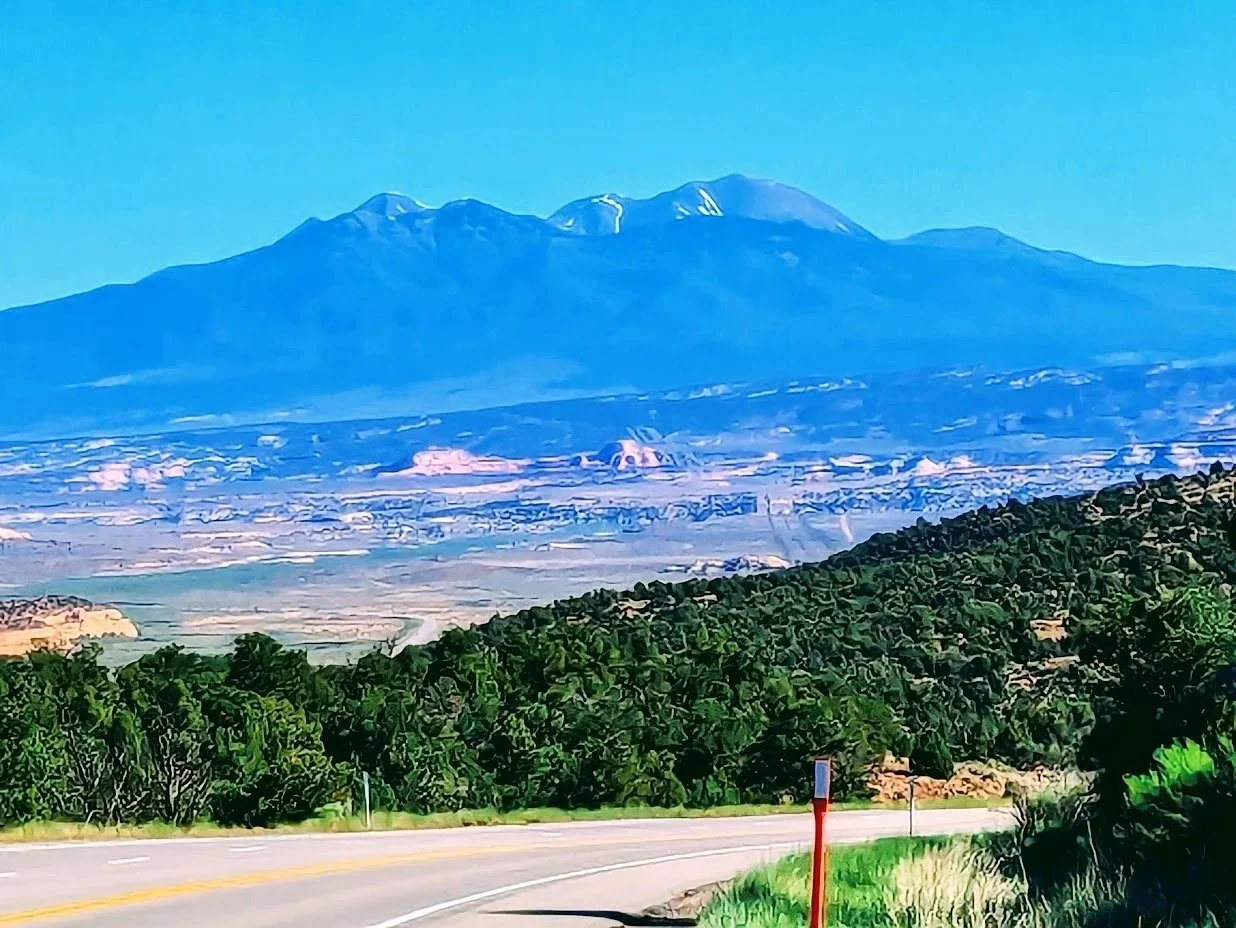
So now we’re heading into the Rockies, get your camera ready. From here through to Salt Lake City, we will be moving through the mountains and catching some of the most beautiful landscapes that you’ve ever witnessed. Just before we crest our first mountain around the Plainview area, take a look back to the East for a stunning view of the Great Plains stretching to the horizon. Over the next 50 miles, we go from an elevation of 5,690 ft. to 9,270 ft. and will go through 31 tunnels, including the 6.2-mile-long Moffat Tunnel. Look for the Winter Park ski fields, which can be seen on our left. We now begin to follow the beautiful canyons and swirling rapids shaped by the Fraser River. We skirt the river for the next several hours passing impressive rock cliffs, narrow valleys and mountain meadows. In one of these small meadows, practically in the middle of nowhere, there is a bright yellow schoolhouse, which stands out from the landscape like a lighthouse on an ocean rock. It’s the Tolland School House and was built in 1906. The local community recently refurbished it, and it now stands as a Historical Landmark. Soon, we connect with the Colorado River and will follow it for the next 230 miles. What a journey!! This stretch of our trip passes through Gore Canyon, with walls towering 1,000 feet above us and jaw-dropping rapids beneath us. Check out the vibrant red rocks of Red Canyon, followed by high cliffs for the 12-mile stretch after Dotsero. One of the things that makes this route the ‘‘Jewel’’ in the Amtrak fleet is the Attendants. The first time I came through, the chap on duty that day gave a running commentary all day long. I learned so much from him and to this day thank him for giving me the knowledge to go along with the splendour of this extraordinary country. Next up, my favourite place on Earth, Glenwood Springs. This is a little piece of paradise that God carved out of the Colorado Rockies. Not only is its beauty unsurpassed in any place I have found in this country, but it also offers a myriad of great activities for the adventurous soul. You can do a ‘‘jump off’’ here, and it certainly won’t be wasted. I have stayed twice for 24 hours, which is barely enough time to sample everything this little gem has to offer. The first time I